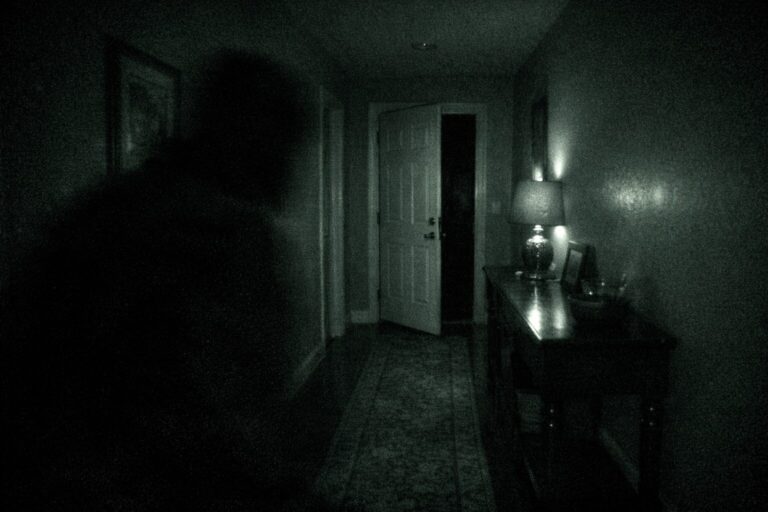
The Signal Came From Beneath the House
It started as a small annoyance: the doorbell chiming a clipped half-tone around two in the morning, the thermostat waking the furnace for a burst and then changing its mind, the living room speaker lighting its ring as if I had said something to it. I blamed the neighbors’ Wi-Fi, the cheap LED bulbs, the router I kept putting off replacing. By the fourth night I was done with guessing. I went to the hall closet, pulled down the little handheld scanner I use for work, and walked the house like an amateur surveyor, watching bars climb and fall.
Outside, the cul-de-sac was dark and windless. The last porch light across the street had gone off around midnight. Inside, my house kept the sounds you only notice once everything else is quiet—the low, careful breath of the refrigerator, the hum of the HVAC motor coasting down. The scanner cycled through the bands I knew were busy in our neighborhood. In the two-point-four gigahertz range there was the usual sawtooth mess from routers and microwave ovens, chatter from doorbells and smart plugs. I could pick out the baby monitor from next door, the faint hiss of a garage opener. All ordinary. But stitched through the noise was a narrow, harder peak that didn’t behave.
I expected it to get stronger when I went close to the windows, to a wall shared with another house, or even near the electric meter. Instead, the bars climbed when I stepped into the center of our living room and kneeled, the scanner hovering a foot above the hardwood. The air there felt cooler across my hands. The scanner ticked, a bright little click in my ear where I’d plugged in a single earbud to monitor audio. Under the reading lamp, pale dust glittered where the baseboards met the floorboards. I edged the antenna closer to a seam in the wood. The bars rose again, bright and steady. The strongest part wasn’t coming from the window or the exterior wall or any of the places that made sense. It was coming from beneath the floorboards.
I shifted, sat back on my heels, and held still. The scanner wasn’t being fooled by reflections off the TV screen or interference from the lamp; when I slid it toward the wall, the peak fell off. When I brought it back to the gap between the boards, it returned, harder than before. The numbers on the tiny screen stepped upward, ten kilohertz at a time until the auto mode decided to plant itself over a narrow slice I didn’t recognize. Not the frequencies for our router, not the cheap remotes I’d taken apart, not the smoke detectors. The house wasn’t giving me anything to blame it on. From below came the faintest draft, the kind that sneaks up from a big building’s lungs.
The door to the basement was at the back of the kitchen, a hollow-core thing that never quite closed without a complaint. When I opened it the hinges answered me softly. The scanner’s tone bled into something like a heartbeat—the clean tick I’d heard upstairs now repeating with gentle insistence. I told myself it was just that the noises were isolated down there, that with the house’s stomach open the nerves were louder. But as I took the first step down an old runner strip groaned under my foot, and the scanner’s LEDs flashed in a rhythm that didn’t match my steps or my breath.
On the landing the air deepened, cool and smelling faintly of powdered detergent and the iron in the well water. I held the scanner out, stupidly as if it were a dowsing rod, and the peak sharpened as if it had been waiting for me. I took another step. The pattern that was forming in my ear—five clicks fast, a lazy pause, three slow beats, a longer pause—repeated itself with considerate patience, like someone teaching you the beginning of a song. I turned the overhead chain and the single bare bulb in the basement swung to life with a soft, apologetic tremor. Its light was too yellow, too narrow, barely finding the corners.
Downstairs is the unfinished kind of basement that makes you forget whole afternoons—concrete floor, block walls, beams still writing the house’s old story in penciled carpenter’s marks. A laundry sink sat stubbornly in one corner, a time-worn oil tank in another. I used to keep a model train on a plywood table down there as a kid, and when I moved back into a different house on the same street a lifetime later it was funny how all basements rhyme. I passed the furnace. Its sheet metal made the world thinner by a degree. Beyond it, where the sump pit is recessed beneath a plastic lid, the scanner brightened, bars pegged tall as teeth. But when I hovered the antenna over the lid, the signal shied away. It didn’t want the pit. It wanted the floor itself.
I crouched low and let the scanner nearly kiss the concrete. The pulse was clean now, the clicks crisp, a pattern I could separate in my mind from the fan inside my own ear. Behind the pattern the noise floor was strangely polite. I tracked the hot spot with tiny movements until the tip of the antenna floated over a hairline crack that ran on a diagonal, like someone had once pushed their thumb in wet gray clay and then taken it back. The scanner’s case thrummed faintly against my palm, or my palm against the case. It was ridiculous to tell myself that anything under a slab was talking, but I could feel the house’s weight under me like a breath held too long.
Then I heard it, not through the earbud but with my whole skin, a tap that wasn’t the machine. It was a fingertip sound, duller and more patient than a drip. One two three five—no, it wasn’t counting, not like that. It was the same rhythm I’d been hearing, that careful little batch of beats and rests, coming from beneath the floor. The taps lined up exactly with the scanner’s lights. The plastic case grew slick in my fingers. I put my other hand flat on the concrete and felt the tiniest throbs pass under my bones. There was earth under this floor, and whatever was between me and it was thinner in that one place, as if the builders had made a trapdoor and then thought better of it.
I stood up out of a crouch that had turned into a kneel and immediately sat down on the old wooden step that jutted into the room. The dog, upstairs, gave a restless whine and then settled. I didn’t call out to anyone or anything; I didn’t knock back, not at first. I moved to the electrical panel and leaned close to listen. It didn’t buzz in sympathy. The furnace was idle. The sump pump was quiet, obedient. The house took my inventory and offered me only my own breathing. I walked the perimeter with the scanner raised and then lowered, drifting closer to where the drain pipes dropped into a shallow trench that someone had half-heartedly covered with scrap wood.
That platform is three or four boards, uneven tongue-and-groove, guarding a stripe of dirt and the kind of damp that evaporates and returns as if it has a schedule. I stopped over it and felt a small change in the air like the air had changed me. The scanner surged. I had to choke down the urge to smile, because some part of this was a hunt and hunters like that first real sign. The clicks in my ear paired so perfectly with the taps under the wood that I found myself swaying to them. I crouched, set my palm on the top board, and felt it answer from below.
I told myself to be sensible and lifted the board’s far edge with just the tips of my fingers to see if it even moved. It did, a quarter inch, and then it stopped as if a hand below had laid a polite finger across it. The tapping paused, the way you pause when someone places their hand on yours. The pattern shifted. Three soft beats, a breath I felt on my wrist like the a/c vent had found me, then two firmer taps that seemed to come from farther away. In the scanner’s audio the clicks pulled apart and recombined, almost a voice without any of the shapes that make language, just the timing and the space around it. The hair along my arm decided what it thought.
Somewhere above me a car moved down the street and was gone. I was knee to plank, one hand giving me splinters, the other wrapped around a piece of hardware that pretended it knew anything at all. I waited for the pattern to break. It didn’t. I tried moving the scanner six inches left; the bars fell. Six inches right; they steadied and sharpened, arrowhead precise. I lowered it as far as the loose board would allow, the antenna dipping into the black seam beside the wood. The LED on the scanner blinked and blinked and then seemed to catch its breath with the tapping, a little duet. I understood, for a heartbeat too long, that there are kinds of listening you do without your ears.
Then the duet stopped. The scanner didn’t fade; it went blank, a small appliance choosing to die in a room it had helped make strange. The bars vanished. The thin carrier I’d been riding became nothing, wiped as if a cloth had been drawn across the air. In my earbud there was a brief sound like the wordless breath between stations on a car radio and then only the rustle of the wire. My thumb found the power switch and cycled it, the practiced little reassurance you give devices, and nothing came back. The taps under the wood kept their own counsel. The silence in the ear not connected to anything was larger than the basement.
It took a second for me to notice the light. A faint blue line had woken along the seam where the board I’d touched didn’t quite meet the next. Not a flashlight spill or the model of blue you get from cheap LEDs, nothing that bright. It was a softness, the way the sky looks leaking under a door in a dream. It traced the imperfections in the cut, fell into the saw marks and trembled there. When the furnace finally chose to take another breath and the ductwork flexed, the line shivered and held. I leaned and the light didn’t change color on my skin. It made its own rules and refused mine. Above me my phone on the counter vibrated once and went quiet, and the board under my hand was warmer than a floor should be.
I sat there until my foot went to sleep and the dog gave up waiting and retreated to the couch. The blue never got brighter and never went away. It filled the crack a little deeper as if the house were exhaling through it, and every so often, with a patience I’ve only ever heard from clocks at two in the morning, there was a single beat in the wood, soft as someone tapping to see if I was still listening.