It Stood in the Doorway Until I Said Its Name
I woke because the room had a weight to it that felt like someone leaning over me. No sound stood out, not the fan ticking in the corner or the occasional truck down on Broad, not even the refrigerator’s stuttering hum from the kitchen. It was more like the air had shifted against my skin. I had that old feeling, the childhood one, of waking in a place that’s mine and sensing it was being borrowed by something else.
For a while I did what people always say they do in these stories: I lay still and told myself to go back to sleep. The clock was a stubborn red 3:11, the numbers uneven on the wall where their light glanced. Heat had pooled under the sheets; the pillow’s cool side had long since been warmed. I stretched one foot out, then pulled it back, ashamed of my own superstition. The window, cracked, let in a sash of streetlight the color of dishwater. The blinds rattled once and settled. I could smell last night’s dish soap on my hands.
The feeling of eyes didn’t pass. It concentrated, like sound does in a hard-walled room. I didn’t sit up all at once. I lifted my head first, propping on an elbow, listening to the small birds that make questions at night, a distant high voice of some drunk person turning a corner, the building settling its minor bones. When I brought my eyes toward the doorway, I think a part of me knew before I saw it that there would be something there.
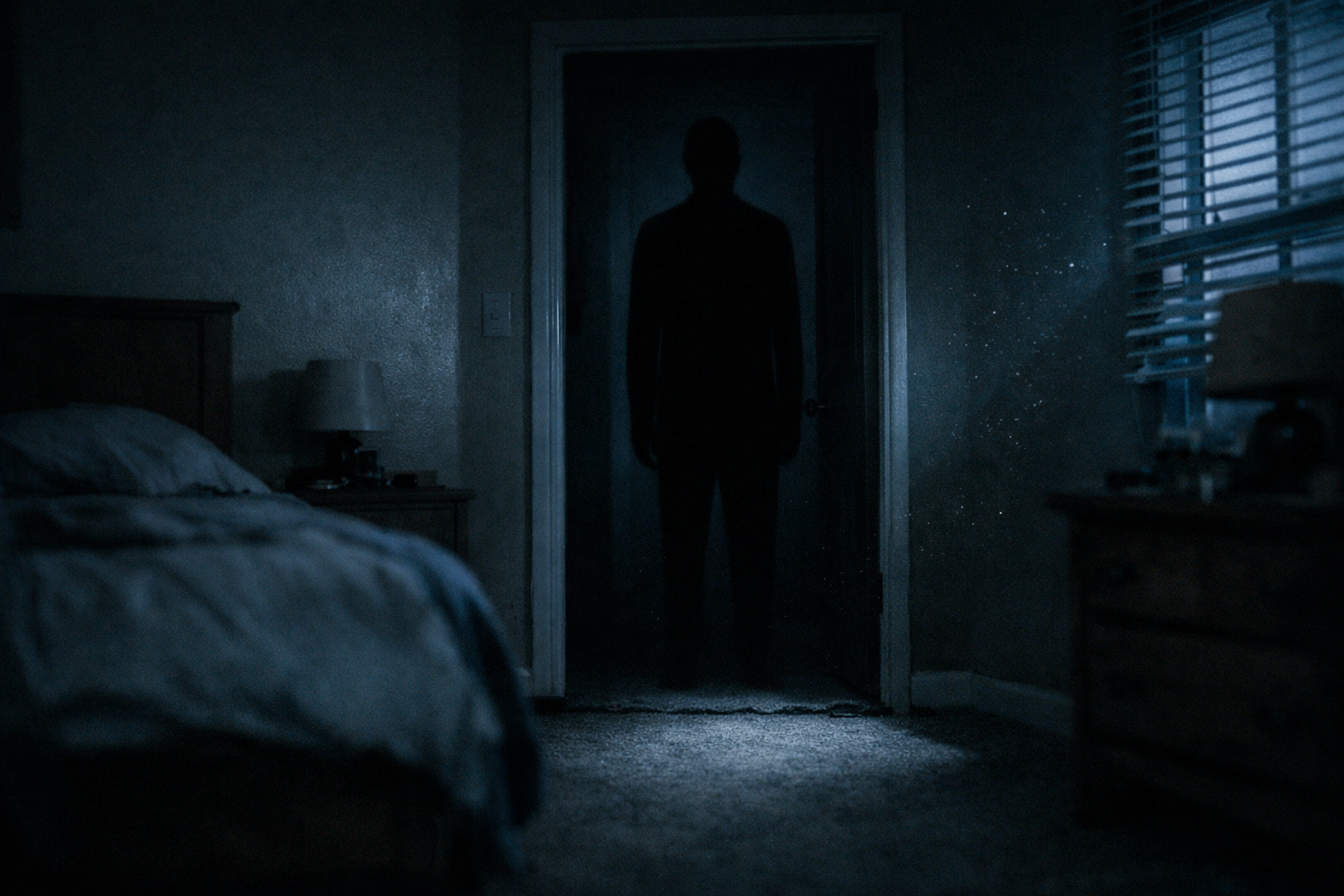
There was someone standing in the doorway to my bedroom. The hall behind was darker than the room, and whatever this was stood inside that darkness, framed by the cheap doorjamb as neatly as if I’d posed it there. Not moving. Not breathing, or else breathing in a way that didn’t claim air from the room. The shoulders were level and square. The head was held the way a person holds it when they know they are being looked at, the chin slightly notched as if to meet my eyes. It was wrong the way a missing stair is wrong: invisible until your foot finds it. Every small thing inside me went shallow and quiet at once.
Ordinary details kept me tethered. The carpet at the threshold, thin in the center and darker where feet never go. The light switch plate next to the door, faintly glossy. That little nail hole above it where a previous tenant must have hung something, forever a tiny mouth. My own robe hanging on the hook back of the door like a long, collapsed mood. I told myself, gently and desperately in the same breath, that this figure was a coat, a trick of the dark, the kind of shape produced by midnight and an old brain wired for danger it rarely meets.
The figure did not shift, not even with the minute movements the living can’t help. No weight changed from one foot to the other. No hand flexed. It was gobstopper stillness, a perfect flatness of intent that made my chest ache. I watched for breath. I watched for the chord of light from the window to show the shape of a face. There was none. It had the color of an off television.
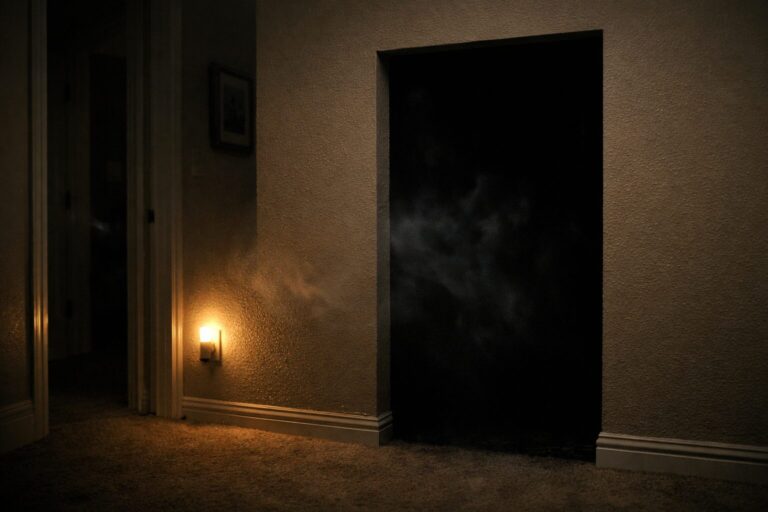
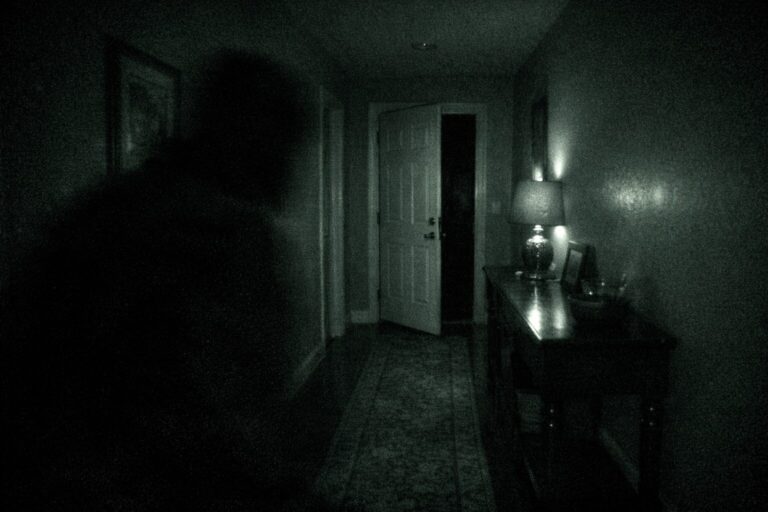
I thought about noises I hadn’t heard: no hinges, no door drag, no click of the latch. The hallway light had been off when I went to bed; it was off now. Still, there was the faintest gradient to that space, the kind your eye maps without thinking—the suggestion of picture frames on the wall, the slender bar of the console table I always stub my thigh on. The figure swallowed that gradient. It did not block it; it ate it. Wherever the outline of that thing lay, there was not dimness but absence. I could see darkness around it and darkness beyond, but within its edges it was an ink that did not share language with the rest of the room.
When I realized it wasn’t casting a shadow, something intricate in me came apart. The light from the window hit the outside of the doorframe and made a pale cuff along the wood. It made a sad river across the carpet toward my shoes. It picked out the corner of a book on the bedside table, giving the paper a little tooth. It did all of this as if the figure were not present at all. The floor at the threshold, where the darkness should have deepened toward me, was the same tone no matter where I looked—except for the figure itself, which insisted on its own version of black. I blinked hard. I rubbed my thumbnail against my ring finger until the friction stung. Nothing in the world of normal shadows behaves like a hole.
My first urge was to call out for someone, and I had to remember there was no one to call to. The thought came with a sharpness that embarrassed me, like catching myself waving at a mirror. I did not want to use my phone, the glow of it felt like calling a small animal into the road. I did not want to pretend sleep either, in case pretending was taken for permission. So I did the stupid, brave, helpless thing left and said, low and careful, “Hello.” I heard myself like it was another room over.
It did not answer. It did not lean or listen. Some part of me, a spare part you don’t think about until it falls off, began to ring. I had the taste of old coins under my tongue. I swallowed and it didn’t help. I had the very clear sense that whatever I said next would matter to it in a way that had been decided before I was born. That was the first time a piece of a name touched the back of my mind. At first it wasn’t letters; it was the shape of a sound, the way you know you’re about to sneeze and only the pressure exists.
I tried to wrench my thoughts toward catalogues of reason, to run through the tenants’ names in the building—Darla in 3B, the couple in 2A with the baby that sounded like a spring peeper, the quiet man across the hall who wore paint-stained shoes. None of them fit. The not-breathing at my doorway did not ask for any of theirs. I could hear the heating pipe ping once by the bathroom. I stared until my eyes watered and fat bright spots swam across my vision. Behind them the figure stayed the same.
I don’t know why my mouth made the shape it did. I don’t know why the name was there to be said at all. It came in as lightly as a draft and landed the way a dropped key lands, in that small echo a room knows. I said, “Ellis.”
The figure responded to its name as if I had tugged a thread tied to its spine. No step, not at first. No movement I could tell you in the language of joints: not a knee, not a shoulder. It was more like a tilt in the dark itself, an attention that turned and climbed up the outline it wore. I felt the move more than I saw it; the bed bowed under me and sprang back as if a large person had leaned and let up. The window’s blind ticked once with no wind. A near-silent click came from the hallway, as if a nailhead had decided to announce itself back into wood. I tasted soap again, but it was old soap from another place.
“Ellis,” I said again, and I hated immediately that I had. There is a way a word can be a kind of touch. The figure lengthened. The head, which had been expectant or patient or simply the idea of a head, tipped by a degree that filled my mouth with heat. I could not say if it tipped toward me or the name. The room in that second felt threaded to a very deep muscle somewhere beneath it. I realized I was showing my throat by how I was lying and I tucked my chin in, slow as apology.
“I don’t know you,” I tried, and the attempt came out like a draft through a crack. The figure’s reaction was the opposite of human courtesy. It did not make a noise to reassure me or step away to appear smaller. It pulled towards the doorway in a way that wasn’t retreat. It didn’t get shorter or further; it got less here. The thing that was most wrong, the absence inside its edges, was sliding away from this room, which somehow made me feel I’d called it from somewhere more permanent than any door.
When it was gone, it was gone so completely that I wondered if it had been a trick of my own needing: needed fear, needed company, needed story. The doorway was its regular frame again. I could see the cheap white wood opening onto a cheaper darker hall, the crooked runner that never lays flat, the thin crescent of kitchen light the street makes when it slips past the blinds. It was one second there and another second not, like someone taking off a hat I had mistaken for a head.
I lay awake until the clock admitted morning by changing to 5:00. The birds that belong to light arrived and performed their inventory. It occurred to me in that roundabout way of sleep-deprived minds that I had said a name out loud I did not know I knew, and that this might be the sort of thing people would say meant something. I stared at my phone until it stopped being an animal and was just a phone, then checked it. There were no missed calls, no messages. I typed Ellis into a search bar and erased it before the results could make the name belong to anything ordinary like a law firm or a restaurant two towns over.
I got up. The floor was cold in the unkind way that tells you the day you planned to have will not be the one you get. In the bathroom mirror I looked like I had been dragged under and left to dry. I ran water. I swallowed it. I went to the doorway to prove to myself the hall was only a hall.
It was quiet there. The runner was its same crooked mouth. The console table’s ridiculous wobble challenged gravity same as always. I touched the light switch as if I weren’t going to actually use it, and then I did, and the bulb made its worn coin of yellow. Dust showed itself where it always hides, a soft rime along the baseboards and the invisible tops of things that are only visible when you stand where you never stand. I rubbed my thumb along the trim and left a clean stripe. Nervous, I almost laughed, the ordinary insistently asserting itself against night’s bad story.
Something on the floor caught the light. The carpet at the threshold is worn down to its threads—a cheap putty color that shows every mistake. Just inside the bedroom, where my heel lands when I turn in, there was a patch where dust had settled into a thin grey film, exposed when I dragged an old storage bin back under the bed last weekend and hadn’t quite pushed it straight. In that dust, very neatly, very plainly, as if someone had steadied their hand on their knee and written with a finger, was the name I had spoken.
ELLIS. The E a little too tall for the other letters. The S like it had second thoughts halfway through. I knew I hadn’t traced it. My fingertips were as clean as my thumb, and I am not practiced at lying to myself about the things I touch. I crouched and felt the stupid prickle of tears push in that makes no sense when you’re only looking at a word. The carpet’s nap lifted where the line of the last letter crossed it. No footprints. No scuffing. Just the name, joined to the floor in the place between my room and where the darkness had waited.
I ran my palm over it and came away grey. I turned my hand and looked at the smear on my skin like there might be more in it than house. There wasn’t. The apartment breathed its tired morning breath around me: coffee I hadn’t made yet, the draft that always finds my ankle near the hall, the reluctant clunk in the pipe when a neighbor’s shower starts. Somewhere above me a child made a small triumphant sound at a cartoon. When I stood again and stepped back, I realized I’d put my foot in the wrong place. The heel mark I’d left sat half in the E and half out, like I’d crossed a line I didn’t see by inches.
I kept seeing it for the rest of the day wherever I walked in the apartment. Even after I vacuumed, even when the vacuum’s lines wrote their own geometry across the carpet, my eye supplied the letters back into the empty place as if something had stenciled them into the air. That night, when I turned out the bedroom light, I told myself it was just my brain giving shape where there was none. I lay on my side so I could see the doorway. The hall light was off. The night beyond was whatever it had always been. Still, when the hinge ticked softly in the kind of way a building shifts without company, some part of me that had made a word out of nothing waited for breath where there had never been any at all.