Missing 411: The Strange Pattern of National Park Disappearances
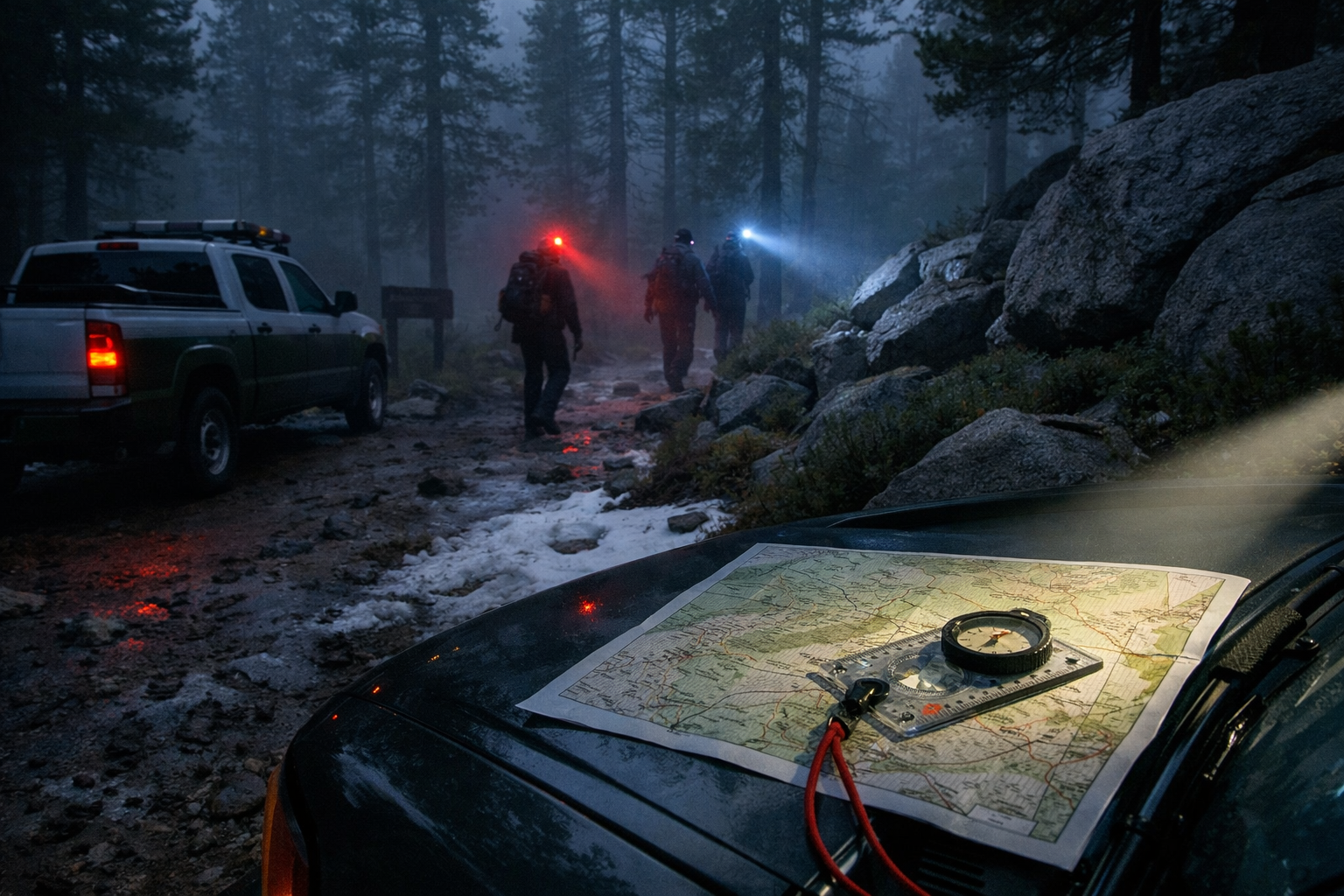
The trail goes quiet where the map turns pale—snow feathering a boot print to nothing, a canyon wind swallowing a name shouted into timber. Around a flickering ranger station light, searchers compare notes that refuse to agree. The phenomenon has a name now, a banner that gathers disappearances from America’s wild public lands into a single unsettling frame: Missing 411. It is the phrase that keeps echoing in late-night conversations and forum threads, suggesting the wilderness is holding onto more secrets than we know how to ask.
What keeps people talking is not a single case but a chord of recurring notes: sudden weather, odd terrain, clothing found incongruously placed, scent dogs losing the trail as if it ended mid-stride. Those who stand by the pattern argue that something underexamined—perhaps something extraordinary—threads these tragedies together. Others insist the thread is in the eye of the beholder, spun from confirmation bias and the chaos of rugged country. Between them is the vastness of the landscape and a stack of files that will never close.
So we shoulder through this thicket carefully. The claims are bold; the losses behind them are real. If there is a story in these vanishing trails, it starts with how the pattern took shape and why it persists in the American imagination.
Background and origins of Missing 411
The label was popularized by former police officer David Paulides, who began compiling accounts of unusual disappearances in wilderness settings more than a decade ago. His project zeroed in on national parks and other remote outdoor spaces, where a person can step off a trail and enter a maze of ridgelines, boulder fields, and weather systems that move like living things. Through books and documentary films, he organized cases into regional clusters and highlighted recurring motifs that he argued were difficult to explain with ordinary misadventure alone.
From the beginning, the Missing 411 framing sat at the confluence of true crime, backcountry search-and-rescue lore, and Fortean speculation. Paulides emphasized places where map pins accumulated—popular parklands like Yosemite and the Smokies—and noted how official recordkeeping could be inconsistent from one jurisdiction to another. The friction between public curiosity and institutional process only increased the mystery’s profile, as readers and viewers debated whether the pattern revealed a deeper phenomenon or merely the labyrinthine nature of wilderness reporting.
The Missing 411 central claims

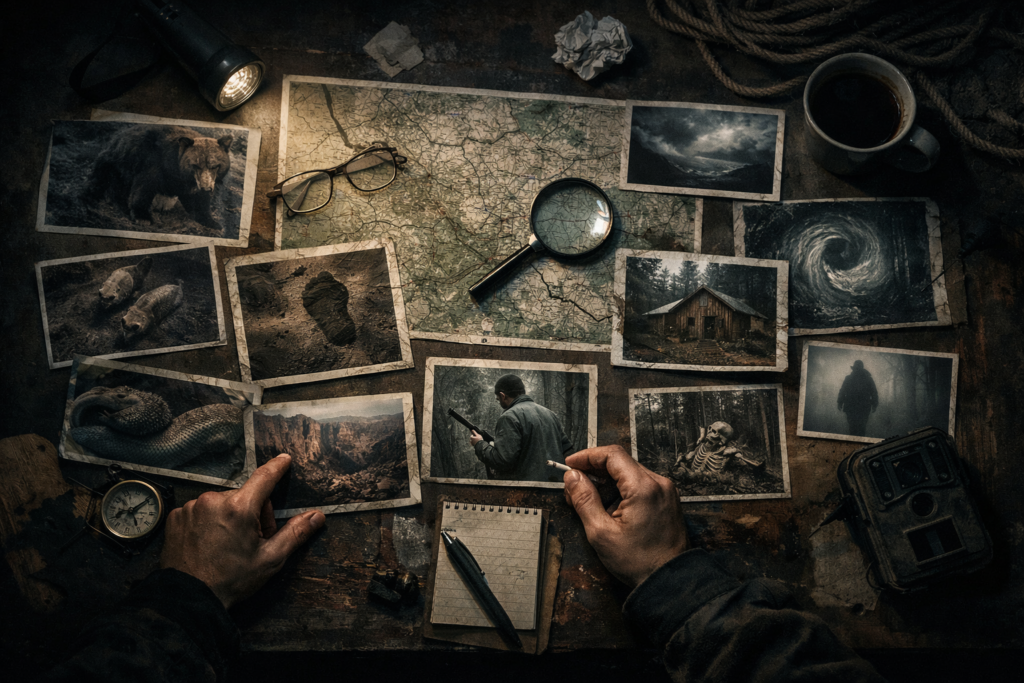
The central claims revolve around clusters and consistencies that, taken together, suggest to adherents a category apart from typical lost-hiker scenarios. Frequently cited motifs include sudden storms that blow in just as a person vanishes; recoveries in unlikely locations, sometimes at higher elevation than where the subject was last seen; and clothing or gear found in ways that appear incongruent with hypothermia or panic alone. In some narratives, scent dogs reportedly fail at points that defy straightforward explanation—gravel slides, creek crossings, or bare slabs where scent could dissipate unusually quickly.
Geography plays a starring role: boulder fields, bodies of water, and steep drainages recur in case summaries, as do edges where maintained trails give way to less-traveled routes. Time of day and age groups are likewise noted, with certain cases involving children or experienced outdoorspeople standing out for the improbability of their outcomes. Supporters argue that these repeated elements form a pattern beyond coincidence; critics consider them the residue of assembling disparate tragedies under a single umbrella.
Key figures behind Missing 411
David Paulides is the project’s chief compiler and advocate, drawing on open-source material, interviews, and public records. His volumes and films became a conduit for renewed attention to long-cold cases, prompting families, retired rangers, and search-and-rescue veterans to revisit old files. Online, cartographers and enthusiasts created unofficial maps that visualize supposed clusters, while podcasters and late-night hosts gave the narrative cultural lift.
Countervoices include statisticians, SAR trainers, and journalists urging caution. They point out that the United States’ national parks attract millions of visitors yearly, that rugged terrain defeats even seasoned navigators, and that clustering can emerge anywhere large numbers of people overlap with hazards. Officials have also noted that “missing persons” is not a singular database in the backcountry context but a patchwork of county sheriffs, park services, and volunteer teams—making comprehensive tallies difficult and fueling suspicions where gaps appear.
Evidence and alleged evidence in Missing 411

At the heart of the file are case narratives—some world-famous, others obscure. The disappearance of a child during a family outing in a well-visited park; an experienced solo hiker whose last known point was a familiar junction; a day climber whose route should have kept them well within shouting distance. The details that push these stories onto the pattern list vary: a forecast gone abruptly wrong, tracks that seem to end where visibility should have continued, or clothing recovered in a way that raises more questions than it answers.
Reports of search dogs losing the trail at water crossings or talus are common, though SAR professionals note that scent work can be thwarted by swirling winds, precipitation, or contamination from heavy foot traffic. A number of cases reference bodies found in locations previously searched, a known phenomenon in large-scale operations where terrain and vegetation shift, and where “grid” lines can only ever approximate coverage in three-dimensional space.
The pattern conversation sometimes ranges beyond U.S. borders, linking in spirit to the Dyatlov Pass Incident in the Urals—a January 1959 trek that ended in deaths framed by baffling injury patterns and contested reconstructions. While Dyatlov sits in a separate historical and geographical context, it serves as a kind of parable: in the backcountry, the intersection of environment, human decision-making, and investigative limits can produce enduring puzzles that resist singular explanations.
Skeptical explanations for Missing 411
Critics argue that the series’ clusters can emerge from how the cases are chosen and presented. In statistics, the Texas Sharpshooter problem describes drawing a target around bullet holes after the fact; applied here, skeptics suggest that selecting for certain features (water nearby, difficult terrain, sudden weather) in landscapes defined by those very features will yield a “pattern” even when disappearances are unrelated. They also note that patterns like losing clothing can be consistent with paradoxical undressing in hypothermia, and that uphill travel by disoriented individuals—sometimes cited as counterintuitive—has been documented.
Practicalities complicate everything: in the backcountry, an hour’s delay can widen the search area exponentially; a storm can erase tracks and spoors; predation and scavenging can scatter remains; and vertical terrain can conceal a person in jagged relief only a few steps off a trail. Recordkeeping oversights, jurisdictional seams, and the human need for narrative structure can do the rest. What sounds extraordinary at a distance may condense into hard-to-stomach, very ordinary loss under close review—though not always, and not for every case.
Why Missing 411 persists
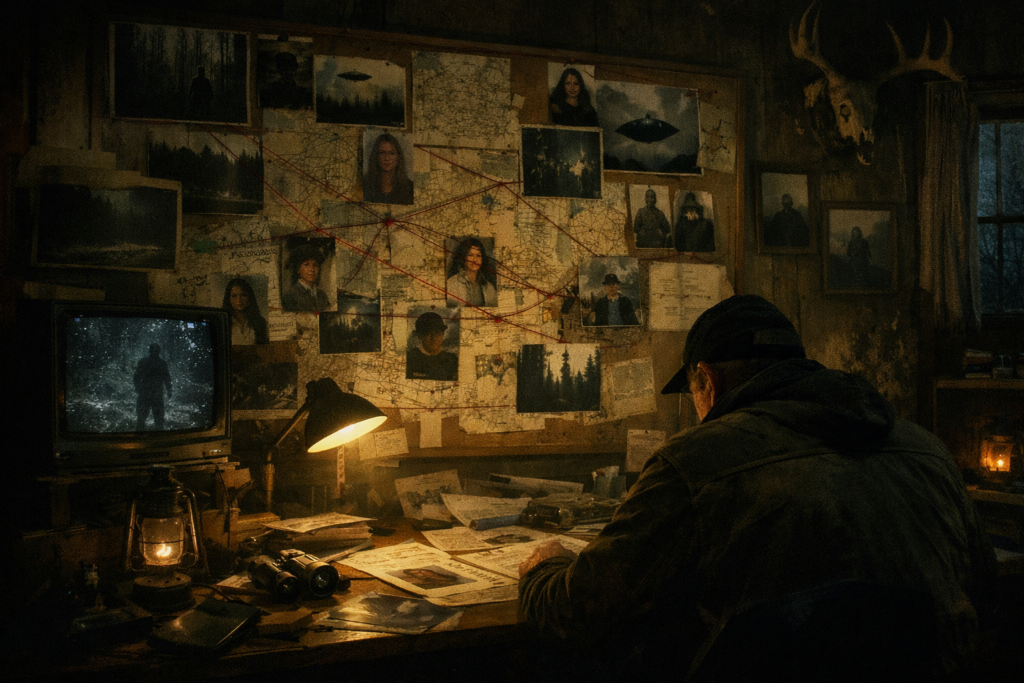
America’s relationship with its national parks is paradoxical: they are both sanctuary and stage, an invitation to pilgrimage and a reminder that nature is not obliged to our plans. Disappearances within these landscapes are indelible because the settings are themselves iconic—the granite faces and deep forests we imagine we know, now paired with names we cannot put to rest. The framework endures because it offers a way to talk about uncertainty, and because some case elements stubbornly resist tidy closure.
Digital culture amplifies the effect. Social platforms organize “mystery” as community, circulating maps, timelines, and speculative models that, together, suggest meaning even where the evidence is ambiguous. Families seek justice and answers; readers and viewers seek coherence. In that meeting of needs, the story seldom fades.
Daily Paranormal Analysis
The story’s popularity stems from a potent blend: the romance of wild lands, the authority of a former lawman presenting archival work, and human psychology’s appetite for pattern recognition. Believers find the case clusters compelling because they present recurring motifs across time and space—peculiar recoveries, weather and terrain coincidences, and alleged tracking anomalies that feel too synchronized to dismiss as random noise. This view places the backcountry as a liminal zone where known hazards may not suffice to explain what occurs.
Skeptics doubt for reasons both scientific and procedural. They point to selection effects, incomplete data, and the inherent bias toward vivid anomalies over baseline probabilities. They remind us that the national parks are among the most visited wild areas on earth, yet the rate of permanent disappearance is low compared with overall visitation, and that intuitive “clusters” often dissolve under controlled statistical scrutiny.
Connections to similar cases—like Dyatlov Pass, the so-called Bennington Triangle lore in Vermont, or other remote-wilderness enigmas—grant the narrative a lineage within Fortean studies. Each suggests a boundary where environment and uncertainty compound. As a framework, Missing 411 remains unresolved: a compelling lens to some, a distorting one to others. The truth likely spans multiple explanations, case by case, ranging from the brutally natural to the not-yet-understood.
Conclusion
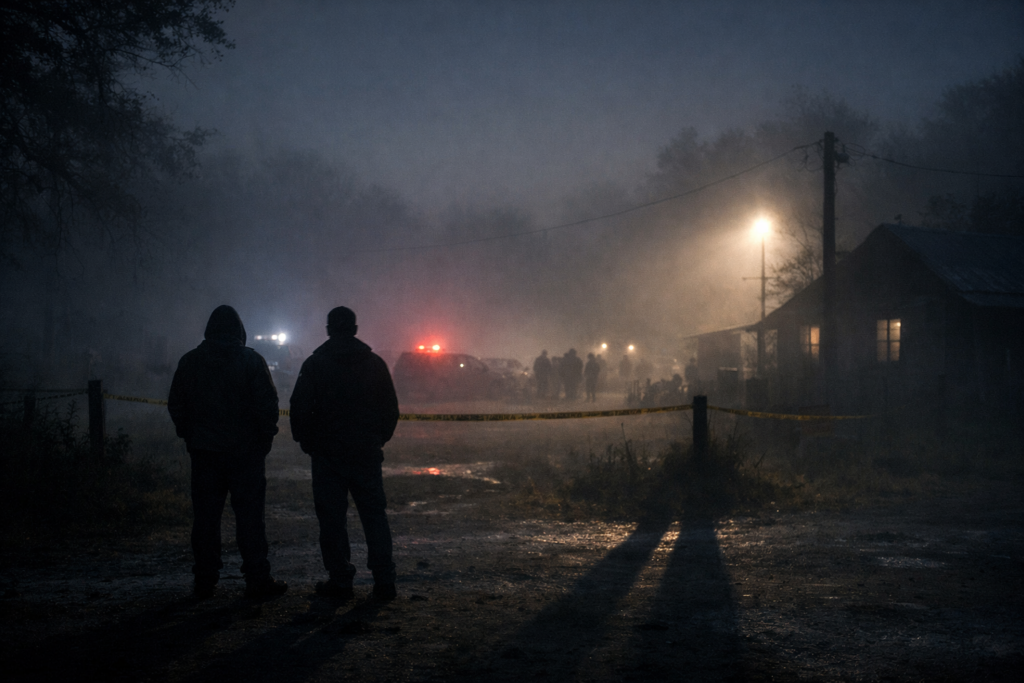
Standing at a trailhead at dusk, you can feel why the question refuses to close. The forest, the talus, the weather—each is its own language, and even the most seasoned people mishear them. Families who never received answers deserve better data, better searches, and better humility from all of us who discuss these stories. And for those who find themselves drawn to the edge of the map, perhaps the most honest ending is also the oldest: respect the wild, keep asking careful questions, and accept that some paths, for now, run out where the paper white of the unknown begins.