The Roswell Incident: How One Crash Story Changed UFO History
Wind moves across the high plains of New Mexico and seems to bring back a single refrain: something fell here, and the world has argued about it ever since. To those who return year after year, the Roswell Incident is not only an event but a fulcrum—where official secrecy, Cold War haste, and public imagination collided. At the heart of it is a claim that a craft not our own came down in 1947, was quickly recovered, and then explained away. Our task is to separate what can be known from what is only repeated, and to ask why this crash, more than any other, reshaped the entire UFO conversation.
Into the Desert: First Echoes of the Roswell Incident
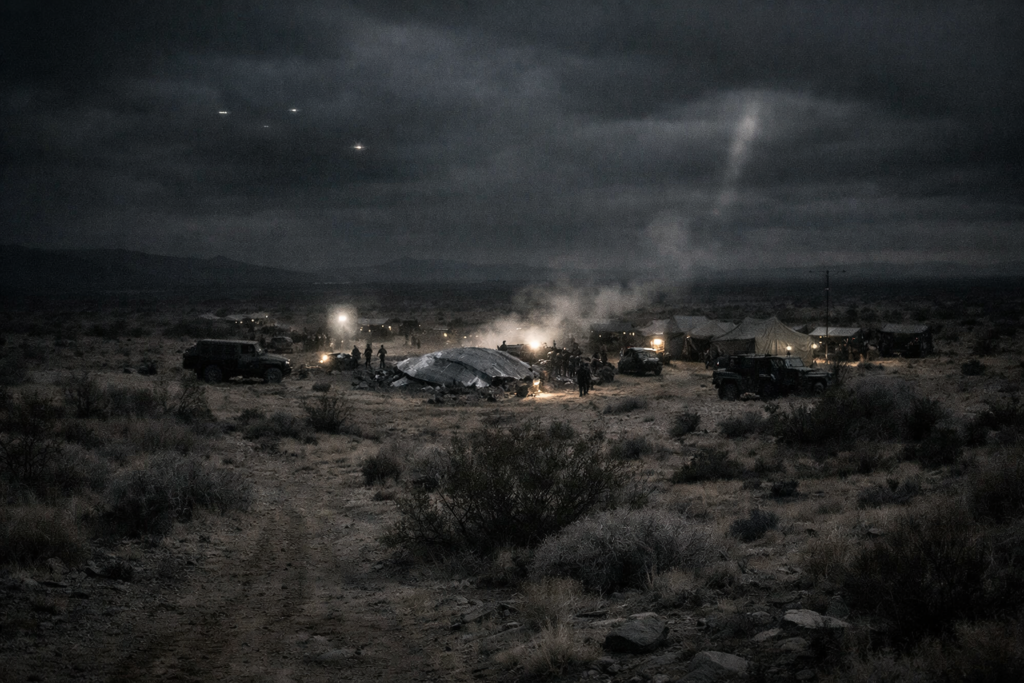
In the summer of 1947, with headlines already buzzing about mysterious “flying discs” across the nation, a rancher northwest of the small town of Roswell found an unusual scatter of debris. Military personnel from a nearby air base soon arrived, and what followed set the template for decades of controversy. A brief, remarkable press release announced a recovered “flying disc”—a phrase that leapt from local wires to front pages—and just as swiftly, came a reversal: it was only a weather balloon.
The whiplash of those hours proved decisive. In the gap between extraordinary claim and mundane correction, a story took hold. Was it a simple misidentification in a jittery summer, or a curtain tumbling closed over something extraordinary? The boundary between error and concealment would become the central battleground.
Background and Origins of the Roswell Incident
To understand Roswell, place it in context. The postwar United States was testing new technologies, watching the sky during the earliest moments of the Cold War, and coping with a sudden national wave of “disc” sightings. The Army Air Forces were still fine-tuning communications, and secrecy was a default posture.
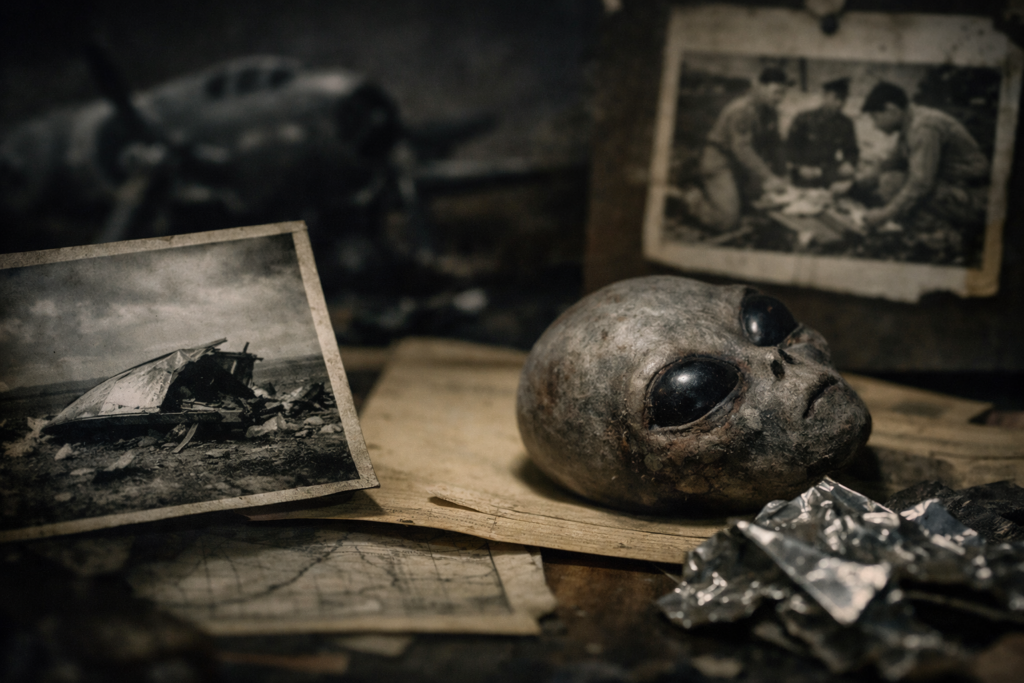
Against that backdrop, the Roswell case began simply: debris found in remote country, retrieved by base personnel, publicized, then downgraded. Only later, as authors, investigators, and conferencegoers revisited the event, did it evolve into a core narrative of crash retrieval lore, complete with allegations of nonhuman bodies, sealed evidence, and a top-to-bottom cover-up.
The Central Claims of the Roswell Incident
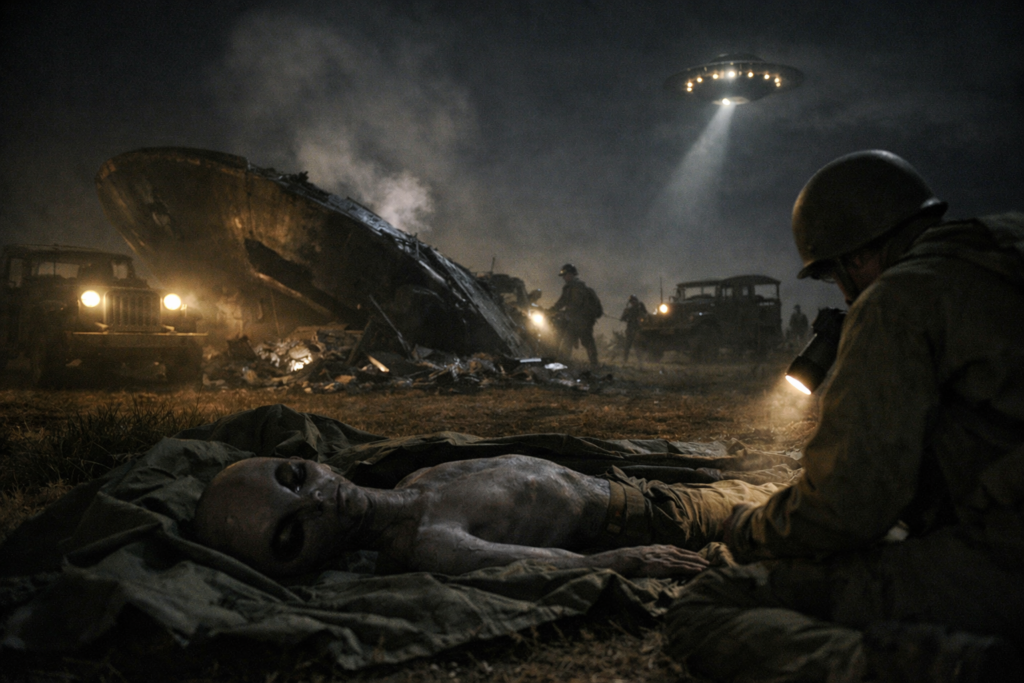
The central allegations are stark. First, that a craft of unknown—possibly nonhuman—origin came down on the New Mexico plains. Second, that material recovered from the site exhibited exotic properties: foil-like metals that “remembered” their shape, strange markings on beams, and debris unlike any conventional balloon train. Third, that bodies were recovered from a secondary location and quietly transferred to military custody.
To supporters of crash retrieval claims, those points are reinforced by patterns familiar across historical UFO cases: quick military response, restricted access, and evolving public explanations. To skeptics, the same pattern signals a summer of confusion, an overzealous press release, and a later accretion of myth layered onto a kernel of prosaic truth.
Key Figures and Documents in the Roswell Incident
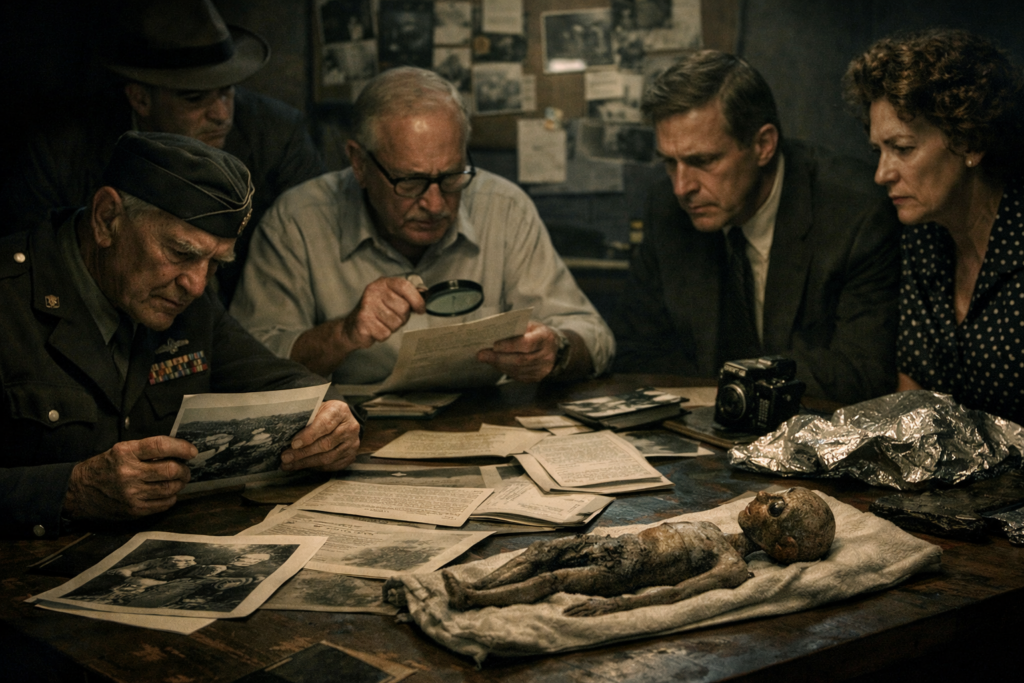
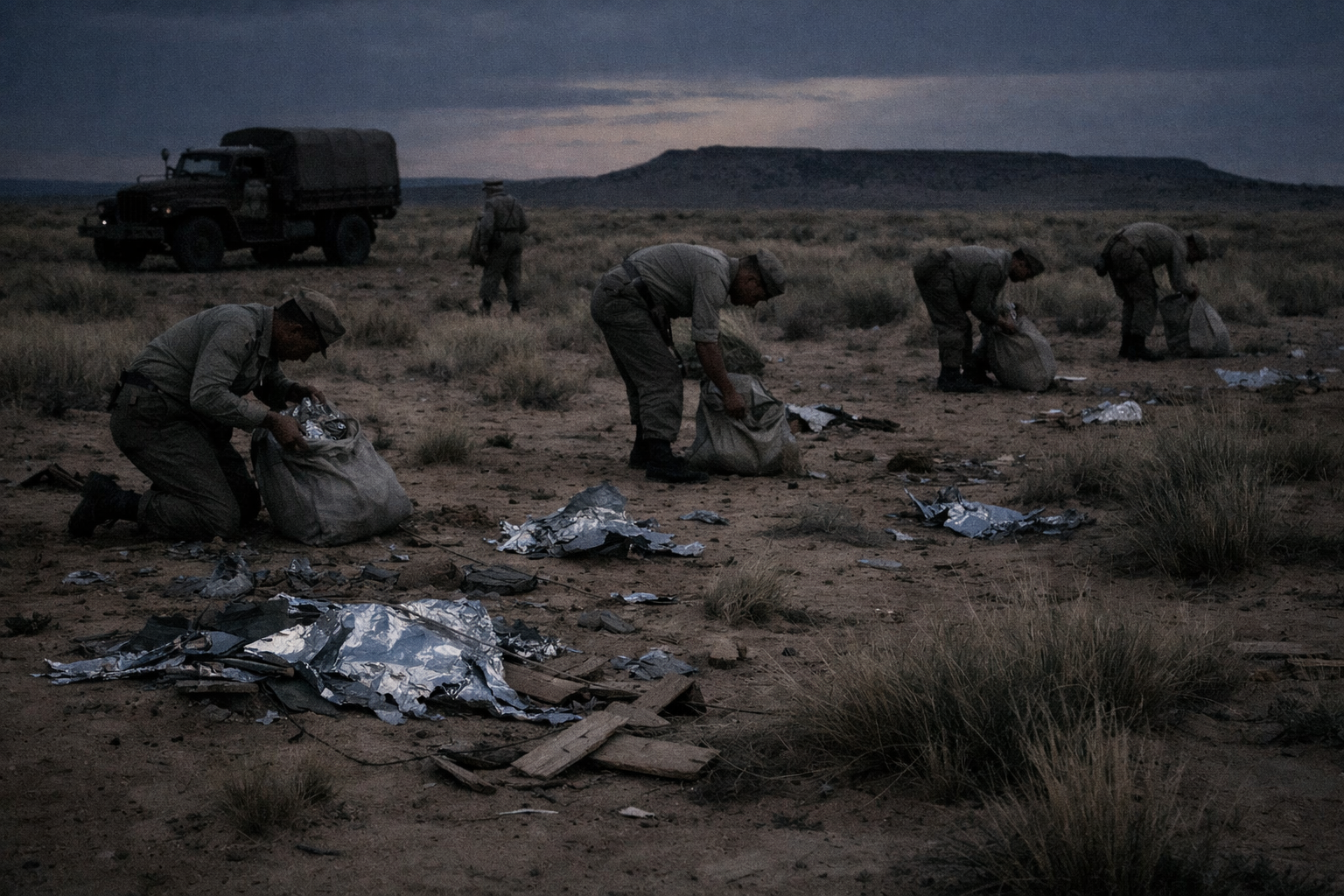
No case endures without paper. The chain begins with the base-issued press announcement reporting a captured “disc.” By the next day, photographs circulated of military officials displaying balloon debris—reflective foil, balsa-like struts, and radar reflector components—meant to settle the issue. An FBI teletype referenced material forwarded for analysis, adding an official echo to the word “disc” before the retraction.
Decades later, the government would weigh in anew. In the 1990s, the Air Force published reports attributing the debris to a then-secret program known as Project Mogul: a series of high-altitude balloons equipped with instrument-laden trains designed to detect Soviet nuclear tests. A subsequent report attempted to address body claims by pointing to late-1950s anthropomorphic-dummy drops—an explanation many found unpersuasive given the timeline.
Peripheral to the documentary trail is a constellation of disputed materials: alleged MJ-12 papers suggesting a covert UFO oversight group, and private testimonies gathered long after the fact. Critics argue the MJ-12 documents show hallmarks of a hoax, while believers see them as a breadcrumb trail. Freedom of Information Act requests yielded thousands of pages on many UFO topics, but no unambiguous artifact or memorandum that conclusively resolves the Roswell mystery.
Evidence and Alleged Evidence in the Roswell Incident
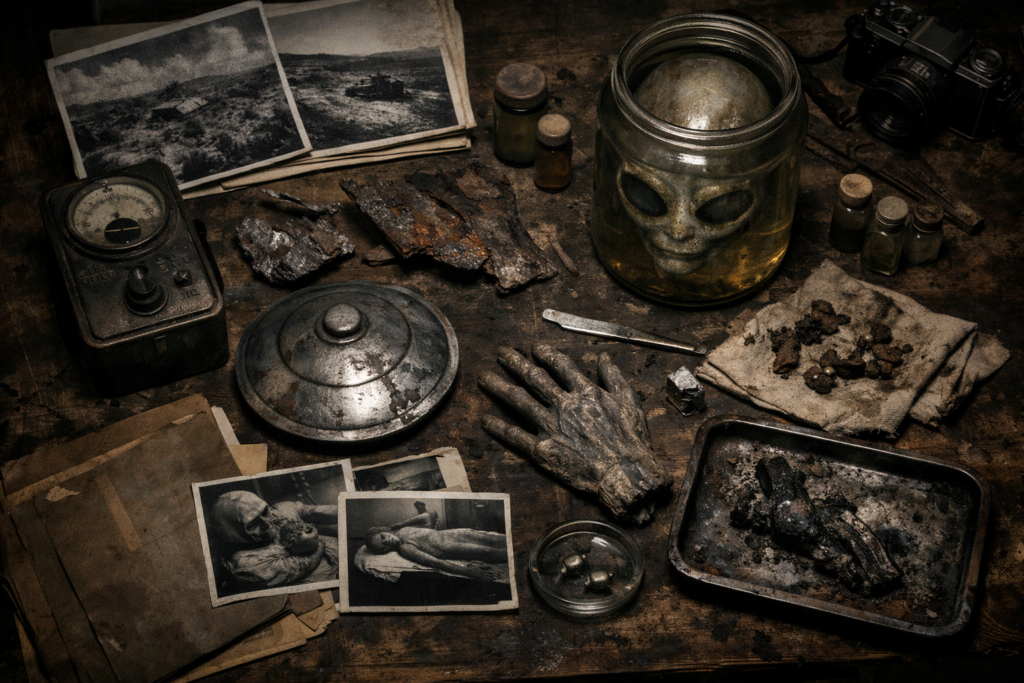
The physical core of the case is deceptively simple: a scattered field of light materials, later displayed as balloon debris. The official narrative aligns the components—foil, sticks, and reflective targets—with balloon-borne radar reflectors common to the era and integral to Project Mogul’s arrays. The government’s position is that secrecy around Mogul, rather than extraterrestrial technology, drove the initial confusion.
Complicating this are enduring claims that the material handled by witnesses behaved unlike any ordinary foil—a “memory metal” that returned to its exact form. Others cite reports of unusual symbols on beams. Roswell proponents argue that the speed of the military’s retrieval and the initial “disc” language indicate something more. Skeptics respond that human memory is malleable, especially when recollected decades on, and that mass media retellings can shape the details people come to believe they saw.
Photographs taken shortly after the retraction show officials with mundane debris. If that was a substitution, as some allege, the switch has never been demonstrably proven. If it was the actual material, then the crash was precisely what the later reports claimed: a balloon and reflectors from a classified project misidentified in a moment of heightened national attention.
Skeptical Explanations for the Roswell Incident
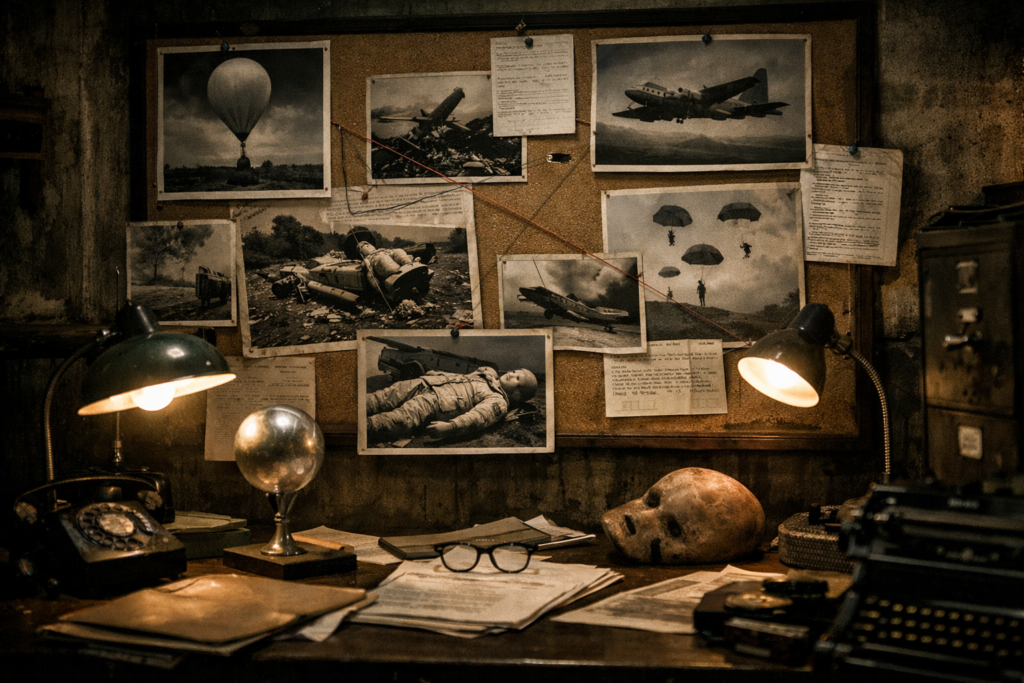
From a skeptical vantage, the Roswell story is a study in bureaucratic missteps during a feverish season. The base’s initial press release was premature and poorly vetted. Once higher command clarified matters, the retraction landed with embarrassment—and a hint of intrigue that subsequent decades would amplify.
Project Mogul provides a mechanistic explanation consistent with known materials, capabilities, and secrecy protocols. In this view, later elaborations about bodies and a second crash site emerged from conflation: memories of unrelated aircraft incidents, later testing programs, and the natural human tendency to fill narrative gaps. The alleged MJ-12 papers are dismissed by many researchers as anachronistic and internally inconsistent. In short, the skeptical case is not that nothing happened, but that what did happen was entirely terrestrial—and then transformed by time, media, and motivated belief.
Why the Roswell Incident Persists
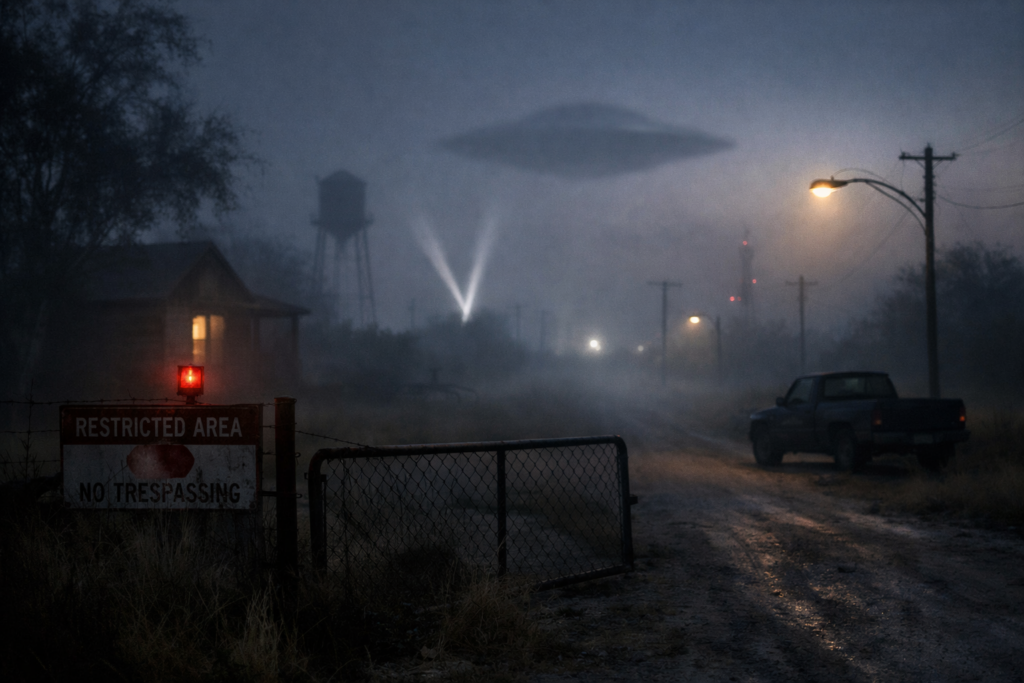
Roswell endures because it offers a complete mythic arc: a fall from the heavens, a swift recovery, a cover story, and whispers of hidden bodies. The narrative aligns with broader expectations—if something extraordinary crashed, of course it would be locked behind gates and classifications. The crash site’s remoteness, the military’s undeniable presence, and the era’s secrecy culture are all fertile ground for legend.
It also persists because it connects to larger currents in UFO culture: hopes for disclosure, debates about government transparency, and the gravitational pull of places like Area 51 in the public imagination. The case has been revisited in countless books, documentaries, and conferences, becoming the touchstone against which other crash claims—from Kecksburg to alleged retrievals overseas—are measured.
Daily Paranormal Analysis
Why this story, and why for so long? The Roswell crash arrived at a hinge point in history: America’s transition from world war to Cold War, with new technologies in the air and a fearful eye on the horizon. A brisk sequence—discovery, recovery, triumphant proclamation, and embarrassed retraction—generated a durable narrative vacuum. Into that vacuum flowed competing frameworks: Mogul and miscommunication on one side, nonhuman craft and clandestine recovery on the other.
Believers find it compelling because elements line up with crash retrieval expectations: immediate military action, reported unusual debris behavior, and a classified program whose existence explains secrecy but not, in their view, the “disc” language and body claims. Skeptics remain unmoved for equally clear reasons: the physical evidence on record resembles balloon-borne radar targets; the government has now provided a documented program that fits the materials; and later accretions look like classic witness contamination over time.
Roswell’s popularity is also structural. It is teachable, televisual, and endlessly debatable. It acts as a funnel, channeling topics like MJ-12, Area 51, and broader UFO disclosure into a single, iconic narrative. In that sense, it is less a single event than a scaffolding for the UFO era—a place where both sides can point, argue, and recruit the undecided.
Is the mystery resolved? Officially, yes: Mogul for the debris; testing programs for later body stories. Culturally, no: absent a verifiable artifact or unambiguous document, the case remains a contested landmark—central to UFO history and still capable of drawing new adherents.
Roswell Incident: What Remains
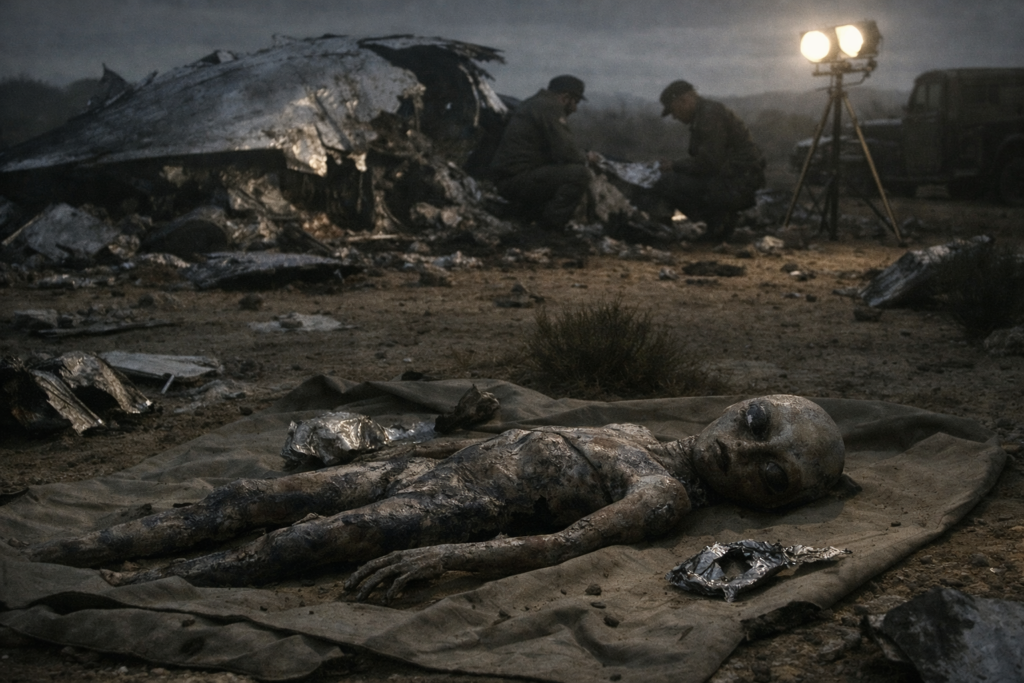
What endures at the edge of the desert is a parable about knowledge, secrecy, and belief. If the official explanation is complete, then a short-lived miscommunication wrought a legend. If even a small fraction of the alternative claims is correct, then the crash at Roswell was a historic encounter quickly folded into classified channels.
Between those poles lies the quiet core of the story: scattered materials under a high New Mexico sky, a press office that moved too quickly, and a public that would never again look at odd wreckage without imagining what else it might be. Until a definitive artifact or document surfaces—something that can be weighed, dated, and independently verified—Roswell will remain the touchstone of crash retrieval claims, a case that refuses to be buried beneath the sands of the plains that birthed it.