The Mothman of Point Pleasant: 50 Years of the Legend
The Ohio River runs quiet after midnight in Point Pleasant, the floodwall murals dim silhouettes against the water. In that hush, old stories stir—of something more than a bird skimming the treetops, of eyes like coals watching from the industrial ruins north of town. The Point Pleasant Mothman is the name history settled on, a label that hardly captures how those months in the mid-1960s frightened a community and then fused to a tragedy no one saw coming.
Half a century later, the questions haven’t softened. A tall, gray, winged figure with burning red eyes was reported by multiple witnesses in 1966 and 1967, often near the old “TNT Area” outside town. Weeks before Christmas of ’67, the Silver Bridge collapsed, taking dozens of lives and fixing the legend in American memory. We reopened the case file—not to romanticize, but to sort witness patterns, the terrain, the paper trail, and the best competing theories.
Case File: Point Pleasant Mothman — Incident Summary
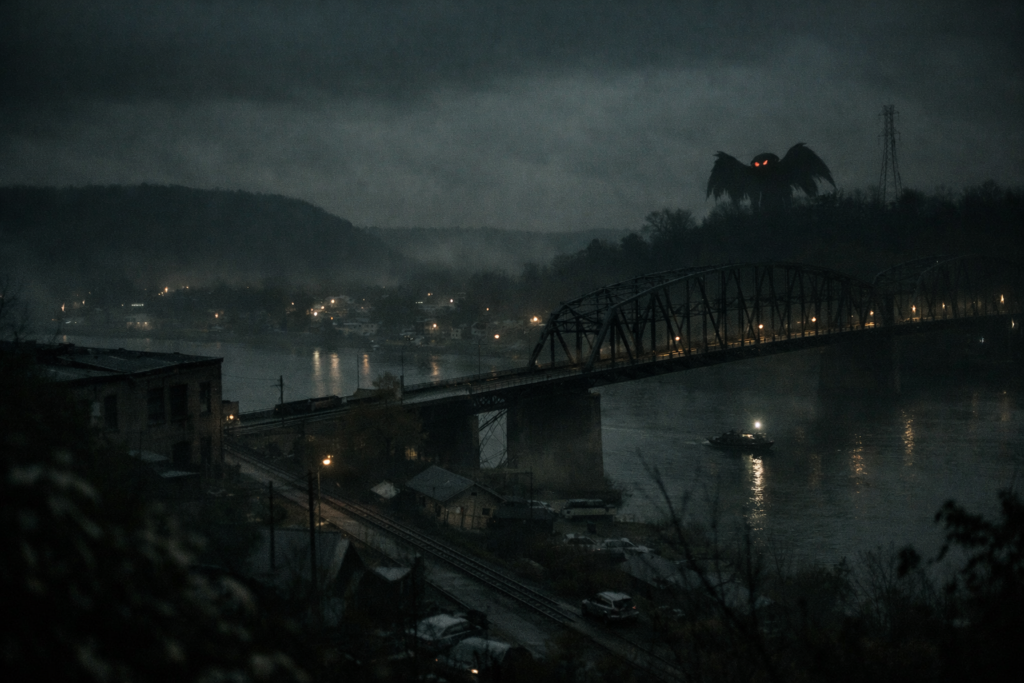
Between late 1966 and late 1967, residents in and around Point Pleasant, West Virginia, described encounters with a large, winged humanoid. The entity was usually reported at night, often seen gliding rather than flapping, reportedly able to match the speed of cars on isolated roads and appearing to show interest in headlights. A persistent detail across accounts: glowing red eyes set into a shadowed, manlike figure with expansive wings.
The cluster of sightings occurred prior to the 1967 collapse of the Silver Bridge over the Ohio River. Though no formal investigation ever proved a direct link between the creature and the disaster, the temporal proximity fueled a powerful association in public memory. Journalist and investigator John Keel chronicled the period in The Mothman Prophecies, stitching together local reports, phone anomalies, and broader paranormal threads that helped elevate the story from regional case to modern myth.
Point Pleasant Mothman — Regional Background
Point Pleasant sits at a confluence of water, rail, and roadway—an old frontier town with a strategic bend in the river and bottomland woods stretching north. The so-called TNT Area, a decommissioned World War II munitions site of bunkers and lagoons, forms a patchwork of wetlands and second-growth forest that later became a wildlife management area. It is an easy place to get lost, and an easier place for sound and shadow to play tricks.
Today, the Point Pleasant Mothman is also a tourism anchor. The town hosts an annual Mothman Festival and maintains a museum recounting the chronology of reports, the bridge collapse, and the national media wave that followed. Exhibits include press clippings, sketches, and Keel’s narrative footprint, which reframed the sightings as part of a broader landscape of winged humanoids and strange visitations.
Point Pleasant Mothman Historical Sightings
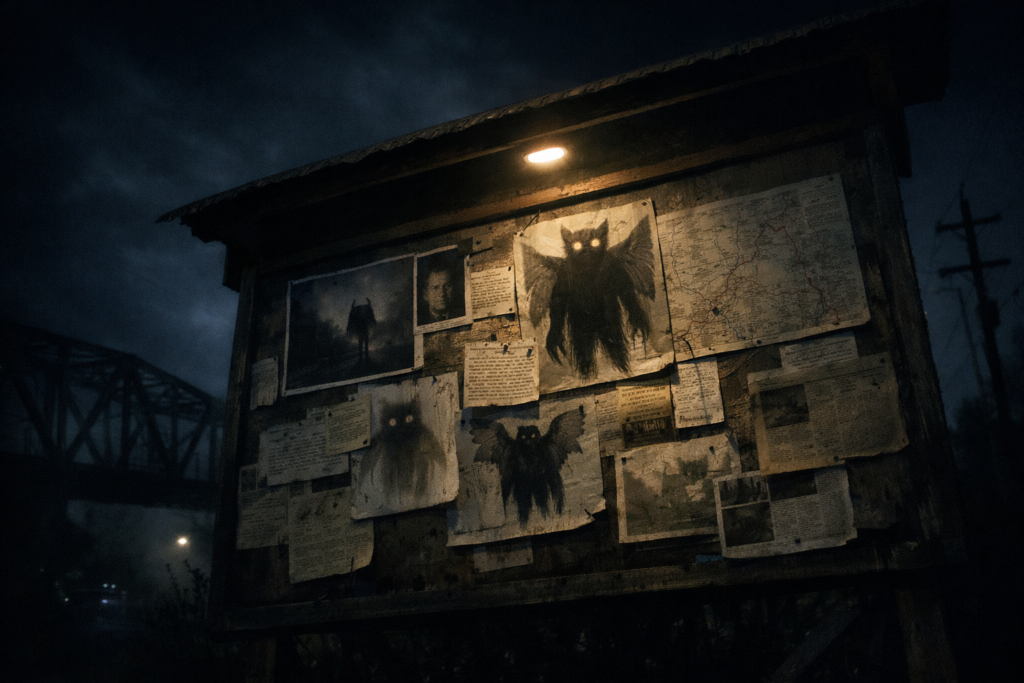
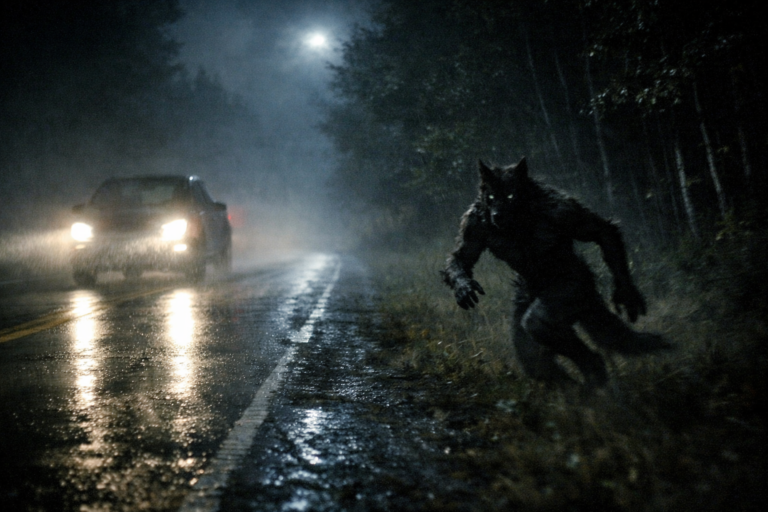
The timeline begins in the mid-1960s, with early mentions of a birdlike shape near cemeteries and along backroads. As 1966 turned to 1967, reports clustered near the TNT Area. Couples returning from late drives described something lifting from a roadside ditch, unfurling wide, batlike wings, and then gliding above their car. Others later recounted sudden fear—reported as an involuntary panic—when they locked eyes with a figure whose red gaze seemed to glow rather than reflect.
Local law enforcement received calls, and newspapers ran headlines that amplified both curiosity and dread. As stories spread, additional reports surfaced: a form perched on industrial structures, a shadow crossing a clearing with no visible source, and, in some tellings, interference with radios and telephones. Keel arrived, documented claims, and ultimately tied the wave to a larger patchwork of paranormal happenings—menacing “men in black,” unexplained lights, and premonition threads—though such elements remain among the most disputed facets of the narrative.
Witness Reports from the TNT Area
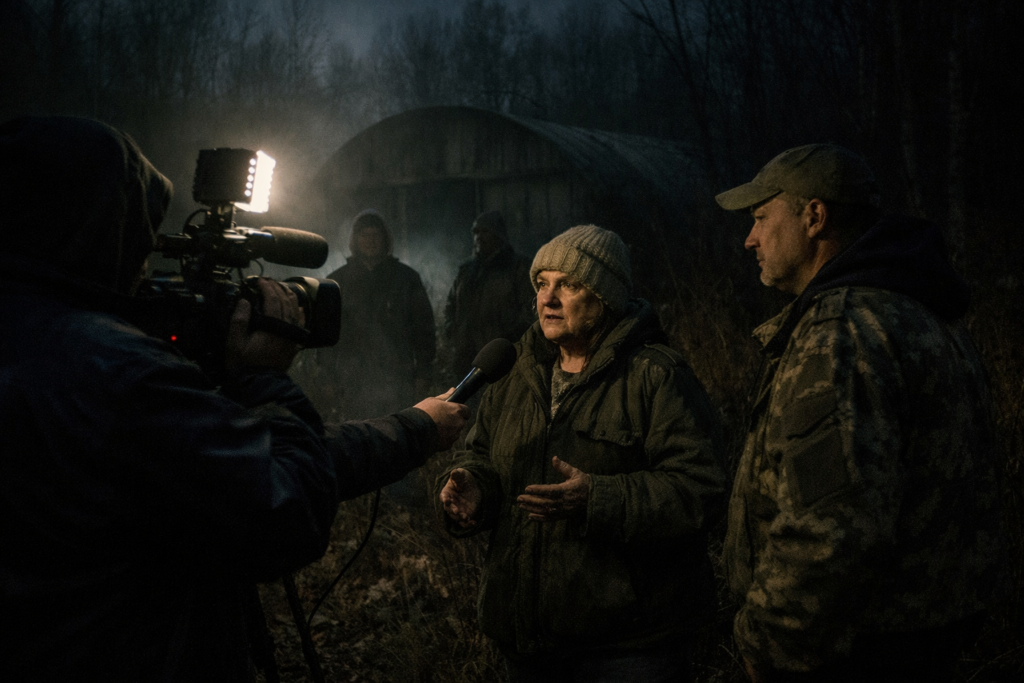
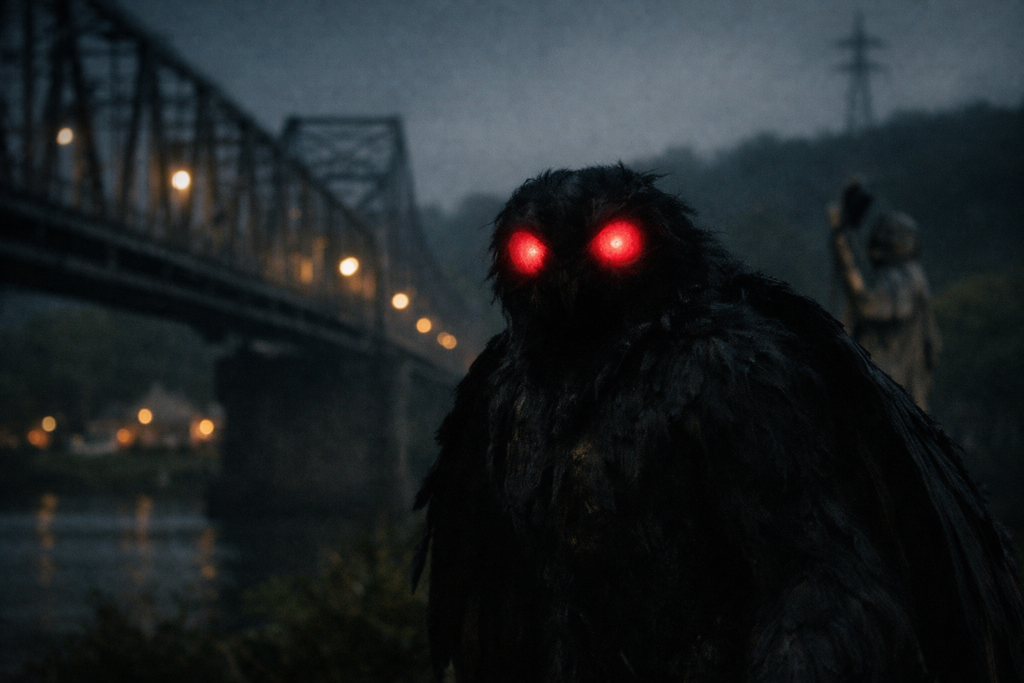
Across recollections, several motifs recur. Witnesses describe a humanoid shape standing taller than an average man, with unusually broad wings and a head either set low into the shoulders or not readily distinguishable in silhouette. The eyes—reported as red and luminous—are the most consistent detail, visible from surprising distances and provoking visceral fear.
Movement is another constant theme. The figure was said to launch awkwardly but to glide with ease, sometimes pacing vehicles along straight stretches of road, then breaking off into the dark without a trace. Close observers rarely mention a beak, which problematizes bird-based explanations, but low light, stress, and the element of surprise complicate physiological descriptions. Reports span seconds to minutes and are typically nocturnal, making reliable size estimates and depth judgment particularly difficult.
Physical Evidence in the Case

For all the ink spilled, physical evidence remains thin. No feathers attributable to a non-avian creature surfaced, no verifiable prints not explainable by known animals, and no clear photographs of investigative value. Newspaper archives, police log notes, and hand-drawn sketches are the strongest artifacts, supported by the topography of the TNT Area itself—bunkers, water channels, and long sightlines that can foster optical illusions under headlights.
Audio or electromagnetic claims also lack reproducibility. Some locals recalled radio static or telephone anomalies in the period, but such disturbances are common in rural infrastructure of the era. Absent a body, DNA, or lasting impressions, the case occupies a realm where testimony weighs heavily and is tested against environment and human perception rather than forensics.
Competing Theories and Misidentifications
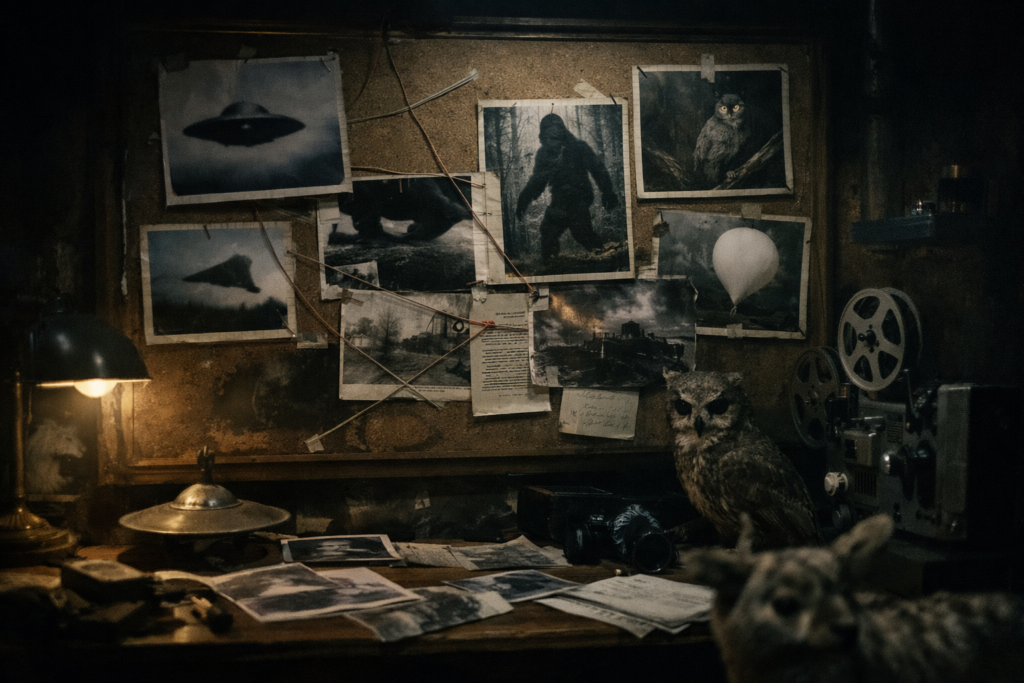
The skeptical camp often begins with birds. Sandhill cranes—tall, gray, and capable of emitting unsettling calls—are frequently cited, as are large owls like the barred or great horned, whose eye-shine can appear red under certain lighting. Migratory patterns can bring unusual species through the Ohio River Valley. At night, a startled crane lifting from a ditch, wings throwing a sizable shadow, might appear monstrous to a driver already primed by headlines.
Proponents counter that cranes have distinct beaks and leg profiles not commonly described by witnesses, and that the reported “no-neck” silhouette and eye shine seemed self-luminous rather than reflective. Some note that the creature’s gliding and car-pacing behavior exceeds known bird responses, though air currents and vehicle slipstreams can produce surprising avian trajectories. Beyond zoology, other frameworks include mass suggestion fueled by press coverage, Cold War anxieties rendering the unknown as a winged sentinel, and broader folklore of “winged humanoids,” including international tales and modern reports sometimes folded alongside Dogman or thunderbird lore.
Daily Paranormal Analysis
The story became popular for reasons both narrative and tragic. A spate of eerie sightings in a distinctive industrial wildland, followed by a catastrophic bridge collapse, created a before-and-after line that folklore thrives on. John Keel’s The Mothman Prophecies gave the episode structure—tying it to a larger cosmos of oddities and suggesting pattern where witnesses saw chaos. The press had names, sketches, and a ticking clock ending in loss; the legend all but wrote itself.
Believers find the case compelling because independent witnesses consistently described a red-eyed, winged humanoid, often in a confined region, with behavior that seemed to respond to human presence. The timing with the Silver Bridge collapse reads, to some, like an omen—less a cause than a herald that something was wrong in the fabric of the town. The annual festival and museum keep the oral history alive and accessible, reinforcing a shared narrative that outlived the fear.
Skeptics remain unconvinced for equally durable reasons: no body, no physics-defying footage, and ample nocturnal wildlife to misinterpret. Cranes and owls are not exotic; stress and expectation are potent lenses. Absent hard evidence, the default explanation leans toward misidentification, social contagion, and the natural human drive to impose meaning on random or tragic events.
In the wider catalog of winged humanoid cases, Point Pleasant is the keystone. It connects to later urban flaps of aerial humanoid reports, to international “owlman” threads, and to cultural archetypes of messengers and portents. Whether as a mirror for our collective anxieties or a genuine unknown, the Point Pleasant Mothman remains the benchmark against which newer claims are measured. The mystery, viewed strictly by evidentiary standards, is unresolved.
Point Pleasant Mothman — Conclusion
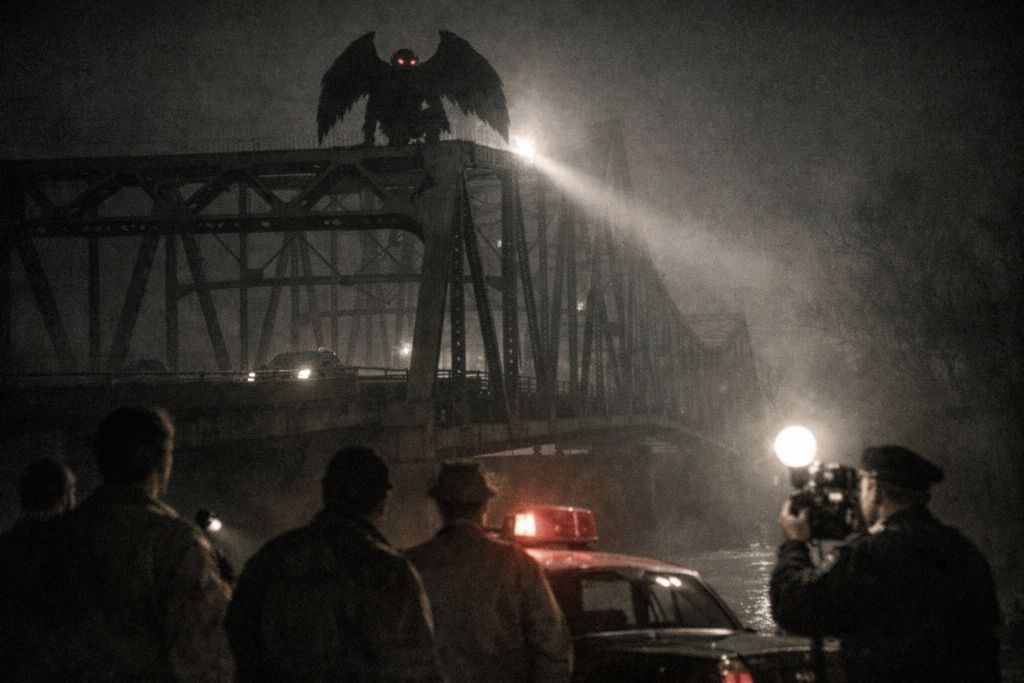
Strip the case to its verified edges and you have this: a mid-1960s concentration of reports describing a large, red-eyed winged figure around a decommissioned munitions site, followed by a terrible bridge failure that forever colored how those reports were remembered. Add Keel’s narrative, local folklore, and decades of retelling, and the outline hardens into American myth.
And yet, stand by the river at night, listen to the echo off the floodwall, and it is not hard to understand why the file won’t close. The terrain invites mystery. The past insists on being felt. Whether the Point Pleasant Mothman was a wayward bird, a trick of light and fear, or something that glided in and out of our taxonomy, the legend endures—sustained by memory, ritual, and the unanswered space between testimony and proof.