The Scratches Were Too High for Any Animal
High on the trunks, fresh gouges ran in a line no animal could reach. Night fell, the howls came, and the scent that followed didn’t belong to the woods.

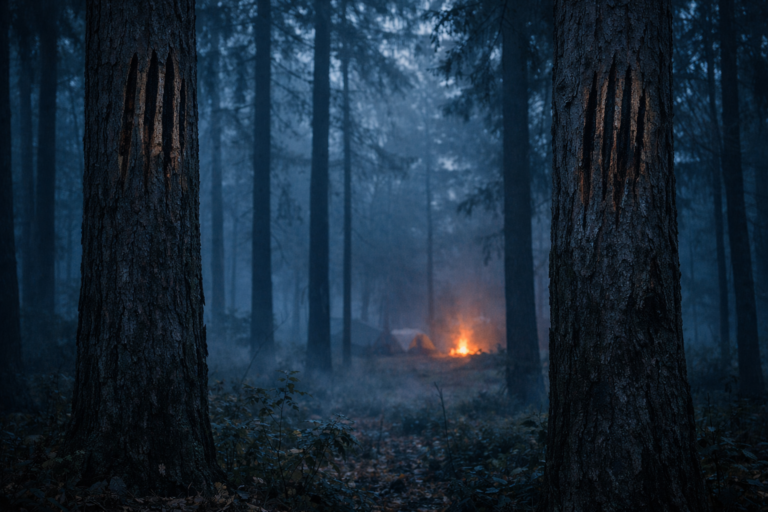
High on the trunks, fresh gouges ran in a line no animal could reach. Night fell, the howls came, and the scent that followed didn’t belong to the woods.
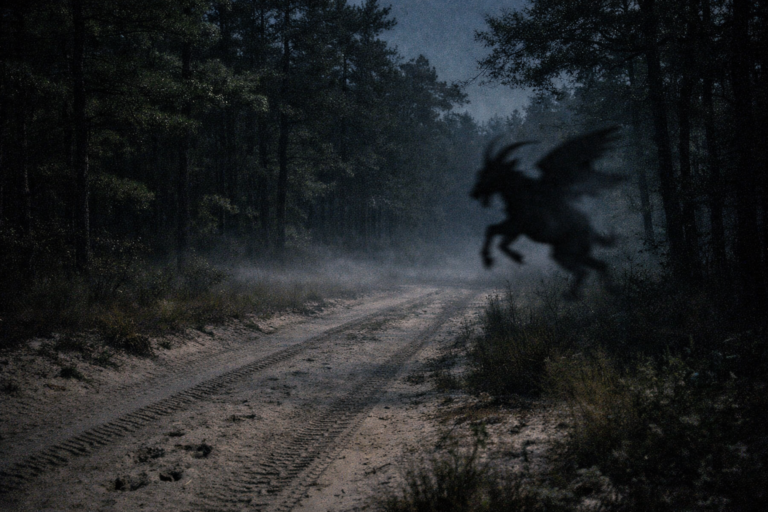
In the Pine Barrens, a winged hoofed figure endures in rumor and report. We examine the legend’s colonial roots, the 1909 panic, and a century of contested evidence.
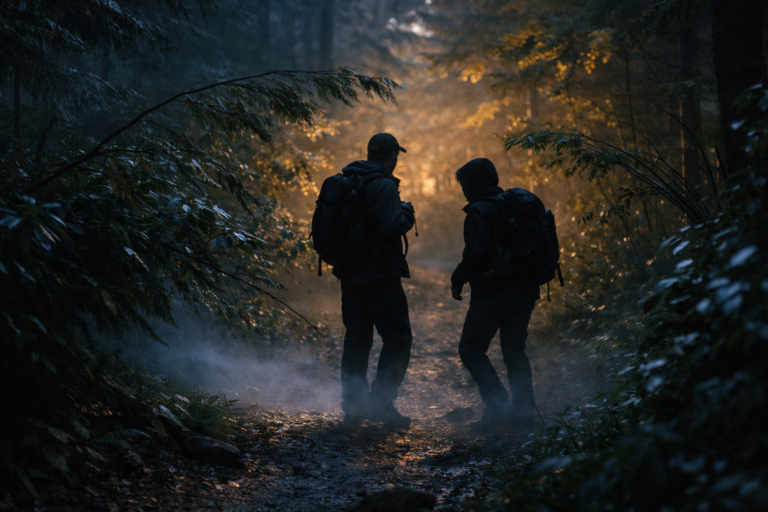
We never saw what moved through the timber, only how the bending trees made room for it. When it turned toward us, the woods stopped breathing.

The ice lifted under our boots like something big exhaling, and we ran. The next morning, our holes had frozen from the underside outward.

We heard it circle the cabin and stop over each room, then the sound of fingers dragging across the shingles. At dawn, wet handprints covered the roof.

A shadow with no body crossed the pasture. Minutes later, posts along the fence lay broken at the same height. Somewhere overhead, the wind changed its voice.

On a quiet back road, a small human shape moved in careful, backward motions toward a drainage pipe. It slipped in tail-first and left nothing behind.

We followed prints in a shallow creek that should’ve washed away. They were moving upstream, lengthening, and then one appeared ahead with nothing to make it.

I heard a clear whistle where there was only sky and treetops. Each time it moved ahead, the branches above me moved without wind.

I heard a clean, human whistle carrying from somewhere no person could stand—above the trees. It moved ahead of me, and the branches moved with it.

Something scraped through the dark and left a perfect circle carved into the ground around our tent—no tracks leading in or out. By dawn, there was another one by the car.

Leaves fall, reports rise. We examine why autumn cryptid sightings seem to surge—where, when, and what competing theories can explain the seasonal pattern.