The Old Man in My Dream Knew My New Address
The first night in the new place, I slept in a square of dim streetlight and cardboard walls. Every room had a different smell—detergent, old plaster, someone else’s cooking coming in soft hollows through the vents. My plates were taped together in a nest of newspaper. My towels lived in a box labeled KITCHEN for reasons that made sense yesterday. I stacked, shifted, opened, forgot. I kept pausing because I’d set something down five minutes before and it vanished into a carton maze, swallowed by bubble wrap and tape.
The apartment itself wasn’t much: a long hallway with scuffed baseboards, an eat-in kitchen that only admitted the idea of eating, a living room pressed to a fire escape. The radiator burped and clicked like it was learning a new language. I kept touching the windows to see which ones stuck, which ones rattled. The previous tenant had left a single folding chair and a nail in the wall where a clock might have lived. I didn’t bother with the bed frame that first night. I dragged the mattress to the corner by the outlet and tried to remember where I’d put my charger. I ate crackers standing up. I kept checking my phone without expecting anything in particular. It was winter-empty outside, the sky bruised and low, and the sound of buses moved in a line just out of view.
I hadn’t written the new address down anywhere. It sat somewhere behind my eyes, an arrangement of syllables I’d skimmed in the lease and then closed, like a door I’d rather not open. I’d saved the building in my rideshare app as “new place,” a red pin with no details. The mail key was still taped to the refrigerator with blue painter’s tape, a thing I meant to peel off and try when I had a minute. If someone had asked me that first night, I could have told them the street started with an H and that my apartment was the one with the crooked peephole. The rest was a blur.
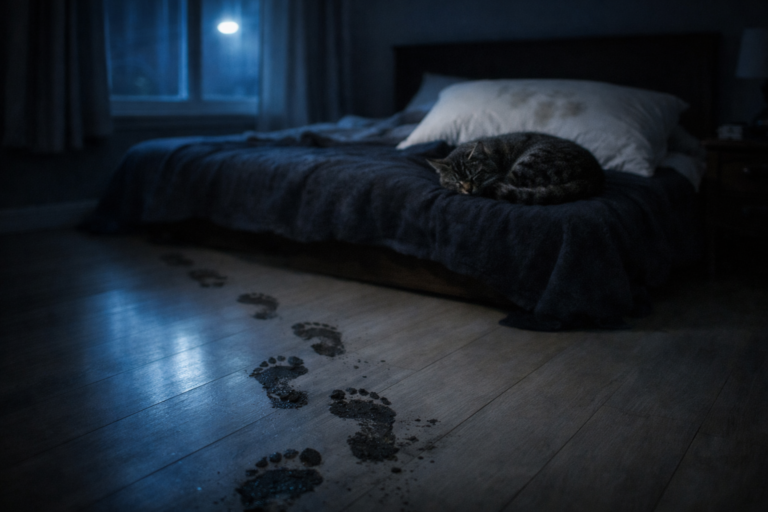
I don’t remember falling asleep. I do remember being in the kitchen in the dream without having moved my body there. The air was grainy in that dream way, as if time were a film stuttering. An old man sat in the folding chair like he’d been there before I moved in, hands on his knees, a wool coat buttoned too high, the collar worrying at his throat. His hair was white and as thin as paint water. He didn’t look at me at first. He looked past me, toward the spot on the wall where the old nail caught shadows. He held a small square of paper between his fingers. His fingers were stained a faint yellow, like a smoker’s.
He said my address without clearing his throat, as if answering someone else. He said it in a careful, conversational voice that reached into the space between us and filled it. He said the number, the street, then “Apartment 3F” like he was rehearsing for a phone call. He didn’t ask, he didn’t check. He gave it to me. It wasn’t something familiar I recognized under a layer of fog; it arrived whole, precise, like the way certain names are spoken at roll call in school. Something about the F felt like an underline.
He tapped the paper on his knee and traced the address with the tip of a blue pen. His letters leaned left. He underlined the apartment once, then twice, deliberate and slow. The pen scratched like a metal zipper. When he looked up at me, his eyes were pale enough to make me think of water under ice. He nodded like we’d agreed.
I woke, mouth dry. The radiator was ticking. On my phone, the time was both too early and too late. I lay there, listening to the building settle into the wind, and said the address in my head. It fit like a shoe that hadn’t molded to my foot yet. I got up and found the lease on the counter under a cutting board. My name was there, and then the number and the street and the apartment, exactly as he’d said. The small space under the F had the same weight in my mind as the dream underline. I hadn’t read it like this before. I stood for a long time with that feeling, that the words had been handed to me from the wrong direction.
The second night, the old man came back. I’m not certain if it was a second night in a row or if the days formed a smooth plank under me and I only stopped once I felt the edge. In the dream we were again in the kitchen but the light was thinner. He sat leaning forward on his elbows, attention fixed somewhere low, as if hearing something through the floor. “You didn’t fix the closet light,” he said. His voice didn’t change. “It stays on unless you slam the door. The bulb is warm behind the coats. There’s a dark thumbprint on the switch plate. Yours.”
I knew what he meant. Earlier that day I’d fallen asleep on the mattress with my coat still on and thought I smelled something like hot dust. When I got up, I opened the hall closet and found the bulb lit without my remembering turning it on. But I hadn’t told anyone that, hadn’t posted it on any forgotten group chat or given voice to the small domestic embarrassment of not knowing my own switches. “Also,” he said, almost gently, “in the bedroom, above the doorframe, a little fish-shaped scrape in the paint. You’ll see it when the sun’s low. And the counter—look near the stove. There’s a burn near the edge, like a comma. It catches crumbs.”
I think I answered—something useless like, How do you know?—but my answer went nowhere. He looked back down at the paper, where he had written my address again. He had crossed it out, then written it a third time, the lines pressing through so hard the paper curled. “And the last cabinet on the left has a loose hinge,” he said. “You’ll touch it and think it will come off in your hand.”
In the morning light I went looking like someone doing inventory of an infraction. The closet bulb hummed faintly behind the coats. On the switch plate, a smudge where my uncertain thumb had been. In the bedroom, a chalky scar above the frame, curved like something living. And in the kitchen, when I wiped the counter in straight lines, the rag caught on a little roughness near the stove, a scorched crescent that did, in fact, gather crumbs as if invited. I touched the hinge on the last cabinet and it answered with a small, tired shift, the kind of move that lives in the body but keeps quiet.
I told myself it was a dream about paying attention. About training my eyes to note the imperfections of a new place, to claim it by its slant and lint and hairline crack. That lasted until I opened my door late that afternoon to go buy a lamp and found the note taped at knee height where a child or a cautious hand would reach. Lined paper torn from a pad, the top edge ragged with the teeth of a spiral. Ballpoint in a hard press that left dents in the sheet. My new address written exactly, the letters leaning left, the F underlined twice. No hello, no context, no name. The tape was the cheap foggy kind that leaves a streak when you peel it.
I stood with my keys in my hand and the door open and the hallway smelling like someone else’s soup. I looked up and down the corridor. Someone upstairs laughed, a sound that died like a match. I peeled the note off and it sounded like a bandage. I walked to the stairwell and looked over the rail to the floors below, half expectant, as if whoever had left it would be standing there still, waiting to watch me read. No one waited. I slid the note into the back of a cookbook, then took it out again. I couldn’t decide if the paper felt too old or too new.
I knocked on the next door down, the one with the nice wreath. A woman in a hoodie answered holding a spoon. She didn’t recognize the handwriting. She wasn’t expecting mail. She laughed when I told her and said, “That’s creepy, but welcome to the building,” which did not help. I sent a message to the landlord. A shrug over text came back. No building manager had been by my unit, no one had left anything official. If I wanted to put my name on the box, I should use the card in the lobby. There were cameras in the entry, not in the halls. If I had concerns about safety, I could “rekey” at my own expense. Everyone spoke like their mouths were full of steam.
I paid a locksmith the next morning to move the locks, to set a new cylinder in the door and adjust the strike so the bolt would catch without me leaning my shoulder in. He tightened the hinge screws and showed me the shims that made the door square. He looked past me into the apartment the way people do, absorbing without intent. I bought a chain and a bar that sits under the doorknob for when I’m inside. I ordered two small cameras online, one to look at the hallway through the peephole and one to watch the living space when I’m not there. Their little eyes blinked into my phone in a grid that made my heart feel steadier.
For a week, nothing. No dream, or at least none I could fish back up in the morning. The building breathed with me. The camera footage showed delivery people pivoting in the threshold like dancers. It showed me coming home and forgetting and coming back for my phone, the angle making me look like someone else. The peephole camera made the corridor a long tunnel ending in a fisheye smear. People walked by with their faces bowed to light or lifted to an idea. No one stopped at my door with a pen and a pad. The note lived in the drawer to the left of the stove, its bottom edge catching on the dividers I’d bought for forks and ended up using for keys and rubber bands.
On the eighth night—I think it was the eighth; there’s an edge that blurs—I woke at three with the sense of having been watched but not touched. I went to the kitchen and stood by the drawer and thought about opening it. The streetlight came off the fire escape in ragged lines. The radiator made a tired clink like a coin in a jar. I opened the drawer and looked at the paper. Someone’s hand had pressed the pen so hard the letters dug valleys. The underlines were not exactly straight; they had a polite lift at the end, like a remark not quite finished. My address watched me from the ink as if it were the part of the apartment that recognized me.
When I slept again, the man was at the table the way gravity is at the ground. He didn’t say the address this time. He said, “You moved the locks,” with an interest that felt like weather. “The screw in the middle left hinge will loosen by spring unless you put a toothpick in the hole. Don’t use glue.” He glanced at my hands. “You keep the note in the left drawer, but you’ll start checking the right one first.” It made no sense how easily the comments found their way to the quiet corners I hadn’t yet learned to fill. His eyes went to the folding chair, to the nail where a clock might have lived, and then to the space above the door where the fish-shape lived. He smiled without showing teeth. The room in the dream had the same tiny tilt as the real one, the same hum from the light ballast like a secret too shy to be a problem.
The next morning the cameras had nothing to show me except myself, and the hallway, and the ordinary life of a building that doesn’t know it’s being watched. The note was where I’d left it. The new locks caught with a clean sound that felt like a period at the end of a sentence. I made coffee and waited for it to cool because I didn’t feel like burning my tongue. The light moved across the counter and found the scorched comma by itself. My address sat folded in the drawer like a small animal at rest.
I wish there were a clean way to fold this closed. I wish I could tell you I found out who he was, or that he was a neighbor with a busted door and a habit of drifting, or a name on a mailbox curled under tape. I printed my name on the lobby card and taped it where it should go, and the cameras watched the entry, and the postman looked me in the face when I signed for something with my new address on it and said it out loud like a question, and I heard it sit in the air like a chair being pulled back. The old man hasn’t been back in a way I can count. Some nights, half sleeping, I feel the apartment list a degree toward him and then right itself like a boat on a small wake. Sometimes I wake and think I hear paper being underlined very slowly in another room. I tell myself it’s the radiator. I tell myself I’m learning the place by its details. When I say my address now, it fits better. I can say it in one breath. It belongs in my mouth. It also belongs somewhere else. That’s the part I can’t unlearn.