What Science Actually Knows About Sleep Paralysis Entities
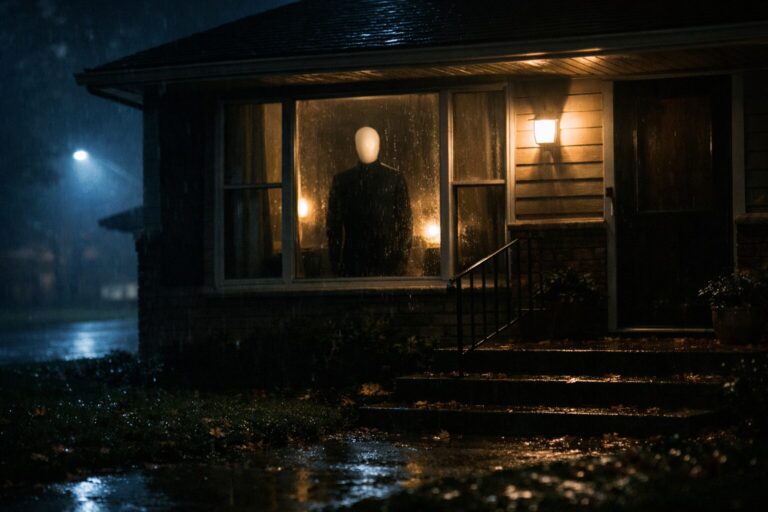
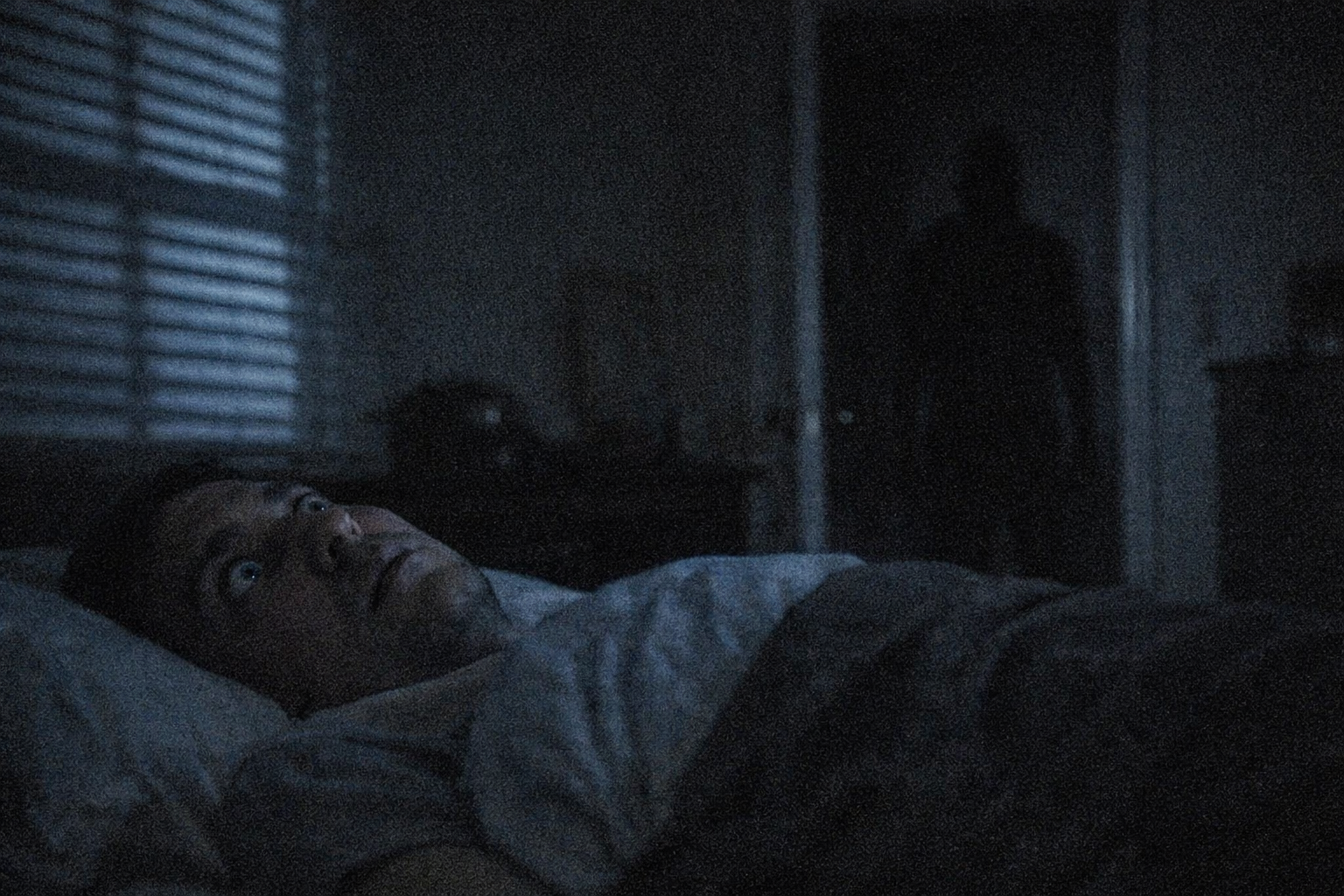
The room is familiar until it isn’t. Air thickens. A presence hovers just outside the reach of your eyes, a dark figure leaning near the bed as if it owns the doorway. You try to sit up—nothing. Breath stalls beneath a pressure you can’t name, and the sense arrives as if spoken: you are not alone. People who meet sleep paralysis entities return to this borderland again and again in memory, because the terror doesn’t feel borrowed from a dream. It feels observed.
Across cultures, the language changes, the architecture of bedrooms changes, even the night sounds change—but the encounter endures. This is the paradox at the center of the phenomenon: science has charted much of the terrain, yet the figures that inhabit it, the shadow people and the Old Hag, continue to act with the poise and conviction of sentient visitors. Tonight, we step into that narrow corridor between neurology and folklore to examine what is known, what is hypothesized, and what still resists explanation.
A Visit in the Dark: Sleep Paralysis Entities at the Threshold

The classic episode begins in the liminal moment of waking. Eyes open, awareness turns on, but voluntary muscles remain locked—an unsettling remnant of REM atonia, the paralysis that normally protects dreamers from acting out their dreams. In that vulnerable suspension, a cluster of sensations often arrives in formation: an overwhelming fear; a heavy weight on the chest; a buzz or hum in the ears; a cold recognition of a presence in the room. Many also report seeing figures—blacker than the dark—at the foot of the bed or by the doorway, or leaning inches from the face as if assessing the occupant.
These presences, colloquially framed as sleep paralysis entities, are not a small footnote in the night’s catalog. They recur enough to form patterns: the Intruder (a sensed or seen entity in the room), the Incubus (pressure on the chest, breath-stealing), and the Vestibular-Motor (floating, falling, or out-of-body sensations). Witnesses describe shadow people, dark humanoids, an old hag figure, an edge-of-vision intruder—the ensemble cast of modern bedroom visitations.
Background and Origins of Sleep Paralysis Entities

Medically, sleep paralysis is a recognized sleep phenomenon. Episodes occur when features of REM sleep leak into wakefulness: muscle atonia persists while consciousness returns, and fragments of dream imagery press through the cracked door of perception. Accounts long predate clinical terms. Maritime communities once spoke of the “Old Hag” riding the chest. In parts of Europe, the nightmare was personified as a mare sitting on the sleeper. Across Asia, tales tell of night visitors and pressing spirits. The motifs align with the modern report: immobility, chest pressure, a presence.
As sleep medicine matured in the twentieth century, researchers began to map this boundary state. Lab recordings documented people waking into paralysis with increased heart rate, intact muscle atonia, and vivid hypnopompic hallucinations—dreamlike content appearing after sleep. The cultural stories, it turned out, had documented the same territory under different lanterns.
The Central Claims Around Sleep Paralysis Entities

Witnesses tend to agree on several core points. First, the experience is not like an ordinary dream; it has a palpable, here-and-now quality, often with consistent room details and a bone-deep conviction of an other in the space. Second, the entities include familiar archetypes: shadow people with featureless faces, dark humanoids who linger at thresholds, the Old Hag or crone who presses the chest, and occasionally more tailored intruders that echo personal fears or religious imagery.
Third, these moments provoke extreme fear. Even seasoned experiencers—people who recognize what is happening—describe a reflexive surge of dread that outruns explanation. Many also report auditory components: footsteps in the hall, whispered words they can’t quite parse, the rumble of something immense approaching. A minority describe tactile sensations—hands at the throat, bedding tugged, a form settling on the mattress. All of this bakes into the conviction that what visited was not simply imagined.
Key Figures and Touchstone Documents on Sleep Paralysis Entities
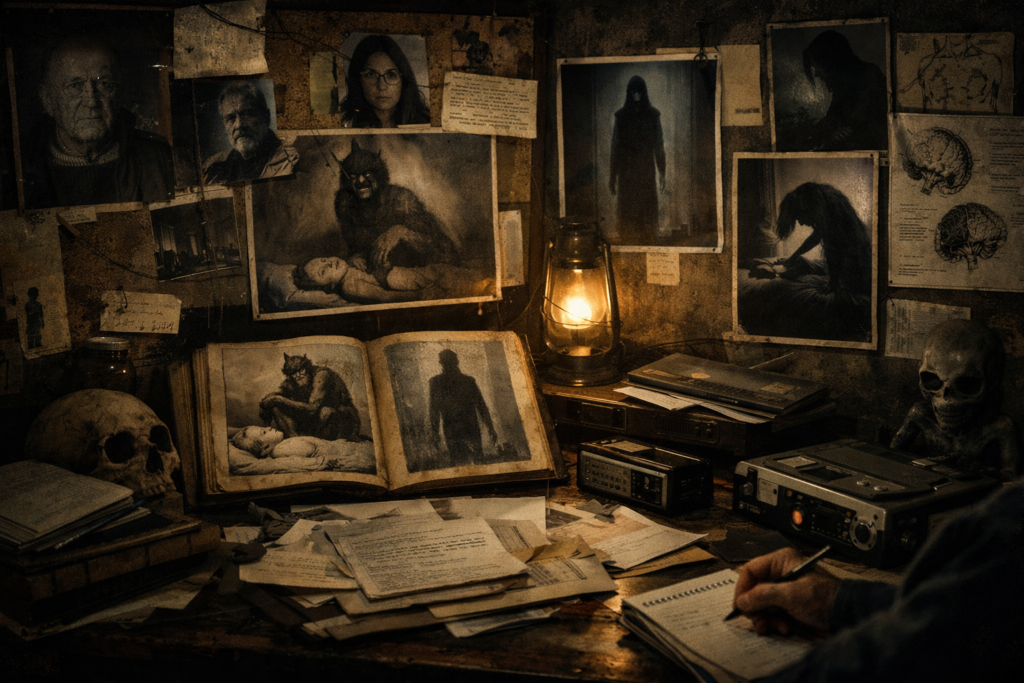
Several strands of scholarship anchor our present understanding. Ethnographic and folkloric work documented the Old Hag and related traditions in communities from Newfoundland to the Mediterranean, noting how cultural belief both shapes and is shaped by the experience. Sleep researchers in clinical settings registered the physiology of REM intrusion: muscle atonia persisting into wakefulness, along with brain activity consistent with dream generation. Psychologists outlined the experience into subtypes—the Intruder, the Incubus, and vestibular phenomena—suggesting a common architecture under different masks.
Contemporary clinicians and authors have broadened public awareness by placing these findings in accessible language, connecting the reports of Shadow People, the Hat Man, and other Night Visitors to recognized sleep states. Meanwhile, survivors’ memoirs, community forums, and art have served as a parallel archive, keeping the phenomenology alive outside laboratory walls.
Evidence and Alleged Evidence: Physiology, Diaries, and Shadows

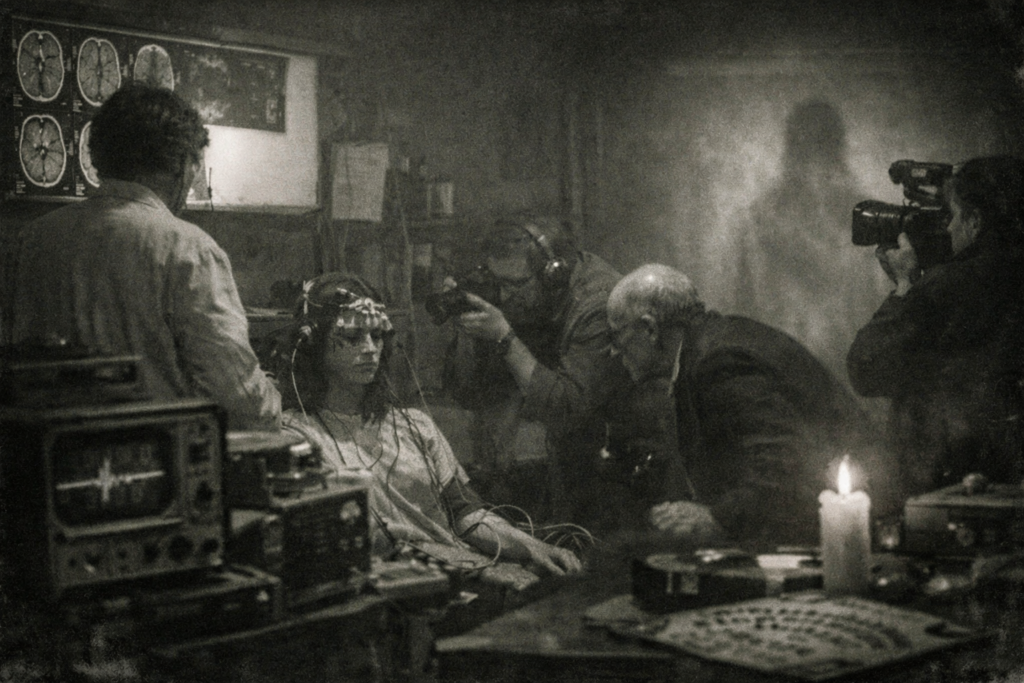
What can be measured has been measured. In sleep labs, EEGs capture the telltale markers of REM transitions; EMG readings confirm muscle atonia when the sleeper reports being awake and unable to move. Breathing may feel shallow under perceived pressure, but oxygenation typically remains normal. When episodes are provoked or caught spontaneously, the signature is consistent with a brain briefly blending waking awareness with dreams.
Outside the lab, the record is largely phenomenological: diaries, sketches, and narratives. Many draw the same silhouettes—a man-shaped void or hooded figure; sometimes the “Hat Man,” a top-hatted outline that seems more like a cutout in the dark than a being with detail. Photographic or audio “captures” are rare and, unsurprisingly, inconclusive; cameras in dark rooms record darkness. Yet patterns in testimony persist across geography and generation, forming an evidentiary collage of consistency. In clinical terms, this repetition is not proof of external entities; it is proof that human brains under similar constraints produce strikingly similar content. To some, that convergence itself is the phenomenon.
Skeptical Explanations: The Brain Behind Sleep Paralysis Entities
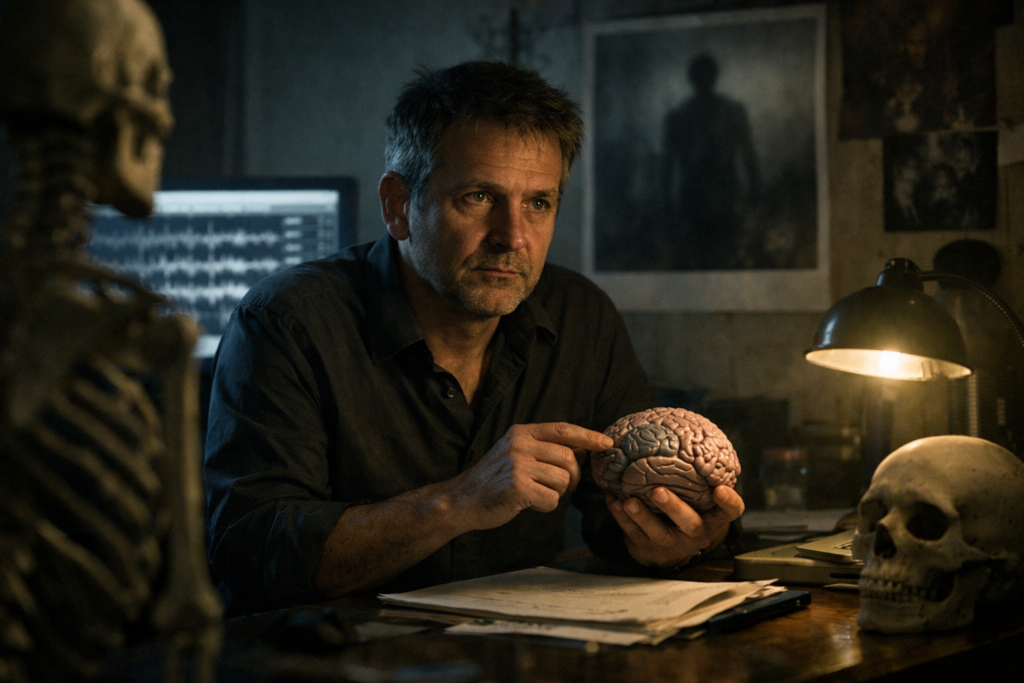
Science accounts for much of the experience without invoking the paranormal. During REM sleep, the brain actively inhibits motor neurons to prevent acting out dreams. If consciousness surfaces before this inhibition lifts, paralysis holds. The amygdala—our alarm center—can be hyperactive in this state, priming threat detection. In a quiet room, where sight is low-resolution, the brain searches for agents; outlines at the edge of darkness become potential intruders.
Visual cortex and association areas may still be generating dream imagery, which the waking mind now tries to parse. The result: complex, embodied hallucinations with the weight of reality. Chest pressure can be explained by supine position and altered breathing perception, while the sense of presence may arise from misfiring multisensory self-representation systems. Stress, irregular schedules, jet lag, sleep deprivation, and co-existing sleep disorders like narcolepsy all increase the likelihood of episodes by destabilizing REM boundaries.
In this view, sleep paralysis entities are internally generated models crystallized by fear and expectation. If a culture warns of an Old Hag, an anxious sleeper may perceive a hag. In a culture now fluent in Shadow People and the Hat Man, those archetypes may populate the night. The script does not negate the sincerity or intensity of the event; it reframes the casting process.
Why the Story Persists: The Cultural Life of Sleep Paralysis Entities

Intensity is memory’s adhesive. Episodes of sleep paralysis often rank among the most vivid moments of a person’s life, lending them a mythic charge. Stories exchange quickly: a relative’s account, a radio segment, a forum thread where dozens affirm, “Yes, him too.” Cultural availability of images—dark figures, bedroom visitations—primes future content. The phenomenon colonizes art, horror cinema, and late-night talk, which then feed back into fresh encounters.
Paranormal interpretations endure because the experience feels agentic. The figure appears to notice the sleeper. It behaves with intention. The timing—arrivals during life stress or in meaningful places—creates narrative gravity. Even those who embrace the neurological model sometimes harbor a residue of doubt, a hedged “but” reserved for how specific, how personal, or how recurrent the visitor seemed.
Daily Paranormal Analysis
Why this story became popular: It sits at the confluence of two fascinations—Dreams & Consciousness on one side, Shadow People & Entities on the other. Accounts of bedroom visitations are universal, portable, and cinematic; they retell easily and strike home even with those who have not experienced them. As sleep science matured, public language for the event spread, amplifying recognition rather than dissolving the mystique.
Why believers find it compelling: The encounters feel too coherent to be random. The visitor’s poise, its seemingly targeted interest, and cross-cultural motifs—old crone, intruder, crushing weight—read like external agency. Shared archetypes, including the Hat Man, strengthen the impression that something beyond the self is at work. Some point to occasional reports of simultaneous sensations between partners or roommates (even if provable synchronicity is rare) as suggestive of an external trigger.
Why skeptics doubt it: The physiology of REM intrusion, the role of the amygdala and multisensory integration, and the influence of cultural priming offer a robust, testable framework. Sleep labs capture the mechanics without invoking entities. The absence of verifiable external evidence—clear recordings, repeatable environmental anomalies—keeps the burden on neurological explanation.
Connections to similar cases: Reports of Shadow People outside sleep paralysis may represent related perceptual events—waking hallucinations during stress, hypnagogic states at sleep onset, or misinterpretations in low light. The broader family includes Night Visitors narratives, classic Incubus/Succubus lore, and modern bedroom intrusion cases that echo the same threat architecture. Many of these can be modeled as threshold phenomena where internal imagery meets ambiguous sensory input.
Does the mystery remain unresolved? In part. We understand the stagecraft—the lights, the rigging, the mechanics of REM atonia and hallucination. What remains elusive is the script’s persistence and the witnesses’ conviction that someone else wrote it. Whether one leans biological, folkloric, or paranormal, the core puzzle—why certain figures recur with such fidelity—still invites thoughtful inquiry.
Conclusion: Between Physiology and the Unknown
Sleep paralysis is a liminal country with clear borders and uncertain citizens. On the map, we can point to REM intrusion, to how dream material bleeds into a waking frame, to how stress and irregular sleep pull the boundary taut until it tears. Yet in the actual experience, the geography blurs. The shadow at the door isn’t an abstract model; it’s a visitor with presence and weight.
For some, accepting the neurological account is relief enough; the terror diminishes when named. Others keep vigil for a meaning beyond mechanism, convinced the visitor’s gaze belonged to more than their own mind. Both positions may be held honestly. Between them runs the uneasy corridor where science and story walk side by side, and where, for now, the silhouettes keep their place.