The Dyatlov Pass Incident: Theories and Unanswered Questions
Snow muffles sound in the high Urals. It swallows footprints, bends trees with its weight, and can hide a story for generations. The Dyatlov Pass Incident lives in that silence. A torn canvas tent in an empty expanse. Bare feet in powder, headed downslope into lethal cold. For more than six decades, the mystery has remained, not because there are no theories, but because each answer seems to leave a seam unstitched.
What keeps this case talking is the collision of ordinary detail and extraordinary circumstance. A winter trek by capable young hikers. A route planned, diaries kept, photographs taken—then a tableau that investigators could not quite reconcile. The Soviet inquiry’s vague verdict—a compelling natural force—became a phrase that only sharpened the unease.
At its core, the claim is stark: something on that mountainside forced nine people from the relative safety of their tent into subzero darkness, and several suffered injuries that did not read as simple hypothermia alone. From that premise, the Dyatlov Pass Incident unfolds into a tangle of Avalanche Theories, Soviet Mysteries, and the modern vocabulary of Cold Case Mysteries.
This feature reconsiders the known record, the leading explanations, and the unanswered questions that still pull researchers back to the ridge.
Background of the Dyatlov Pass Incident
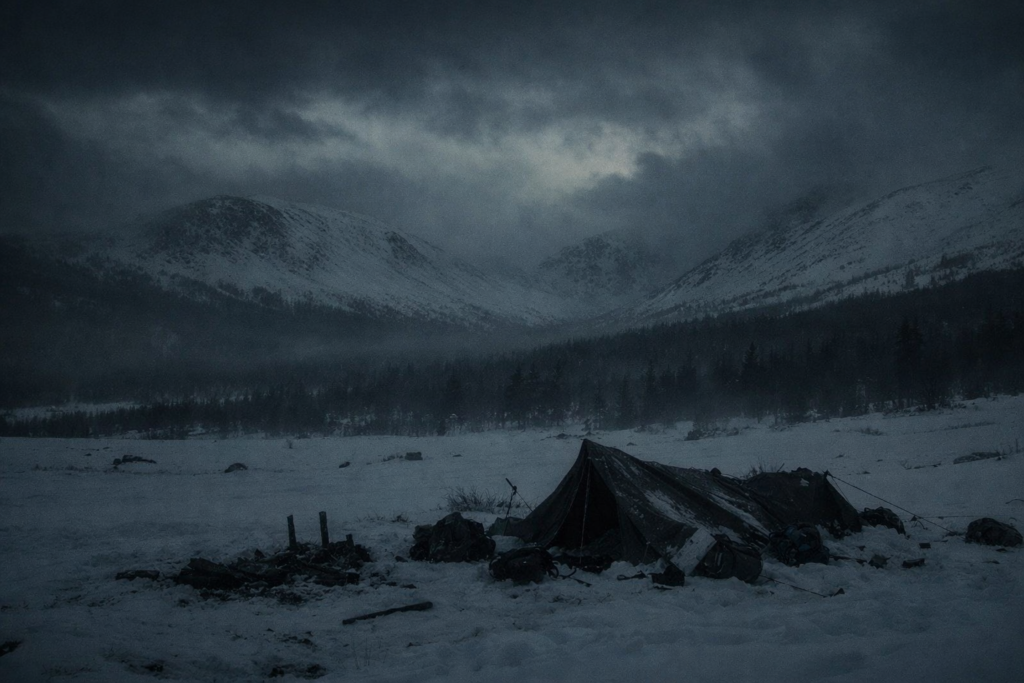
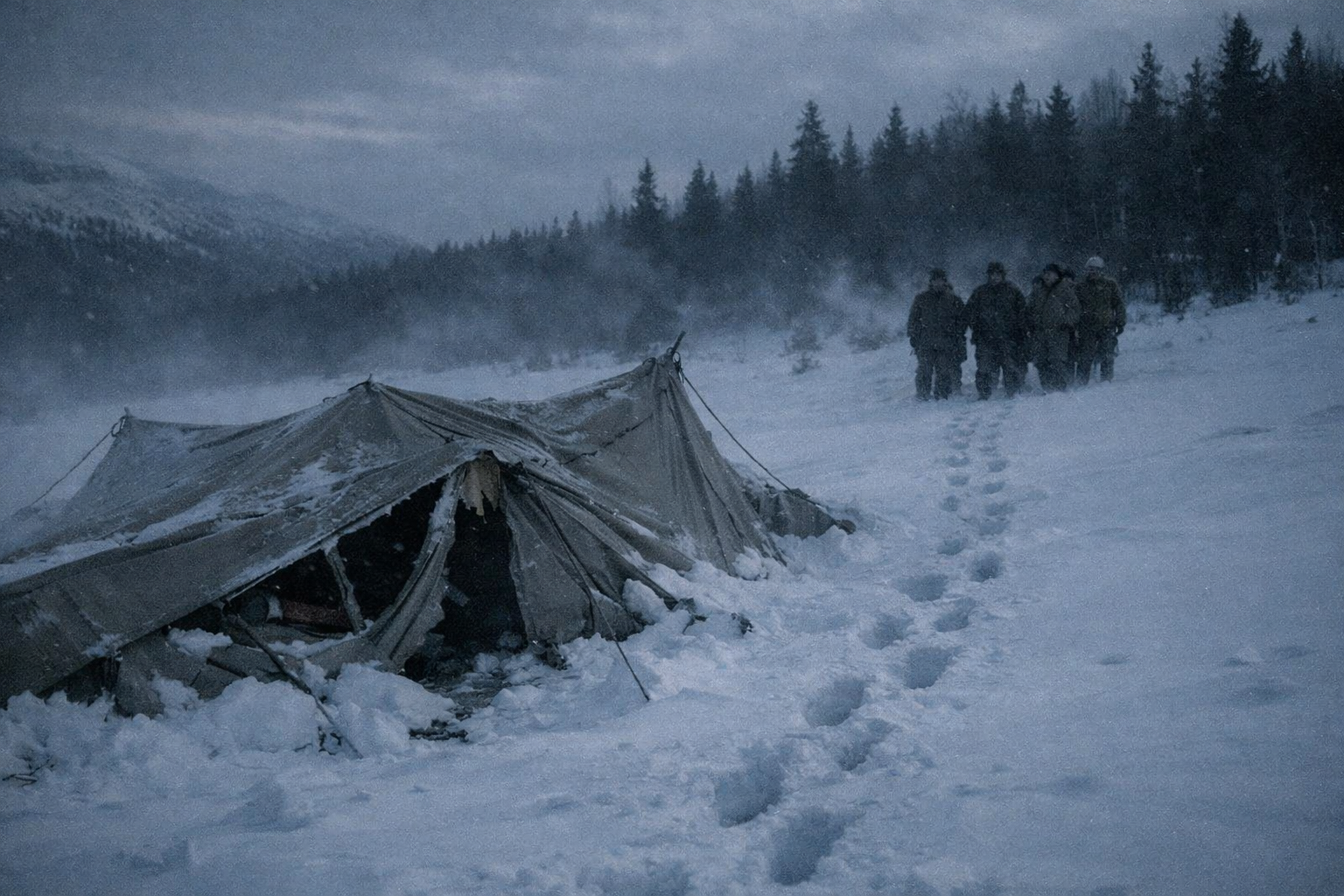
In early 1959, a student-led group set out into the northern Ural Mountains of the Soviet Union. They were experienced in winter trekking and aimed to earn advanced hiking certifications. When they failed to return on schedule, search teams were organized. The camp—found high on a slope—quickly puzzled rescuers. The tent, half-buried and cut open from the inside, suggested an abrupt exit. Tracks led away, some made by socked or bare feet, into wind and cold that could end a life in minutes if exposure took hold.
All nine hikers were eventually recovered in or near a ravine and the forest below the tent. The deaths occurred over a short span, in conditions better known to reindeer herders and soldiers than to civilian hikers: brutal cold, deep snow, and shifting winds. The setting alone was formidable. Yet it was the combination of strange tent damage, scant clothing on several victims, and a handful of puzzling injuries that carved this event into the canon of Remote Wilderness Disappearances and survival enigmas.
Central Claims of the Dyatlov Pass Incident

The central claims can be summarized in three questions: Why cut through the tent? Why flee partially dressed? And how to explain the unusual injuries reported in some autopsy summaries?
Investigators found that the tent seams and panels were slashed from the inside, as if the hikers had lost time or ability to use the entrance. Many retellings emphasize barefoot or lightly clad footprints leading toward the treeline. Most of the group perished from hypothermia—tragically consistent with a sudden nighttime flight. But two or three of the hikers showed significant trauma, including chest fractures and a head injury, cited for decades as injuries not easily matched to a simple fall.
From these points grew a field of explanation: avalanche or slab collapse forcing a rapid escape; katabatic winds that made the site uninhabitable; infrasound-induced panic; military testing; even paranormal forces. Some argue that after leaving the tent, the group fractured into smaller teams, attempting sheltering strategies that failed in extreme conditions. Others focus on the severity of select injuries as the key anomaly.
Key Figures and Documents in the Dyatlov Pass Incident
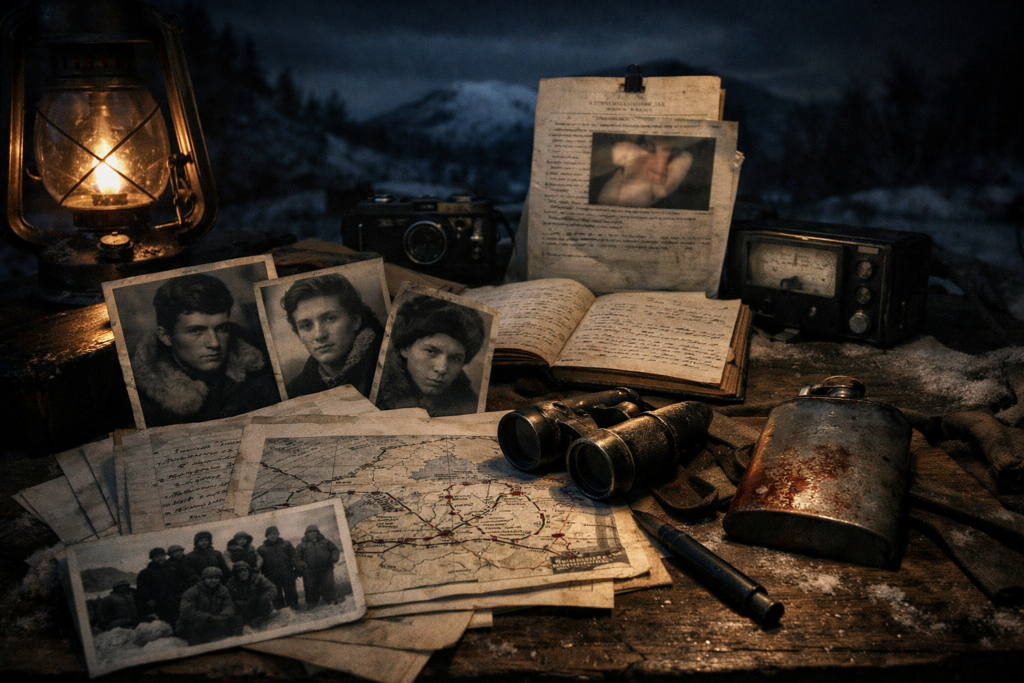
At the center is Igor Dyatlov, the groups leader, a capable organizer credited with careful planning. Soviet-era investigative records—interviews, site photographs, autopsies, and field notes—provide the backbone of what we know. The diaries and camera rolls recovered at the campsite and along the descent offer time-stamped glimpses into the partys final days, including scenes of camp construction and moments of ordinary camaraderie that ended too soon.
Primary documents are complicated by Cold War context. The official phrasing—a compelling natural force that the hikers were unable to overcome—avoided naming a precise cause. Later reviews, including a modern Russian inquiry, reassessed weather, snow mechanics, terrain, and known hazards to argue an avalanche or a snow slab as the best-fit explanation. Yet the archives silences—gaps, ambiguities, and a scarcity of certain technical details—left room for layers of interpretation.
Evidence and Alleged Evidence at Dyatlov Pass
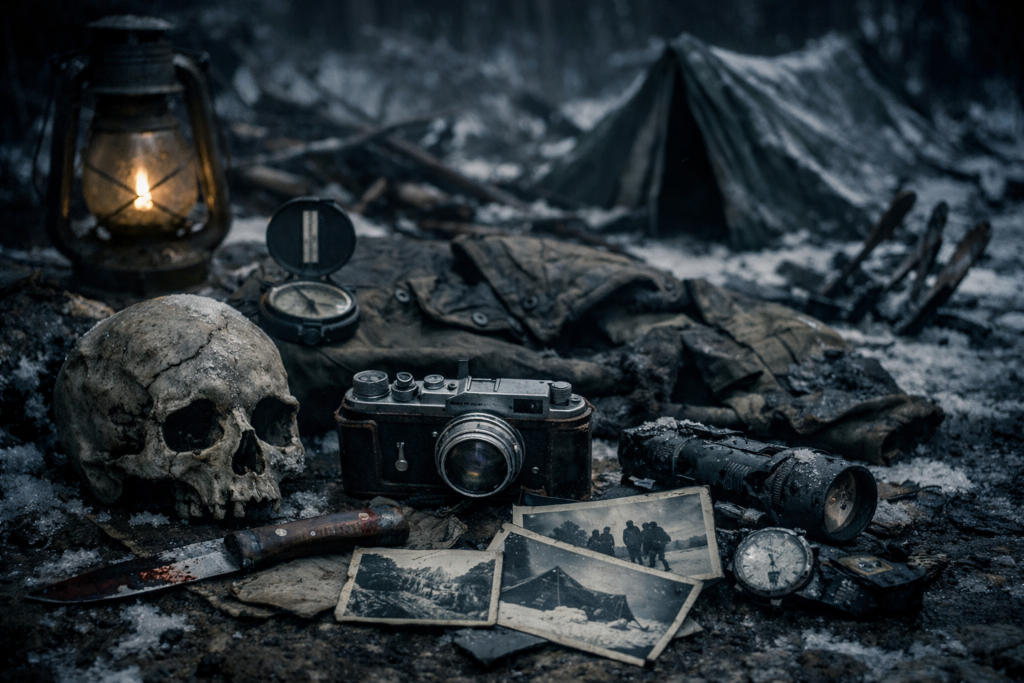
The physical evidence starts with the tent: its location, partial burial, and internal cuts. The footprint trail—measured by rescuers—appeared orderly rather than a frantic scatter, a detail sketched into many reconstructions. Down the slope, investigators found the first bodies near a cedar, with signs that a fire was attempted. Others lay between the tree line and the tent, as if caught mid-return. The final four were discovered months later, in a ravine under snow, where some of the more serious injuries were documented.
Forensic interpretations have diverged. Chest injuries have been described as caused by force without external wounds, a phrase later associated with heavy compression—consistent with snow load or a fall into a ravine. Head trauma could align with impact on hard-packed surfaces or rock under shallow snow. Reports of missing soft tissue (such as eyes or tongue) have been attributed in many analyses to post-mortem changes in water and snow or to small scavengers, rather than to violence. Popular retellings sometimes highlight claims of low-level radiation on articles of clothing; the context and testing protocols remain debated, and most modern assessments regard such findings as inconclusive within a mountain environment and a 1950s laboratory context.
Meteorological back-analysis has suggested gusting winds, drifting snow, and potential slab formation above the tent site. Terrain modeling points to shallow angles where small slabs can still release. Meanwhile, the diaries record nothing ominous in the hours before the last encampment, reinforcing the view that their crisis was sudden and likely mechanical or environmental rather than social.
Skeptical Explanations: Avalanche Theories and More
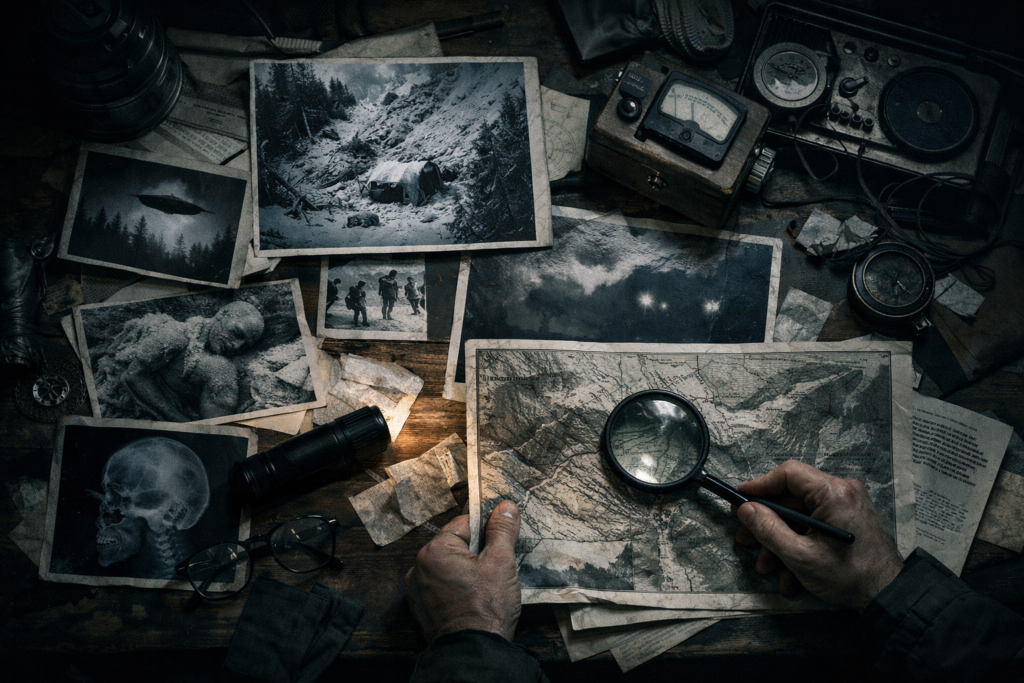
Among skeptical frameworks, the avalanche or snow-slab theory has led for years. A slab can release silently and suddenly, imparting enough force to injure and to collapse or threaten a tent. The rational response—cutting out and retreating to safer ground—would align with the torn tent panels and the descent toward trees. In this reconstruction, hypothermia claims most lives; trauma may result from initial loading, a later fall into a stream bed, or attempts to climb or shelter under wind-battered branches.
A related weather hypothesis invokes katabatic winds: dense, cold air flowing downslope, capable of flattening a tent or making a camp untenable in minutes. Some analysts also explore infrasound, proposing that particular wind conditions can induce nausea and fear—though this remains disputed and difficult to prove after the fact. Military testing theories—parachute mines, distant ordnance—are invoked to explain trauma and alleged lights in the sky, but physical correlates on the ground have not been verified to a standard that satisfies most researchers.
In the 21st century, a state-backed review revisited the case and concluded that an avalanche or snow slab was the most probable cause, not an exotic factor. That finding has not eliminated doubt, but it has pulled many investigators toward a family of natural explanations rather than conspiratorial ones.
Why the Dyatlov Pass Incident Persists

Three elements bind this case to public imagination. First, the photographs and diaries humanize the timeline; readers meet the hikers in their own words. Second, the mix of straightforward hypothermia with fewer but striking injuries resists a one-sentence summary. Third, Cold War opacity lingers. Even as more files circulated, the initial phrasing—compelling natural force—felt like a closed door left ajar.
Myth accrues where facts are thin. Mentions of strange lights in the region in winter 1959 feed a parallel tradition of extraordinary causes, though such stories are hard to verify at distance and time. In the ecology of Soviet Mysteries and Remote Wilderness Disappearances, this one offers a rare, well-documented stage where readers can walk the last day in photos and yet exit with questions intact.
Daily Paranormal Analysis
Why it became popular: The Dyatlov Pass Incident arrived in the West as archival material dripped into popular media: stark site photos, clipped official prose, and the immediacy of personal diaries. It sits at the crossroads of survival literature and Cold Case Mysteries, inviting armchair forensics and field modeling alike. Its cinematic contrasts—cozy tent, black night, blizzard hiss—do the rest.
Why believers find it compelling: The term compelling natural force invites the supernatural by omission. Add to that reported anomalies, post-mortem oddities, and alleged aerial lights, and a portion of readers reach for paranormal or covert causes. The difficulty of reconstructing the hikers split-second choices, coupled with injuries that seem too much for hypothermia alone, leaves room for entity or unknown-force speculation—a thread shared with other Paranormal Survival Mysteries.
Why skeptics doubt it: Skeptics see the entire tragedy as a layered natural event—snow mechanics, wind, darkness, cold—cascading into a discipline of errors under stress. They note that strange injuries can emerge in falls, compressive snow events, or later recovery conditions, and caution against overinterpreting ambiguous forensic language. The modern Russian review, pointing to avalanche/snow slabs, gives this camp an anchor.
Connections to similar cases: The case resonates with other high-altitude and backcountry tragedies where missing hours and chaotic weather leave jagged narratives—incidents in Siberias Hamar-Daban range, puzzling mountaineering accidents in the Caucasus, or even non-mountain analogs like the Yuba County Five. All share partial records, harsh environments, and behavioral puzzles at the edge of survival.
Does mystery remain: Yes. While avalanche and snow-slab scenarios plausibly explain much, they do not perfectly seal every seam. The exact trigger, the sequence of movements, and the mechanism of specific injuries remain reconstructed rather than proven. The Dyatlov Pass Incident stands as an unsolved mountain mystery—less occult the more we learn, yet still irreducibly incomplete.
Conclusion: The Dyatlov Pass Incident Remains Unresolved
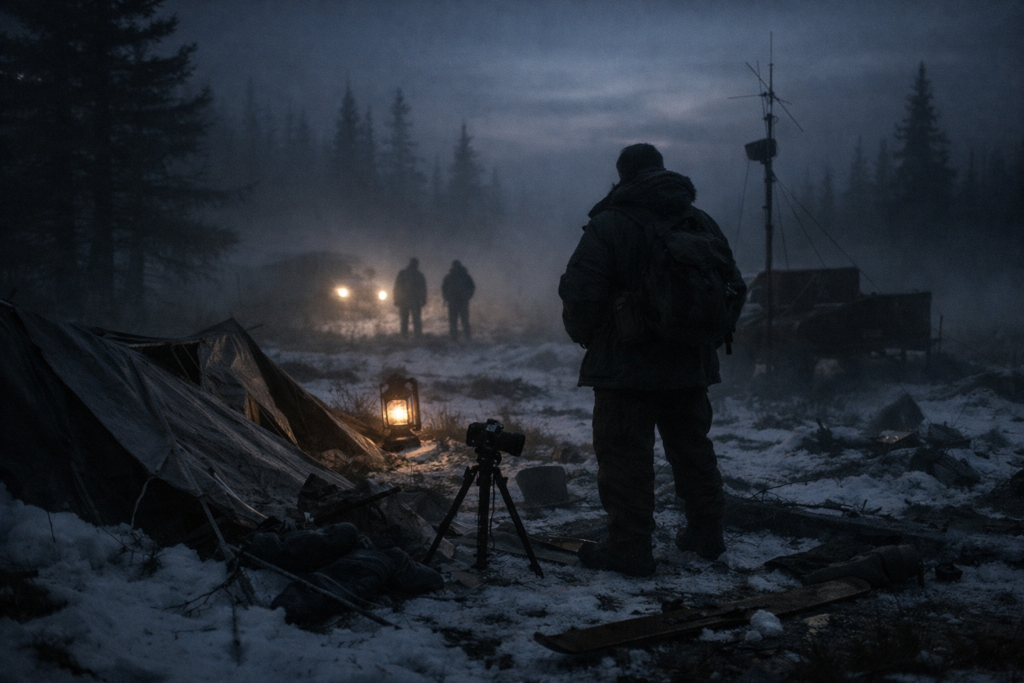
In the end, what returns us to that wind-polished slope is not the promise of a single, startling revelation, but the more human puzzle of decision under duress. A tent is threatened. You cut and go. Exposure tightens the window for rationality. Some reach a tree, light a fire, try to climb. Others turn back for gear that can save them. Somewhere in that narrow arc from seconds to hours, lives end and a legend begins.
Between avalanche mechanics and folklore, between case files and speculation, the Dyatlov Pass Incident continues to occupy a rare middle ground. It is famous not because it resists any explanation, but because it tolerates more than one. Until the landscape yields a definitive physical match—or the surviving records surprise us with something new—this story will remain where it began: in the snow, with a tent cut open to the night, and with questions that harden in the cold.