Inside the Most Active Haunted Hospitals in America
The first thing you notice is the sound. Not a voice exactly, but the shiver of a corridor settling after midnight—the clack of a loose hinge, the hush of a draft crossing tile. In the darkest corners of America’s haunted hospitals, night doesn’t fall so much as it thickens, filling empty operating rooms and half-sealed wards with a pressure that feels almost social, as if the building itself expects you to speak first.
It’s why people keep coming back: seasoned investigators, weekend thrill-seekers, amateur historians, and those who can’t let a name in a patient ledger fade into dust. Haunted hospitals hold onto stories like they hold onto cold—deep, bone-level, resistant to the light of day. The central claim is simple and stubborn: the places that witnessed the greatest concentrations of human trauma, illness, and quiet endurance have not entirely gone still.
Some buildings are louder than others. Waverly Hills Sanatorium in Kentucky, its monumental silhouette still a national reference point, and Linda Vista Hospital in Los Angeles, a ghost of a working ward turned film set and urban myth, are shorthand for the entire genre. Their halls are cited on late-night radio, in tattered paperbacks, and in video clips endlessly shared: America’s most active haunted hospitals, the ones you can point to on a map and say, “That’s where the footsteps were recorded,” or “That’s where the shadow crossed the nurse’s station.”
We followed the trails—newspaper archives, facility histories, investigative notes, and the cautious testimonies of those who’ve walked these halls—to understand why hospital hauntings keep their grip on the American imagination, and whether the living are truly the only ones left on the night shift.
After Hours in Haunted Hospitals

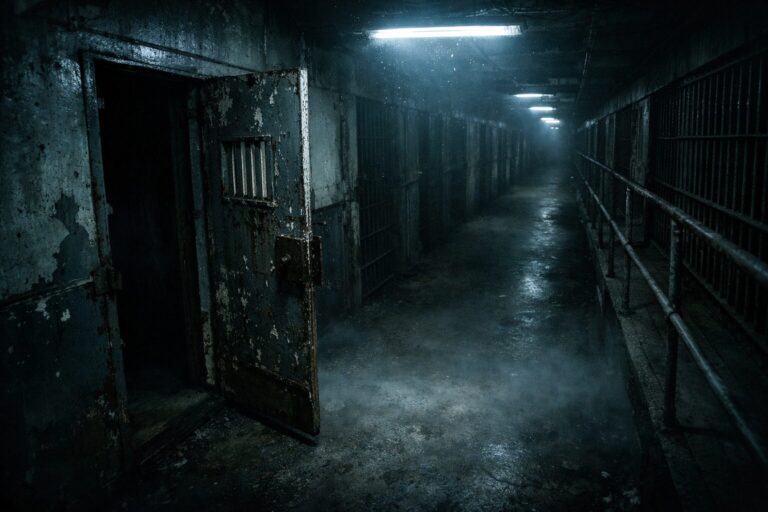
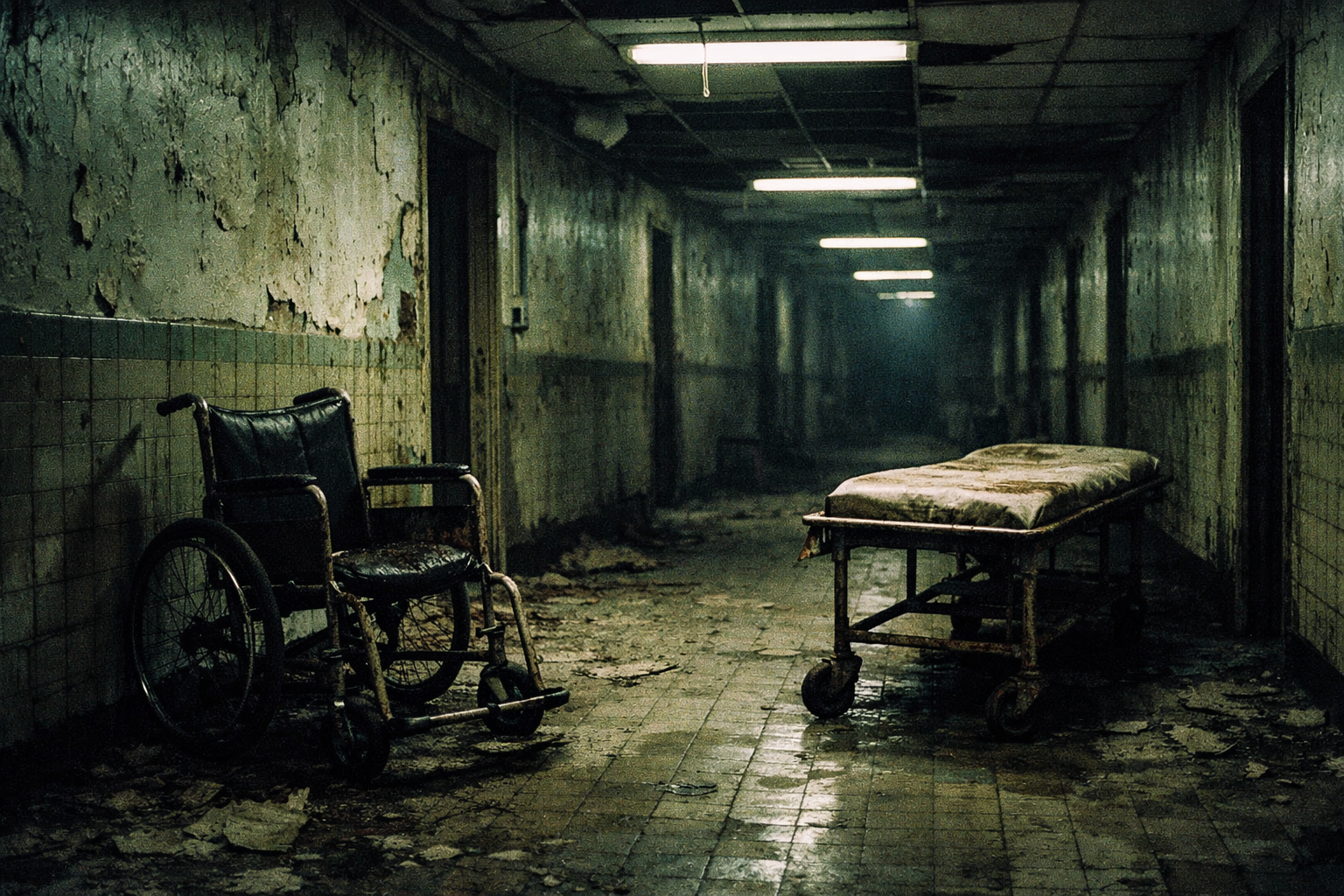
By day, many of these structures are museums-in-progress, construction sites, or private properties bounded by chain-link. By night, the architecture reasserts itself: corridors long enough to cause optical illusions, tiled rooms that amplify the softest scrape, stairwells that answer your breath with their own. In haunted hospitals, the emptiness is architectural—an indoor wilderness of recovery rooms and surgical suites, summoned to life by the simple act of walking through with a flashlight.
The atmosphere is not an accessory but the main event. A ward designed to contain coughs and pain will hold onto the emotional tonnage for decades. It’s a gravity you can feel under your shoes. This is the stage on which every anomaly, whether genuinely unexplained or perfectly normal, earns a second look.
The Long Corridors of History: How Hospitals Became Haunted Hospitals
Before they became destinations for ghost tours and documentaries, many of these sites were busy institutions. Sanatoriums battled epidemics room by room; county hospitals tended to generations of births and deaths; some facilities were later repurposed or left to weather alone when budgets and demographics shifted. Waverly Hills Sanatorium, emblem of the tuberculosis era, and Linda Vista Hospital, a neighborhood anchor turned cinematic backdrop, sit in this lineage.
In the American paranormal conversation, hospital and asylum histories fold together: medical wards alongside surgical theaters, isolation rooms next to convalescent porches. The result is a bloodstream of legend—some documented, some secondhand—that moves from guide to guest and from webpage to earbud. Over time, a site’s medical past, its architectural oddities, and the emotional weight of lives lived and lost there can converge into a reputation that’s hard to unspool.
Reported Hauntings and Phenomena in Haunted Hospitals
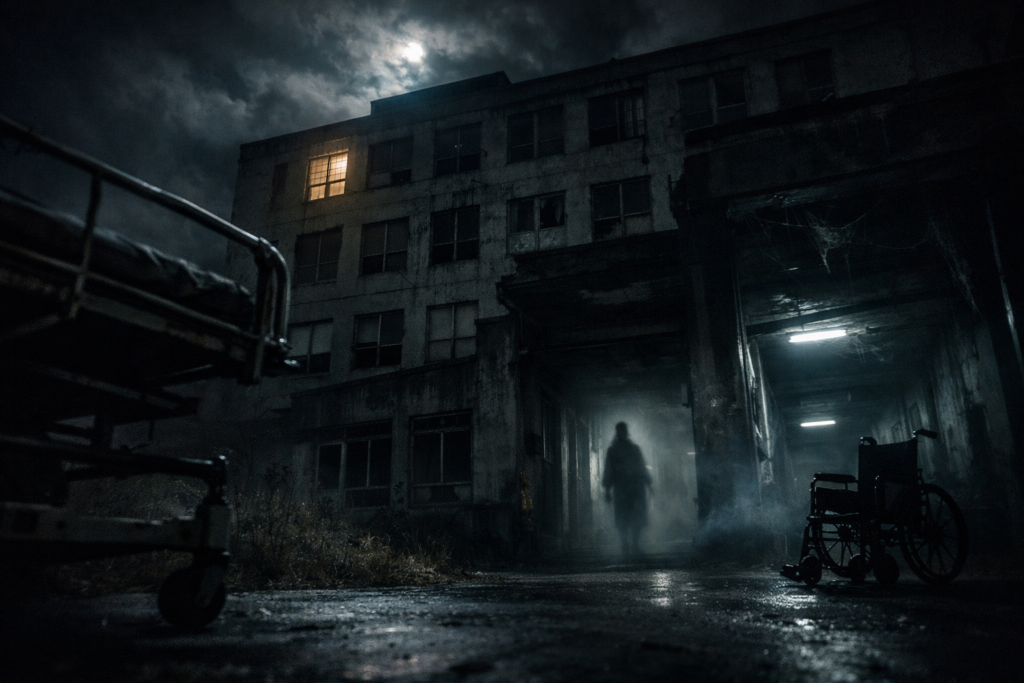
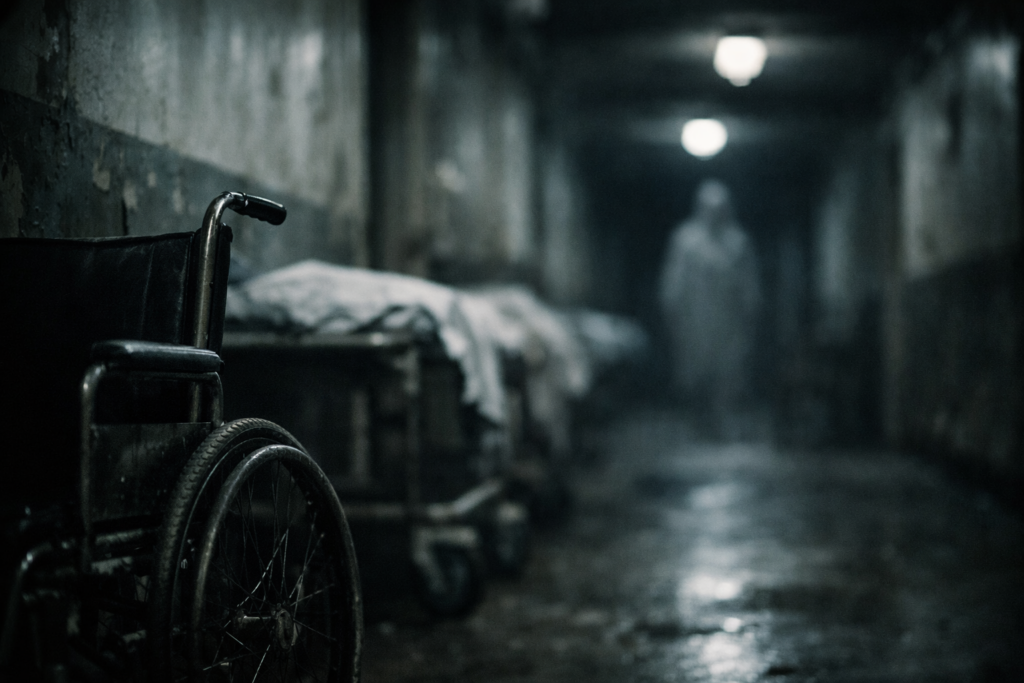
Reports echo across locations, even when separated by region and decade. Apparitions in orderly silhouettes. Unaccounted-for footsteps pacing the length of a broken corridor. Disembodied voices—sometimes captured as EVPs—whispering at the edge of audibility. Cold spots in airless rooms. Sudden wafts of antiseptic where none is stored. Shadow figures observed moving against the direction of a single light source. And, on the lucky nights, anomalous shapes on thermal cameras or motion sensors flickering in empty wards.
In haunted hospitals, these patterns are the folkloric baseline. They are what bring repeat visitors, what lead hosts of investigative shows to roll the dice on four more hours in the dark. Even skeptics who sign their waivers and climb the steps know what script the building might hand them; believers arrive ready to improvise a response.
Witness Accounts from Haunted Hospitals

Accounts vary, but certain scenes play again and again. A small group at Waverly Hills hears a ball roll down a hall as if coaxed by an unseen hand. A caretaker in a retired surgical wing senses movement where there’s nothing to move. A camera left unattended at a nurse’s station at Linda Vista Hospital records a long stretch of silence, followed by three staccato knocks that no one present recalls making.
Many visitors describe an emotional overlay—sadness out of proportion to the setting, or a sudden spike of anxiety as they cross a threshold. Others recount the sensation of being observed from low-lit doorways or from behind the swing of an operating room door. These reports are specific to the moment, yet they line up with decades of similar claims at haunted hospitals across the country.
Investigations: Testing the Claims of Haunted Hospitals
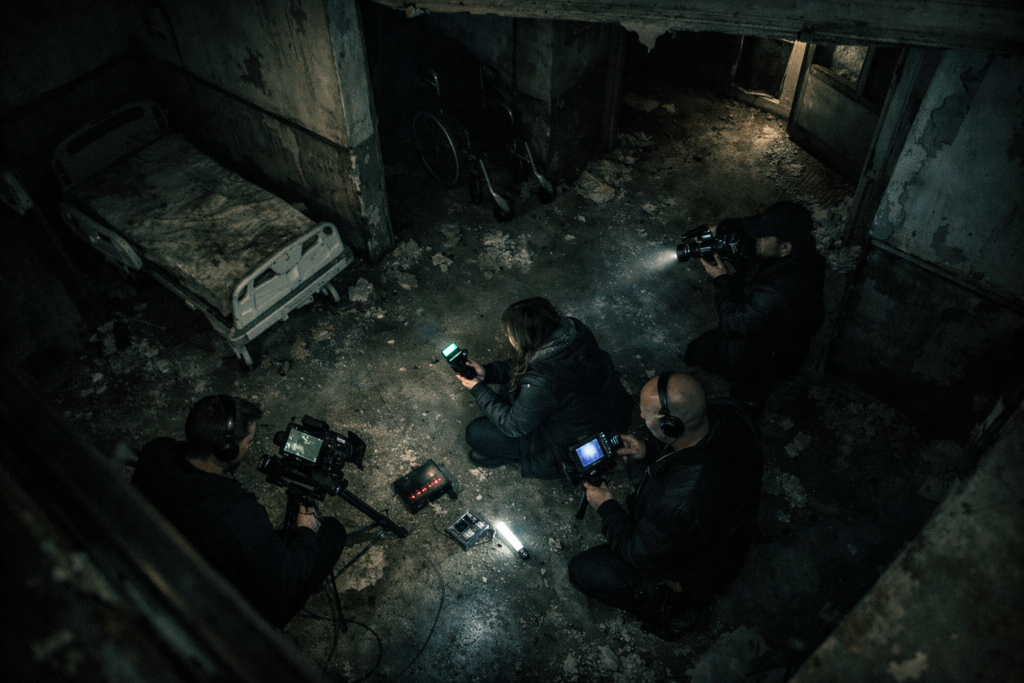
Investigators approach these sites with a mix of discipline and endurance. EMF meters sweep for electromagnetic fluctuations that might accompany—or explain—an experience. Digital recorders chase EVPs; headphones let a reviewer catch syllables the ear missed in real time. Thermal and full-spectrum cameras canvas silent corridors. REM pods, trigger objects, and data-logged temperature sensors sit like bait on steel trays, waiting for variables to change.
In America’s most cited haunted hospitals, television crews and local teams have generated hours of recordings. Some segments show moments that stick: a door closing on cue in a decommissioned ward; an EVP that seems to finish a question; a figure picked up in the corner of a frame where no person was assigned. Others reveal nothing unusual except the sound of an old building flexing. The best investigations admit both possibilities, walking the line between pattern and pareidolia, instrument readout and draft.
Skeptical Explanations for Hospital Hauntings

Skeptics emphasize context. Old hospitals are systems of cavities and conduits: shafts and vents that make whispers travel, plumbing that can thump like a fist, wheel-bearing doors that slither shut on floors too subtle to read by eye. High EMF from degraded wiring can induce headaches or the prickly sensation of being watched. Infrasound—low-frequency vibrations generated by wind across gaps or by dormant machinery—can rattle the body and alter perception without tripping the ear.
They point, too, to the power of suggestion. Many tours deploy decades of dramatic storytelling before the lights go out; the brain, primed by expectation and the cultural weight of haunted hospitals, can convert ordinary stimuli into extraordinary meaning. A temperature drop near a cracked window becomes a cold spot; a raccoon or stray cat reads as a shadow figure; a kicked pebble turns into a phantom step. For critics, the most convincing explanations are often the most mundane.
Daily Paranormal Analysis
Why this story, and why for so long? Haunted hospitals sit where American memory congregates: on the boundary between service and loss, science and its limits. Their very purpose—collecting the sick, tending the dying—imbues them with narrative gravity. The sites most often named, from Waverly Hills to Linda Vista, benefit from sustained visibility in late-night media, books, and streaming investigations, which seeds new visitors who bring fresh testimonials and footage back into the loop.
Believers find the case compelling because the patterns repeat. Across states and owners, without direct contact between witnesses, the same motifs arise—footsteps, voices, cold currents, shadowed silhouettes—and many are captured in ways that can be replayed and debated. They argue that the consistency and the emotional resonance of hospital stories suggest that something nontrivial is embedded in the fabric of these places.
Skeptics doubt the claims for precisely the same reasons. Repetition, they argue, is what you’d expect when expectation and architecture shape experience. If every abandoned ward offers long echoing corridors, intermittent drafts, and complicated acoustics, then similar reports will cluster whether or not a single anomaly points beyond the natural. EVPs may be artifacts of noise reduction, footsteps the consequence of thermal contraction, apparitions the brain completing a silhouette in partial light.
Connections to similar cases are obvious: haunted asylums across the Midwest and Northeast, hospital wings inside larger historic complexes, and even active medical centers with late-night lore among staff. The toolkit is the same—recorders, cameras, patient note-taking—and so is the debate. In that way, haunted hospitals function as American paranormal hotspots and classrooms at once: they teach us how we argue about the unexplained.
Does the mystery remain unresolved? Yes. Neither the most careful debunk nor the most dramatic EVP has closed the file. What we have is a growing archive, a contested map of places where architecture, memory, and human perception meet. The question that fills those corridors is not whether the dead linger, but how we interpret the living conversation between our senses and the rooms that shaped so many final words.
Why Haunted Hospitals Endure

Ultimately, the fascination is durable because it’s two stories at once. One is a cultural chronicle: epidemics faced with grit, communities stitched together by care, and buildings that outlived their budgets. The other is an inquiry into the borderland of experience—a study in how people confront the unknown when the lights dim and the old instruments gently click to life.
As long as there are places like Waverly Hills Sanatorium and Linda Vista Hospital to anchor the imagination, haunted hospitals will remain a recurring theme in American paranormal culture. Whether you go to test your nerve, to chase a data point, or simply to lean against a windowsill and listen, the night shift is still taking volunteers. And somewhere past the nurses’ station, a corridor is waiting, patient as ever, to decide how loudly it will answer back.