Someone Kept Moving the Flowers to One Grave
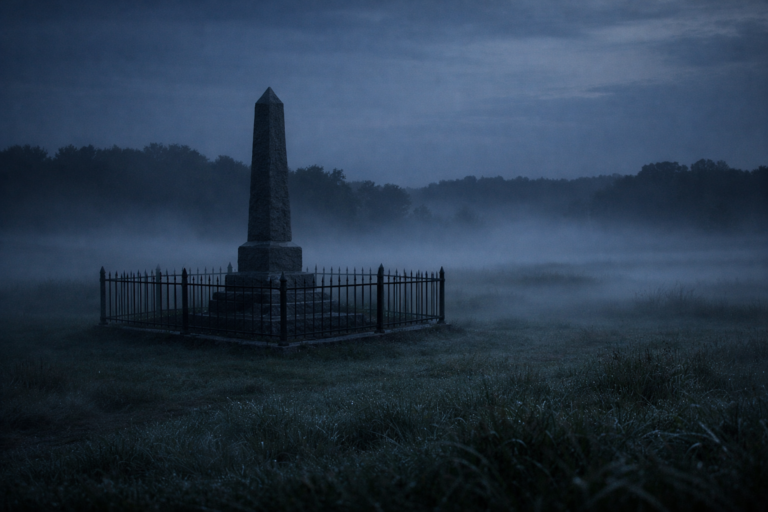
The caretakers were used to small mistakes—the wrong vase at the wrong stone, a wreath displaced by wind—but it was the neatness of it that bothered them that first week. Dawn washed the old cemetery in that thin, colorless light that made the granite look wet and close. The morning crew moved along their rows in quiet habit: picking up toppled flags, emptying the metal trash barrels, brushing off leaves that stuck like damp hands to the newer markers. It was then one of them noticed the first mismatch: a spray of pink artificial carnations propped at the base of a soldier’s cross that had been bare yesterday. The tag on the stem had handwriting he recognized from another family two avenues over.
He carried the carnations back without ceremony, shrugging at the thought of a visitor who’d lost their way in the paths, or a child who liked to arrange things in rows. The next morning there were more: silk roses crowded onto a plot that usually took simple wildflowers, and a jar of baby’s breath stranded in the wrong corner like a lost cloud. He pressed the flowers back where memory and records said they belonged, telling himself that the wind had been sharp in the night, that the tall iron fence could not keep out careless teenagers, that nothing meant anything in particular.
Two days later, they found the wrongness had organized itself. It was not scattered anymore. The crew turned up at first light and saw, from the top of the gravel drive, a concentration of color at the far corner by the old oak. The arrangement at first read like a patch of late summer, tidy as a catalog photograph. As they got closer, he saw that someone had taken flowers from different graves—the plastic lilies with the brittle edges, a bundle of purple asters in a chipped glass, even a hand-tied bouquet of daisies that belonged to a stone nearer the gate—and set them, grouped by height and color, before a single low headstone almost lost in earth and creeping thyme.
The stone itself barely rose a hand’s width from the ground, the letters muddied by lichen and years of winter plowing. No border, no vase holder, just the raw slate edge of it pushing its way through soil like a hard shoulder. He crouched and brushed the face with his thumb. Thumb came away green-black. The name didn’t give itself easily. Initials, a span of dates too short. He wiped again and found a month and day, then the year had been eaten by moss. The flowers looked new where they were; their stems dripped clean dew. He could have sworn each had been somewhere else the day before, carefully placed by hands that knew the graves, and now those careful hands had been undone and rearranged as though some quiet host had set a table for a guest.
They returned the flowers yet again, their wheelbarrow creaking under the gathered vases and jars. It took the better part of an hour to set everything back. The caretaker, who had kept keys to the place for twelve winters, checked the front gate and the back service gate himself that afternoon. He hauled the chain through twice and ran his palm over each link, noting old bends, the burgundy paint that peeled like fish scales off the iron uprights. He clicked the lock and pulled at it until the assembly sang against the posts. The sign-in book on his desk held no names but his own and the assistant’s for a week. There had been no visitors after dusk. He got the spare camera from the shelf, the one they used to deter vandalism in autumn, and set it on a post that gave a direct look at the old corner and the thin stone that seemed to be asking for something without words.
In the morning the corner was full again, only more exacting this time. Vases equidistant. Taller stems at the back, little white dots of baby’s breath in a clean semicircle. There was a strip of pale ribbon that had been frayed where it always snagged on wire; today it had been smoothed and tucked under itself. The gate’s chain was where he had left it, the lock’s shackle chalked from the raw, unpainted cut his key always made when it swung. The camera’s memory light blinked.
He pulled the card at the office and clicked through the dark. The pictures made a slow flipbook of nothing. Night sat gray over granite. Once a cat like a poured shadow paused and flitted between stones. A raccoon ghosted the back fence. At 4:13 the mist thickened and pooled. At 4:17 the first bouquet trembled at the edge of its grave, flower heads bobbing once as if someone had lifted them an inch to test the weight. At 4:18 the jar slid. Not knocked over, not grabbed and carried. It slid. Across damp grass matted by dew, as if there were ice under it or a strong, patient hand pressed invisibly against glass. The ribbon unfurled and drew a soft track that reflected the camera’s infrared like a slender, wet snake. One by one, other vases began to pull free, tips of stems catching and then straightening as they traveled. Some took wide curves, avoiding headstones with a courtesy that did not belong to animals. In the last frame before the card filled, the flowers settled in front of the low stone and stilled. There was no one in the frame to make it happen.
He said nothing to the maintenance men when they came in at seven and saw the corner made up again. He would not have had the language. He put the flowers back in their rightful places with a heat in his chest that had nothing to do with the climbing sun. He ordered another camera on a lunch break. By the third night, there were three angles on the corner, one on each gate, and a small motion-activated light that should have shouted at anything taller than a fox. The chain on the gate received a second length of chain, so heavy it grieved the iron with its weight. He set a chalk line along the lip of the office door. He was not sure what proof should look like when he saw it. He only knew that he wanted it contained, to be something his hands could hold.
It did not contain. Each morning brought the same quiet ceremony: the emptying of bright points from the rest of the cemetery, the way they made their way as if on rails to that one stone. The arrangements learned tidiness. The blossoms that tended to blow off in wind tucked themselves in among tighter stems. A single fallen leaf that had been caught in the shallow sag of the stone’s edge was gone at daybreak, though the push-broom leaned where he’d left it in the shed, bristles still muddy from the previous afternoon’s work. He found, in the notch of grass near the little stone, a clean line where lichen had been scraped back, raw slate exposed like a new scar. No tool of his had done it. He ran his finger there and felt the grit of it, a recent task. Bits of green-black lichen dusted the nearby dirt in a crescent, no footprints to anchor their scatter.
He moved through his hours as if moving through church—watching his words, listening for things unsaid. The neighbor who walked his dog along the outside of the fence at dawn nodded as usual, but the dog’s ears went flat as it drew near the far corner, and it pulled to the other side of the lane. A train sounded a long, tired horn from the marshes beyond, the note droning into the ground. He cleaned a name on a different stone and realized he was thinking about the old one’s letters, trying to coax them forward in his mind: a curve that might be a B, the way the curve opened to an A if he allowed it, a short name, a girl’s name. He had no story to go with it, no records easily at hand. It was enough that each dawn made the same gesture toward it.
The assistant sat with him in the office on the fourth night, both of them drinking coffee that had been boiled twice and would later harden in the pot. They kept the window open to the quiet, a quiet that was not entirely quiet: little pledges of sound from the world, the tick of cooling motors, a soft scuff of a branch. The monitors hummed. Static made a snow of the far corner until motion woke the clearness at 4:12. They watched the maples toss their small sleep, watched an opossum amble behind the tool shed and lift its pointed face to some thought of its own. At 4:19 a tulip in a weathered pot tipped and then stood itself upright again, as if shaking off a hand. Then it began to go. It took the long route, skirted the low pump, threaded between two stones with the careless expertise of someone who knew the ground. They leaned forward so far their chairs threatened to come with them, and the world narrowed to the screen.
It is a strange thing to feel afraid of a pot of flowers moving as smoothly as a pond boat in a breeze. Afraid because there was no breeze, only that thin air that made the back of the neck cool. Afraid because the gate camera showed the chain in its place, and the office camera showed their own faces reflected in the glass, looking scared and foolish. Afraid because it was slow and polite, because there was nothing messy to mount a defense against. The assistant reached for the switch to the yard light and then didn’t, fingers hovering. They watched the procession, more pieces joining as if summoned not by a call but by a decision. They watched each one arrive and stop with a precision that made their breaths fall into odd sync. The last jar clicked softly against stone. The motion light, useless all night, came on a second too late, spilling its square of white over an empty path.
He could not pretend any longer that a person had slipped in through some overlooked weakness. The cameras were not wrong. He looked at the piece of paper he kept under the mouse pad—the list with lock times written in a careful, old-fashioned hand—and saw his own insistence there like a superstition. He did not tell anyone else. Work was work. He kept his mouth and his schedule. He began, though, to speak under his breath to the old stone when he passed it. He said, “We see you,” because it seemed like an honest thing that cost him nothing. He wiped at the letters with a cloth before he left at dusk like he did for the new stones whose families sent money for upkeep. It felt like fairness.
Before the week was out, the little grave looked tended. The weed growth receded in a small halo that none of their tools had made, the dirt smoothed as if by a hand pressing down a bedspread. The letters came forward. He saw them sharp in the morning: not all of them, but enough. A first name, simple and old-fashioned. A dash between years that were barely years. The ground around the stone sank in a way he had been meaning to correct with fill dirt but had not, and yet in the morning that too had a neatness to it, a little border of stones set like teeth along the margin. He had no record of stones borrowed from elsewhere. A family had left a thin silver coin on one grave the day before for good luck; now it lay bright atop the old stone’s edge, catching cold light.
On the last night he stayed, he did not drink the coffee. He set the chain and heard each link settle into its place as if the gate were a living thing that exhaled after a day’s posture. He closed himself in the office and turned off the overhead so only the monitors lit his hands. Three forty. Four. The hour was a place between pages. He felt that gentle pressure again, the feeling of being watched not maliciously but with attention. When the first bouquet on the far western row began to move on the screen, he stood without meaning to, the chair’s legs squealing on linoleum. Out in the yard, the dew stitched a white film over grass. The shapes on the screen made their passage, dignified, no jostle, and he put his palm against the glass of the window and expected the night to be cold to it and it was.
He unlocked the gate at six and walked the distance to the old corner with a slow, steady step. He did not touch the arrangements. He looked at them a long time. The stone was cleaner than it had ever been under his watch. Lines around the name were crisp as if drawn new. There was a little half-moon of scraped lichen at the base where someone had worked. He checked his shed. The scraper and wire brush were hung where they belonged, rust where it had been yesterday, no dampness to suggest recent use. He told the assistant to leave that corner as it was. He could not explain the instruction, so he did not try.
He went back to the office to fetch his jacket and the small padlock key and found what he hadn’t been looking for. The office door stood the inch it always stood, the chalk line unbroken. On the threshold, centered like an answer, lay a single fresh white carnation, beaded with dew as if it had been placed the moment before dawn. It did not belong to any arrangement that morning. He knew because he could name each bouquet now, remembered the slight curve of wire in one, the rusty loop of another handle. This carnation was new. Nothing else in the room suggested an entry. The gate clicked where he had left it. Out at the far corner, the little stone sat with its strange court of flowers. He did not pick up the carnation at first. He stood and listened as the cemetery took on its morning sounds—the caw of three crows on the fence, a truck shifting gears on the road beyond—and he watched, as if watching would make a difference, the slight drip of water from one carnation petal onto the office floor, a neat dot in the wrong place.