

Waverly Hills Sanatorium: Why the Death Tunnel Still Draws Investigators
Content note: Mentions of illness and death
The hill holds its breath when the sun drops. Concrete yawns open along the slope like the throat of a mine, a cool draft slipping out as if the building itself exhales. Locals don’t need directions—everyone in Louisville seems to know the way to that ridge and the broken red-brick monolith on top. They call it Waverly Hills Sanatorium, and they still talk about what waits inside: the voices in the stairwells, the drag of footsteps across empty corridors, and the long, slanting “death tunnel” that swallows light and gives back whispers.
Even decades after the last patient left, the site keeps calling investigators and late-night radio audiences. The central claim hasn’t changed: something remains in the dark at the edge of the city, and the heart of it beats in the tunnel that once moved bodies unseen. Tonight we retrace the stories—what’s known, what’s claimed, and why the mystery endures.
Nightfall at Waverly Hills Sanatorium
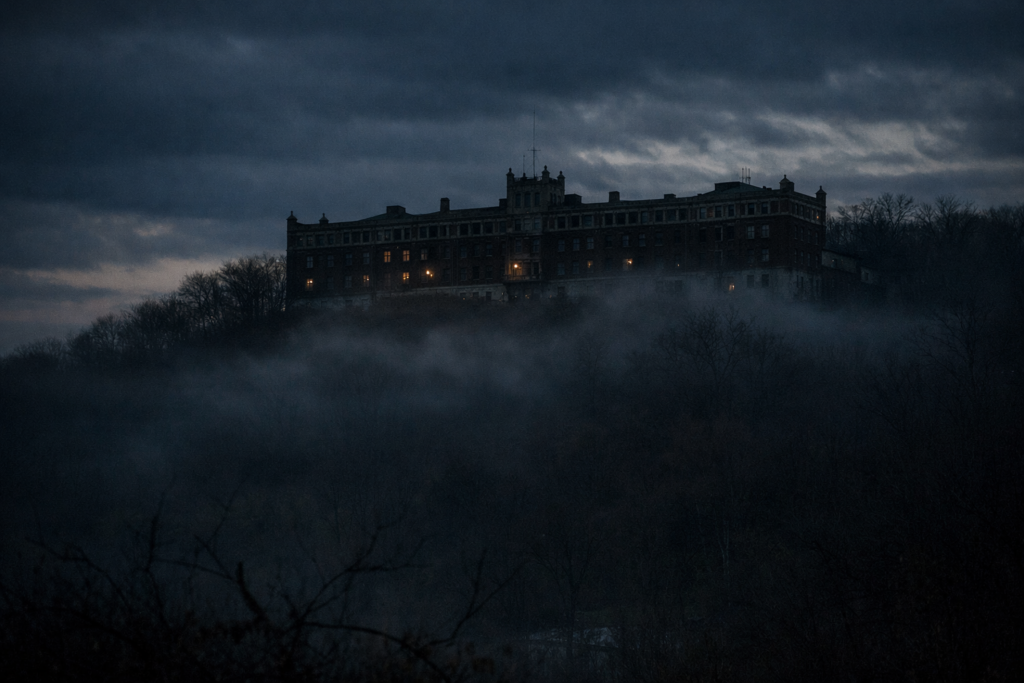
Perched on a wooded rise, the main building reaches like a tired ship, five stories of arched porches and windowless eyes gazing over the treeline. When the wind comes up from the Ohio River, it combs through corridors and whistles along the flaked paint, stirring leaves that have no business being that high off the ground. The courtyard grasses have learned to bow under the weight of rumor.
The infamous tunnel cuts down the hillside at a steep angle beneath the structure, a long concrete chute with a stairway along one side. When daylight hits the mouth, it fades to graphite halfway, then ends in an absolution of black. Many visitors, even on guided ghost tours, tend to linger at the lip—one step in, then two—listening for a sound they tell themselves won’t come.
The History of Waverly Hills Sanatorium
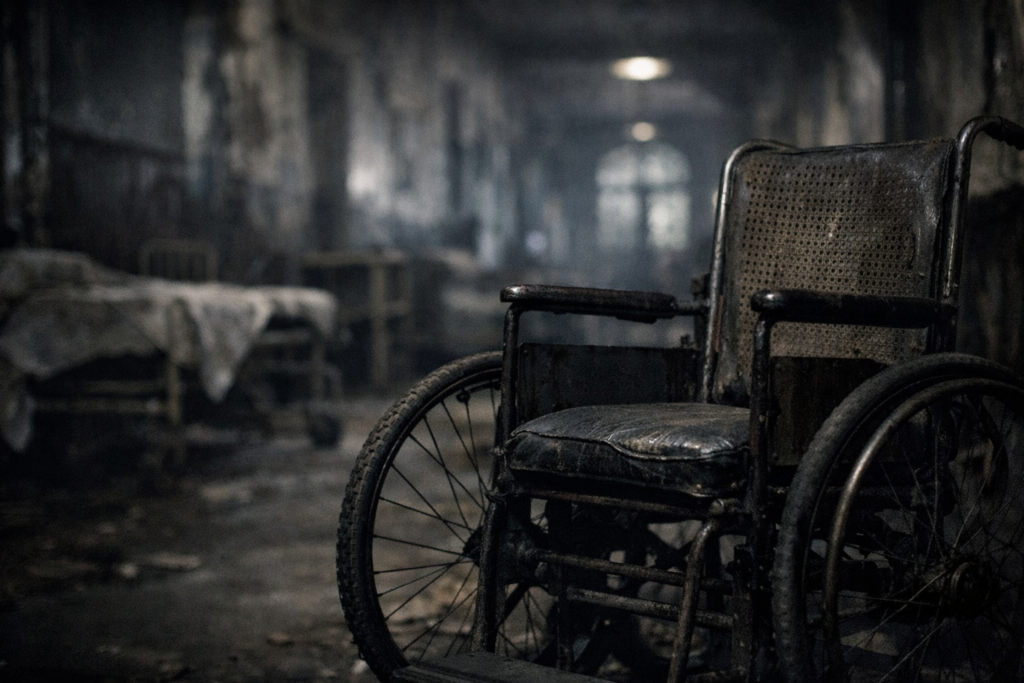
The building began in an age when tuberculosis was called the White Plague and fresh air was medicine. Louisville’s expanding population and industrial growth fed the disease’s spread, and the ridge provided clean breezes, distance, and room to build what became a self-contained treatment world: wards open to the air, surgical rooms, kitchens, even recreation spaces to keep bodies and spirits afloat.
The so-called body chute—”death tunnel” in modern parlance—served logistical needs. Supplies could be moved up from the lower road, and, according to widely repeated staff accounts from the period, the deceased could be transported out of sight of patients. Later, as tuberculosis treatment advanced and cases dropped, the hospital fell quiet. Administrators moved on. Years of decay turned the walls porous to vines and rain. Then came documentaries, paranormal television, and a structured tourism economy of night tours and investigations. The result: a modern identity less about medicine and more about lingering presence.
Hauntings Reported at Waverly Hills Sanatorium
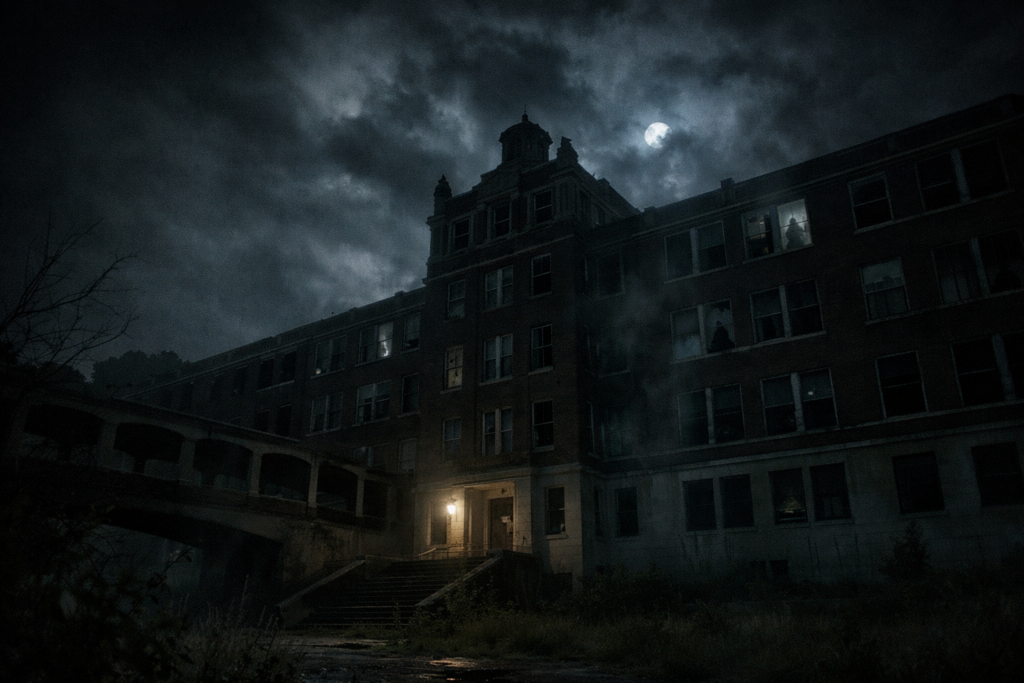
Reports have settled into recognizable patterns. Visitors describe ghostly apparitions in doorways, fleeting shapes that pause as if aware and then fold back into shadow. Shadow figures—the slender, oddly dense silhouettes that people swear block light—are said to cross halls at the far end of the fifth floor. Voices are among the most common claims: soft, conversational tones that never quite form a full sentence, names called from stairwells, or a distant “hello” that seems to roll along the tile.
Footsteps are a constant in testimonies. They come from behind, or from floors above that should be empty. In the tunnel, the soundscape tightens: a rhythmic tap as if someone is descending the unseen steps, shuffling grit under their heels, then the surprise of a footfall directly behind an investigator where no one stands. Many describe temperature drops near the midpoint of the tunnel, as if a line had been painted across the air.
Witness Accounts from Waverly Hills’ Death Tunnel
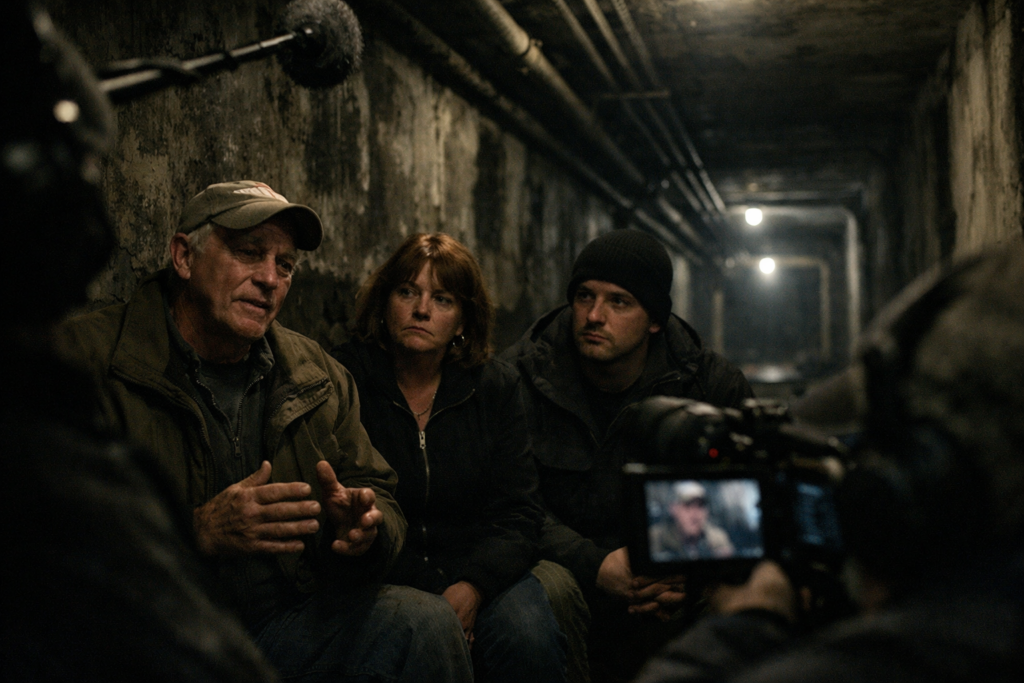
Those who have walked the tunnel at night tend to start their stories the same way: they turned off their lights and tried to let their eyes adjust. They describe a layered darkness broken only by the soft geometry of the handrails. A few mention hearing a murmur that they believed was water—until the cadence shifted and resolved into something faintly like speech.
Guides on ghost tours recount repeating patterns. Groups that stand quietly midway often report footsteps that match the count of the last person to descend, as if the tunnel played back the moment. Some claim to see a figure at the bottom landing, too far and too dim to describe, but distinct enough to lift hearts into throats. Many insist they felt watched. Whether whispered or said aloud, the same refrain returns on the surface: It feels wrong to turn your back on that incline.
Paranormal Investigations at Waverly Hills Sanatorium
Waverly has become a laboratory for paranormal investigations. The site regularly hosts organized teams and television crews that bring arrays of equipment—digital recorders for EVPs, thermal imaging cameras, REM pods, EMF meters, laser grids, and full-spectrum video. The tunnel, more than any other place on the property, attracts their focus. Teams will stand at set intervals along its length, calling out questions and marking time.
Across a broad sampling of televised and private sessions, investigators have presented EVPs allegedly captured in the tunnel, often interpreted as single words: names, yes/no responses, or simple commands. Thermal cameras have captured apparent cold spots that drift up-tunnel, contradicting the expected flow of air from outside. Laser grids sometimes hint at interruptions, and motion-triggered devices have lit in sequences some interpret as responsive behavior. These results are not uniform; repeatability remains elusive. But the tunnel consistently yields the moments that end up in highlight reels and documentaries, reinforcing its reputation as the building’s most active artery.
Skeptical Explanations for Waverly Hills Phenomena
Skeptics point to a long list of natural and psychological effects. Acoustics in the tunnel can mimic whispers as air moves and bounces sound off concrete. Distant traffic, animals, or other tour groups can seed “voices” that fade into the suggestion-heavy atmosphere. Footsteps can be explained by water drips, debris slide, and the echoing structure, where a single scuff can sound like a sequence on a different level.
Light contamination matters. A flashlight beam two landings down can resemble a moving shape if it catches dust in the air. Human vision under low light is primed for pattern completion—pareidolia—creating faces and figures from contrasts and voids. Physiologically, the tunnel is damp, cool, and moldy; stress, mild hypoxia, and anxiety can amplify sensations. Finally, there’s the power of narrative. Ghost tours set expectations. The mind hears what it’s trained to hear; once someone says “Did you hear that?”, others will, too. This doesn’t mean people aren’t experiencing something; it means the cause might be more ordinary than extraordinary.
Daily Paranormal Analysis
Why did this site, of all the region’s abandoned places, capture the spotlight? The answer sits at the crossroads of history and design. Hospital Hauntings resonate because medicine and mortality are braided together; a tuberculosis hospital, especially one this large, multiplies that effect. The “death tunnel” provides a potent symbol: a literal downward passage associated with passing on, easy to film and impossible to forget. When investigators describe a reply in the tunnel or a figure at its base, the story is already arranged in the audience’s imagination.
Believers find Waverly’s case compelling because the patterns repeat: disembodied voices in multiple locations, footsteps in empty spaces, and apparitions reported across eras and by unrelated groups. The tunnel’s consistency in producing anomalies—be it EVPs or temperature swings—feels like a controlled experiment with a known hotspot. Add the building’s relentless presence on paranormal television and ghost tours, and you have a feedback loop: more attention invites more phenomena, creating a body of lore that seems to validate itself.
Skeptics, however, have solid footholds. They argue that the site’s decay, heavy storytelling, and architectural quirks can manufacture sensation. Equipment used in Paranormal Investigations can be finicky—EMF meters react to wiring and phones, recorders pick up stray radio or environmental noise, and REM pods respond to movement, temperature, and even insects. Without rigorous controls, the data remains ambiguous. In that ambiguity, they say, the mind fills gaps with narrative.
How does Waverly compare to other Haunted Hospitals? Trans-Allegheny Lunatic Asylum in West Virginia offers a pointed parallel: an immense complex with a traumatic past, frequent tours, and televised investigations. Both sites center on liminal spaces—long corridors, locked wards, stairwells—that compress air and magnify suggestion. But the death tunnel gives Waverly a unique archetype. Where other sites trade on whispers and windows, Waverly gives you a slope into the earth and invites you to listen. That image binds the story to place more tightly than most hauntings can manage.
Does the mystery remain unresolved? Yes. Despite the years of footage and recordings, no single piece of evidence has settled the question. Yet the story’s traction doesn’t depend on closure. It depends on repetition, on the nightly gamble that something will happen again in that tunnel and that this time, the recorder will catch it clearly. In that way, the legend persists not just because of what people once endured here, but because of what the living still seek.
Why Waverly Hills Sanatorium Still Matters
Sites like this become cultural mirrors. The hill, the corridors, and the tunnel ask how we remember suffering and what we do with the residue of places where many died. Ghost tours keep the lights on and the doors functional. Television keeps the name in circulation. And the city keeps a wary affection for the landmark that refuses to fade back into the trees.
Waverly Hills Sanatorium will continue to draw those curious enough to walk below ground and wait. Whether they find spirits or their own reflections inside a darkened lens, the wait itself shapes the story. At the mouth of the tunnel, where warm night air turns cool and sound slims down to a wire, people lean forward, quiet as patients, and hope the hill will answer. That is how legends are fed: one careful step into the dark, every night, for as long as the tunnel breathes.


