The Drums Started After the Fog Rolled In
They came at dawn because the guidebook said the light at that hour made the lines of old ground easier to read. The parking lot gravel cracked politely under their tires. Breath wasn’t yet visible, but the air had that early-morning chill that collects in open places. A low flag stirred half an inch and then forgot to move. People stepped out speaking quietly without deciding to, as if it were a church or a library instead of a piece of mown earth between a road and a tree line.
They followed the path that curled along the markers: granite and bronze and neatly painted signboards with maps in relief. The plaques gave dates and fragments of letters, the names of units and commanders, arrows showing the direction of advance and retreat. A split-rail fence traced a seam across the field—a suggestion of where a fence had been. The grass was wet enough to darken shoes, dew clicking like sugar when ankles brushed the taller stems. Someone read aloud a caption about “the lower field” and “a skirmish turning by the old orchard,” pointing to a square of trees no longer there, just a black-and-white photograph of them in a case. They stepped off into the trimmed swale that the plaque called the old line, just to feel the shape of it underfoot, their shoe soles touching ground where a map had put arrows.
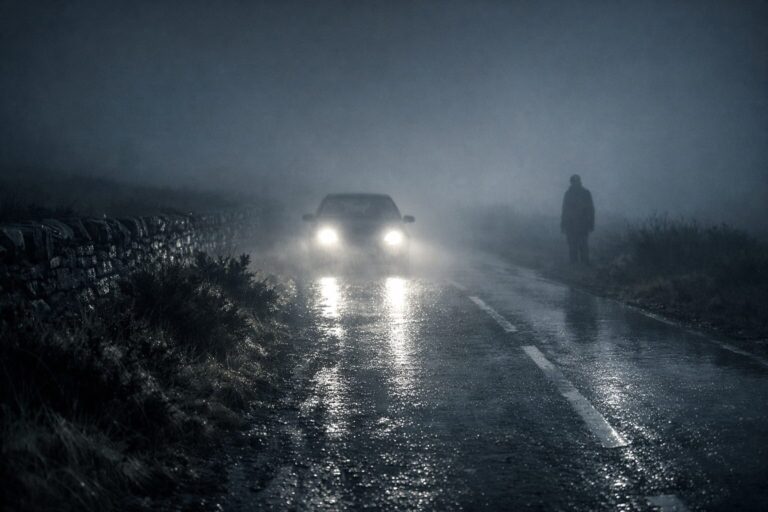
A ranger unlocking the visitor center doors had said it would be clear all day, cold early and T-shirt weather by lunch. One of them had looked up the forecast the night before and again before leaving the house: sunny symbol, low chance of anything, a cartoon of a perfect morning. For a while, the sky at the edges agreed: pale eggshell to the east, a thin coin of light pressed shyly into it. Then, without arriving from any visible distance, the fog appeared.
It gathered first along the low spot of the field, a white band that could have been breath held along the treeline. In another minute it uncoupled, slid forward in a careful unfurling until it laid a sheet over the furrows of ground as neatly as cloth over a table. There was no wind pretending to blow it, no tricks of weather one could point to. The air simply seemed to change its mind and condense. Someone glanced at her phone. The little sun on the screen looked obstinate and irrelevant. The fog kept coming and took their calves and then their knees, the moist chill of it pressing through fabric. Sound changed with it—edges of it dulled and came back with a softness that hid how near things were.
They read a few lines more, as if by following the format of a visit they could argue the morning back into itself. The letters on the next plaque beaded with water until the words were see-through. Their shadows went out like a polite light, and as visibility narrowed to fifty feet, a small noise fell into the new white: two quick taps, like a stick adjusting in a strap. It happened again, this time not tentative. Then the pattern set.
At first the beat felt like an echo of something that must be close but politely unseen—someone practicing below the ridge, perhaps, or wood knocking into wood as a truck rattled a hill. It did not behave like that, though. A steady drum cadence grew into the field, measured and plain: a timekeeper with no flourish and no show. It rolled through the fog with a low skin sound, not the snap of modern snare but a rope-tension voice that knew how to be heard outside. Left, right, left; a small roll filling the space between steps like rain sifting into the corner of a room. It was the sort of beat meant to tell feet what to do.
They stopped without needing to speak about it. One of the men, who had taught music for most of his life, said very quietly, “That’s not a kit. Field drum,” and did not smile about it. He named nothing else, but his head had the tilt of someone reading an old language. The sound sat where the posted diagram had shown a skirmish line running: along the long shallow of the lower field, hugging the place where the ground might hide a company if a person had reason to hide one. Someone called out a hello, his voice thin where the fog trimmed it. The drum did not stop or hurry or acknowledge. It kept time for something that was not there to be seen.
They moved a few paces, trying to triangulate by feel. When they edged toward the silent cannon line—painted black on refurbished carriages—the beat drew left without moving, as if the geometry of the fog changed faster than they did. When they turned to follow it that way, they found it off to their right, still perfectly in the measure it had chosen. There is a distance a sound can keep from a person that is not a measure in feet so much as a posture; the drum held that posture.
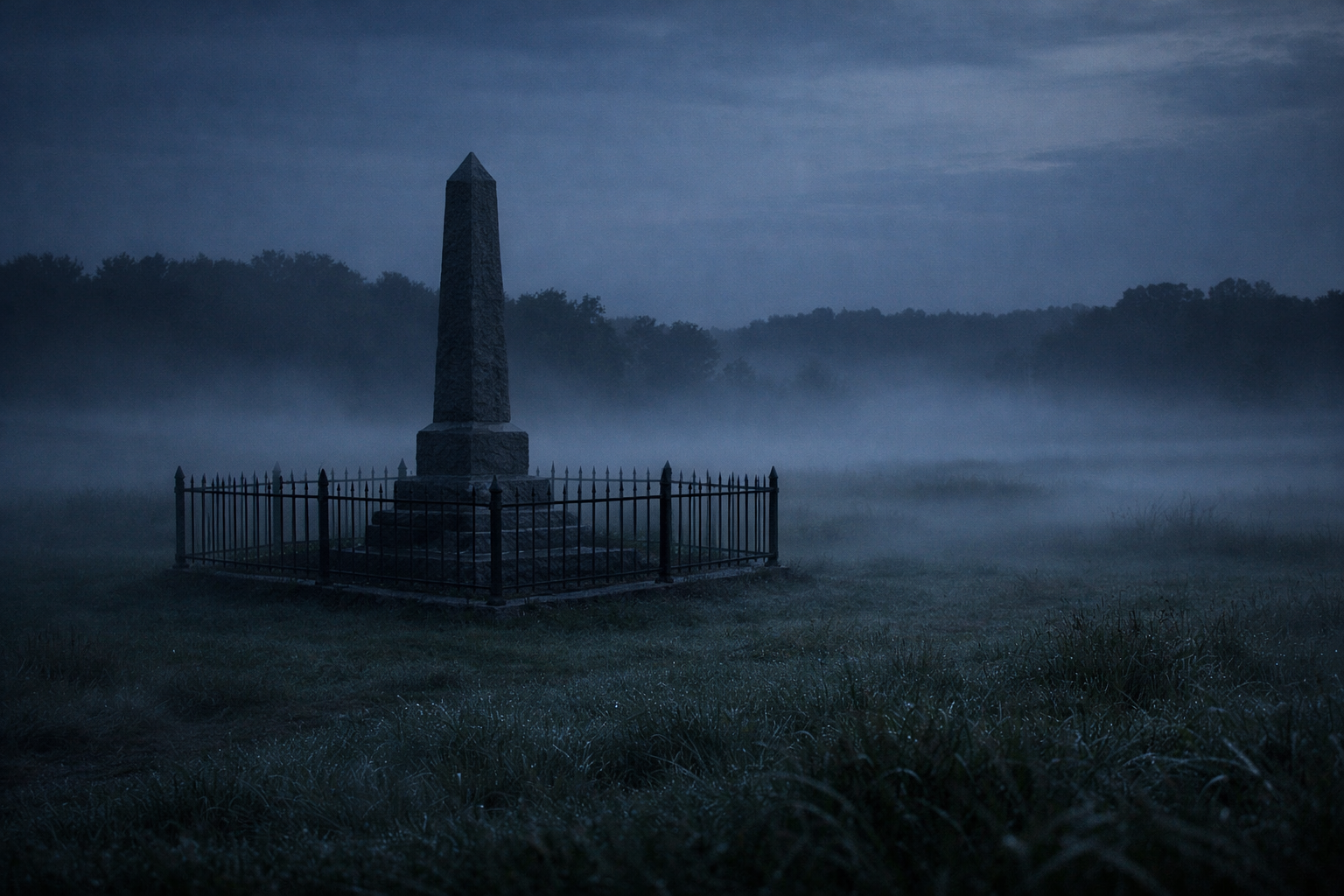
The pressure of it grew in a way that was not loudness, more a density the ear felt in places it did not know it could. The woman in the group felt it under the balls of her feet, a small muscle in the ground insisting at a rate her pulse decided to argue with. The ribboned wreath on the nearby monument had beaded and darkened since they’d first walked past it. Coins on the plinth wore thumb prints dull bright. The iron fence that ringed the square of stone exhaled little commas of water off each spike and then caught more.
They stood by the fence as the beat went on being obligate and unembellished. Somewhere very near, a bird would have complained if birds still had opinions in that minute. The fog swaddled sound and gave it back without a location. It had the implacable patience of a metronome and none of its domestic comfort. One of the men laughed once, a short syllable more to hold a place in his stomach than to admire anything.
Then the cadence swelled. Not in decibels, not exactly, but in presence, the way something too large to be in a room will nevertheless stand behind you and wait while you try to conceptualize it. The rolls rang with more skin and less air, the knuckles in the beat going heavy, the measure rising at shoulder height until there was no tilt to it, only flat insistence. It came from the field. It came from the near air. For a breath, each person there located it to the left of the cheekbone. A man’s voice said, “Okay—okay,” like a person to a dog. The fog was a wall and a floor and a ceiling, and then it did something stranger still.
A seam drew through it by the iron, a column of density like a darker color threaded inside the milk. It was not a shape so much as the suspicion of one, something man-sized but colder than the air around it. It passed along the fence without touching, but the fence knew it. The iron trembled as if the weight of a coat had brushed against it and found nothing to catch. The brown ribbon on the wreath lifted itself an inch and let go again, not because a breeze had asked it to. A thin fringe of dew on the top rail traveled a finger’s breadth and stilled. The pennies turned a fraction under water grown momentarily grainy. The seam crossed the square of stone and moved back toward the lower field, leaving no bend in the grass and no mark in the soft earth between blades. It partook of the fog and unparted it as it went, like a thing moving through a pool after the water has decided not to acknowledge motion for a living thing anymore.
The drum cut off. It did not fade or wander. It ended on a neat edge you could have held like a card between the tips of two fingers. The silence made the morning sound wronger than the drum had. Faces emptied of whatever tight concentration they had taken on in the minute before. The woman noticed her own hands had kept the count the entire time, fingers pressing thumb to forefinger, forefinger to middle, a habit she did not know she owned until she chose to stop and found the lack of it startling.
They let a long parcel of time stand without anyone deciding its size. Then a throat cleared and someone said they should go back up for a minute. They went, not quite in a group and not quite alone, using the path’s wooden posts to find a way when the arrows on them were a blur in a pale world. The quotes on bronze about courage and cost waited where they had been installed years ago. The old photographs kept looking outward in their little sheltered boxes with the same tastes for dust and condensation they had had since they were framed. None of it had an explanation to hand they could accept, even the ones who tried to produce one out of obligation to their own ordinary lives.
By the parking lot, the fog lay in a thinner skirt, as if the open ground had pooled it and then exhaled. Voices found their edges again and returned to habit. The argument about trucks and speakers and the road ran itself dutifully until even the man making it heard how it didn’t fit and stopped out of a respect he hadn’t named yet. The woman clicked the car lock and watched the tiny red LED blink, the first man-made beat of the morning to admit where it came from.
Inside the visitor center, a ranger wrapped his hand around a paper cup that had cooled while nothing very remarkable was supposed to be happening. He listened in a manner that did not perform listening and did not ask for agreement. He asked what time, and where they stood when it started. He called maintenance on the radio. The reply was a sleepy “Negative” for anyone on the lower field. He wrote the time down and the word fog and then added drumming and underlined it once, a gesture that might have been habit, or acknowledgment, or a way to balance the line on the page.
When the fog thinned to strings they could walk through without tasting it, another ranger went along the path with them. He looked for prints because that’s what you do when people ask you to. He pointed to deer marks at the breaks in the fence—two clean toes sprayed a little out—and showed the different way a man steps when he stops and when he hurries. In the wetness beyond their own, he found nothing newly made. The ribbon on the wreath lay down again, tired and obedient. The coins blinked the same curly reflections under the same thin water as before.
In a small library room with blond wood and a hum that was likely the HVAC but that also might have been the morning’s sound attempting one last hiding place, a volunteer in a cardigan set a folder on the counter. If they wanted to read, she said, there were copies, and if they didn’t, they could still take the idea of them away. The folder held a carbon of a Works Progress interview from 1938 in which a farmer said he’d “hear a tattoo walk the lower field when the fog set down.” A penciled margin from 1957 noted “cadence at dawn—no events on calendar—source not found.” A typed report from 1989 underlined the same word the ranger had just underlined: drumming.
Outside the glass, blue returned exactly the way the forecast had drawn it. The field went bright in the places it could, the tree line resolving into its separate trunks like a choir detaching back into single breathers. Down at the community center, a youth team ran laps, their calls overlapping like birds, their hands clapping a rhythm short and cheerful and fully owned. Every sound belonged perfectly to its maker and to the distance it used to travel.
They drifted to their cars slower than they had arrived. Dinner tables would get a version of it that night, though not all of them. Some would keep it behind something more practical until a bridge seam beat their wheels into an accidental meter and brought it forward. The woman who had felt the small muscle in the ground would move around her house with the measured care of a person mapping new corners, and when the dishwasher thumped through rinse into its next step, she would notice the gap between two thumps and put a hand to the counter without meaning to.
The park closed and opened and closed again. Autumn arranged itself and unarranged. Flags shook on their lines and lay down when asked. Photographs in visitors’ pockets remembered morning in squares without depth. Then, on certain days, a low bank of fog would reach across the lower field whether anyone had made time to see it do so or not. The rangers tended the lawn and the stones and the stories in drawers. When someone came in out of that white and said, very carefully, what they had heard, a ranger would slide a bound book across the counter, a finger holding it open to a page gone thin where it had been turned often, and let the person read the underlined word.
Months later, one of the men would step out into a leaf-slick street and hear a trash can lid roll a long imperfect circle and then lock into something too old to be an accident. Or the woman, standing on her porch at first frost, would hold still through the train downriver and find that for two heartbeats the span between her and it behaved like the lower field with the fog on it, as if distance had remembered a trick it knew better than to use and did so anyway. On a morning with no forecast reason, the memorial’s iron will bead again, and someone will stand at the fence and wait to be told when to step. When the fog gathers itself to leave, it will do so with a pause, and there may or may not be a last soft knock within it that is only silence holding a shape because someone is listening.