My Mother’s Voice Came From the Crawlspace
After the funeral, I moved through my mother9s house with that floaty quiet that follows a storm, my ears filled with the sound of my own breath and the soft squeak of clean linoleum under my socks. The smell of her laundry soap lived in the towels no matter how many times I washed them. A knitting needle lay on the table with one stitch caught outside the row, scarf on hold forever. In the living room, the lamp with the dented shade made a pale, domestic island. I carried boxes room to room like a ferry, deciding what to set aside and what to let go. I spoke out loud, the way I always did when I was alone there, saying little nothings as if to a listener in the next room. At night I turned off the lights in the same order she had, hand drifting to the same notches on the same switches, pausing just a second in each doorway for no reason at all.
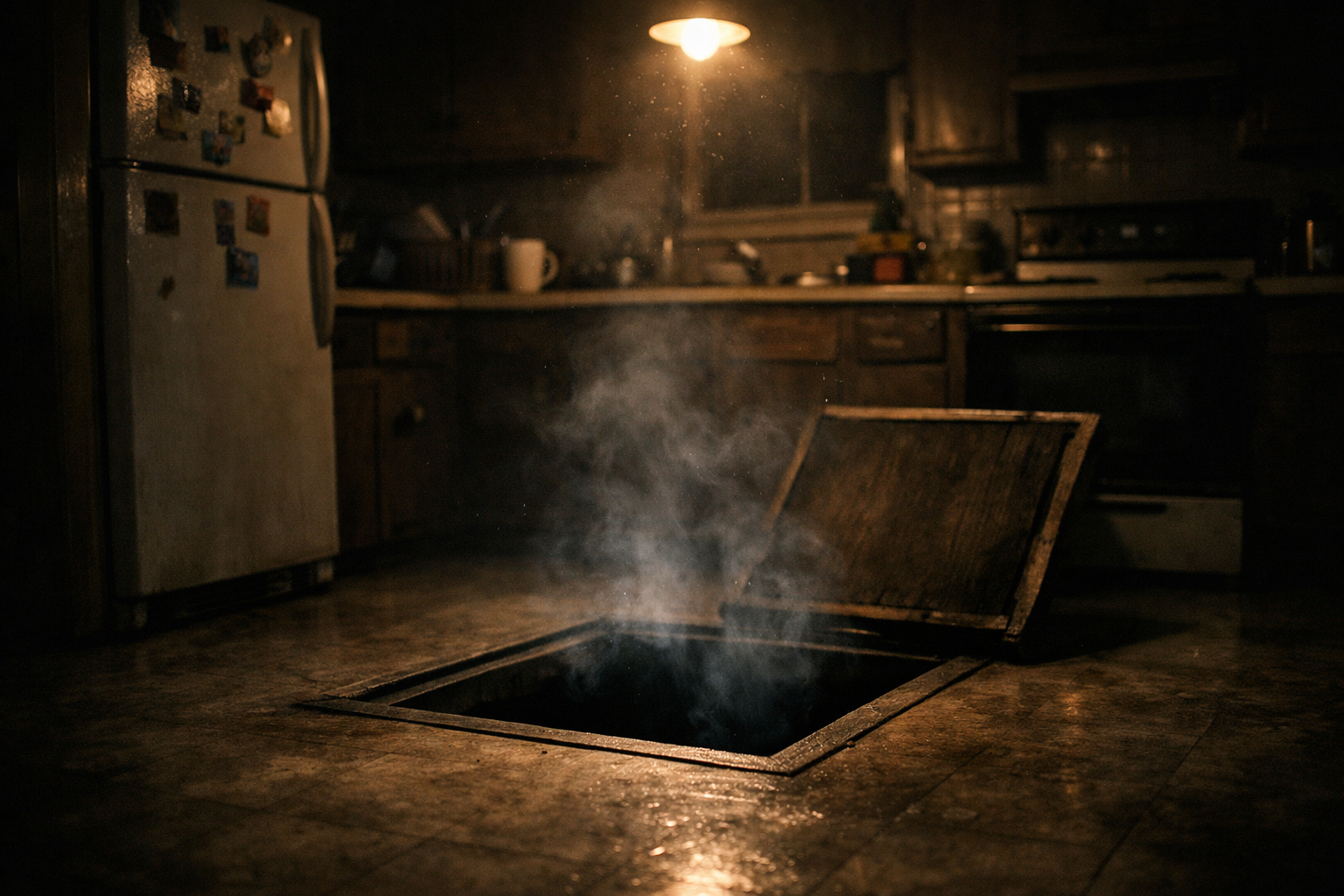
In the kitchen, the clock over the stove ticked in a steady, friendly way that used to be a kind of metronome to our evenings. Beneath the sink, under the neat coil of capes and aprons she9d folded into plastic bins, there was a square hatch that led to the crawlspace. It had a brass ring for a handle and a habit of sucking air when the weather changed. Mom used to keep jars down there, and for the thirty years I lived in that house, we treated it like a mouth: feed things in, reach down and take them out again. You never stuck your head in. You never said hello to the dark.
It was late on the second night after we buried her. I9d pulled the kitchen table away from the wall to wipe behind the legs and left my tea going cold on the counter. Every room had been visited by my hands; every drawer cataloged and shut. The house was as neat as a photograph, and I was tired in that deep, not entirely physical way that comes of holding back tears all day and pretending to be useful.
I was reaching for the light pull over the sink when I heard my mother say, from directly under the cabinet doors, where the hatch was, Porchlight promise?
The words clicked together in her precise way, the second word lighter, the last one like a question on a smile. It was exactly her. The aftertaste of a menthol cigarette in the p and the rounding of the r like candy in the cheek of it. I didn9t think, I turned. What? I said, reflex as old as my childhood. The kitchen exhaled. The little brass ring trembled in its recess.
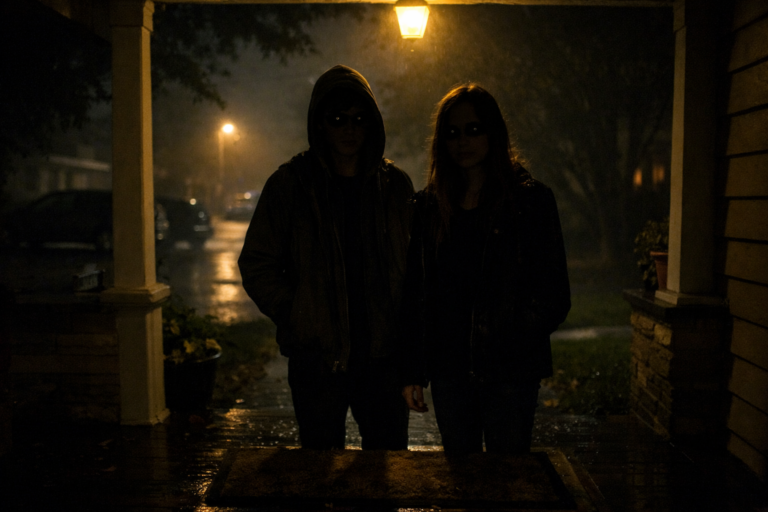
There were only two people who had ever said that phrase. My mother and I had made it when I was seven and scared to sleep alone. When she tucked me in, I would flip the porchlight twice and she9d answer from the hall, Porchlight promise, like an oath that we were lit up for each other in the dark. It was our barest, simplest spell. I had not heard anyone else say it in that cadence, the little catch between the words, the private music of the thing.
I put my hand on the counter because my knees had gone strange. Who9s there? I asked, because that is the line you say in empty rooms, and the moment the question left me, I knew exactly whose shape I was expecting in my mind, even as another part of me bent hard against it, insisting on mice, or pipes, or a dream with my eyes open.
From the square between the lower cabinets and the floor came her laugh, just that small, two-notes-out breath she used when she9d surprised herself. You hear me, she said. It wasn9t echo. It wasn9t muffled. It was as if the space beneath the floor had leaned up and set its mouth against the wood, using the grain as a throat.
I lowered myself by degrees to the vinyl, feeling the cold come up through my palms. The hatch cover had a smudge that would not wipe clean, a half-moon from winter boots. Say it again, I said, because if I didn9t ask the question I would have to think about answers, and I was not ready for those.
Porchlight promise, she said, and then, in the habit I had almost forgotten, she added, Always, always. That was mine. That was the words I used to say back, and she9d stolen them gently out of me, the way she did when she wanted to coax me into bed quicker. The two alwayses were the same shape as my own, the first one like a breath and the second rolled on the tongue. I only knew two people in the world who could have said it exactly that way. One was kneeling at the hatch. One had been set down into a hole much bigger than this one two days ago.
I told myself not to say my mother9s name because that was a boundary I could control in the moment. I said, Tell me the color of the cup I broke on my tenth birthday, and without any pause the voice under the floor said, Blue enamel with a chip shaped like Kansas, and I could feel the chip under my tongue again, the place where I pressed the metal when my stomach went bad. We never told anyone I9d been playing rock toss in the kitchen and sent it skittering across the tile. I had buried that memory in the crack behind the radiator and moved on.
What did you burn with me behind the garage? I asked, because grief turns you into a person who tests, and the voice said, gentle like a secret not proud, not cruel A letter I said we9d never mention and then we didn9t. The kitchen narrowed to a tunnel between my head and the hatch. I didn9t feel my heartbeat in my chest, I felt it in the drum of the cabinet doors against my cheek.
Remember the dryer? she asked, and then she imitated the oil-slick clunk of the old drum on the back porch, the sound it made when I hid in it and wouldn9t go to school. Tap tap tap, she went, three taps like she always did with her fingernail on the metal, the little metronome of mercy that had got me to laugh and roll out before I smothered. I had never told anyone about the taps. It was, I tell you this like I am confessing, the softest, truest sound I have ever loved.
I sat back on my heels. The ceiling pressed low. The refrigerator motor cut out, and in the blank that followed, time had a different texture, like a held breath. I was not cold, but the air found a way into me all the same. Where are you? I asked, and the voice, still hers, as if we were playing with a string and two tin cans, said, Right here with you, Button-Bird.
My full nickname. All three syllables, the little lilt on the hyphen like she used when I was five and had feathers from construction paper tucked behind my ears. Not Button, which she used in public, and not Bird, which she used when she wanted me to get off the counter. Button-Bird, the whole thing, just for us, said like a hand smoothed over hair. I looked at the brass ring and it looked back. The house felt like an ear. Pressure built, subtle at first, the way your head feels when a front moves in: a hand, not on my shoulder, but around the whole room, tightening in slow, patient degrees.
Do you want me to sing it? the voice asked, and before I could say no or yes or run, the dark under the floor began to hum, my mother9s pitched a little low on the first note, as she always did. I see the moon, and the moon sees me, she sang, and she clicked her tongue at the place she always clicked because she never could remember the next line without it. The tune wasn9t eerie, not in itself. It was what the song was attached to, the nights when rain pattered like fingers on the window and the porchlight made a small circle on the steps and our house felt floating and safe. That song came out of the crawlspace like breath from someone bigger than the room we were in, and the cold clenched down, slow, firm, like the sink was lowering toward my face and the gaps in the floorboards were widening. I found myself saying Please, without knowing to whom.
Porchlight promise, she sang between lines, and I heard the corners of her smile. My hands had gone stiff and wet where my palms kissed the floor, as if condensation were forming under my skin. The light above the sink brightened and dimmed by a breath, not a flicker, but a small motion like the nerve in an eye. Everything else was so steady that it made that one small thing feel like thunder.
I said her name before I could stop myself. It made the sound I used to make across the backyard when she called me in for dinner. The voice didn9t answer to it. She laughed again, a sound that used to come from the back of her throat when she bit her apple wrong and juice ran along her wrist. Come down and have a look then, she said like a dare, but not in a mean way, more like the way she used to say one more step when we stood on our front walk and watched thunderheads build over the school.
I wrapped my fingers around the brass ring and it was very cold. The coldness felt active, like something hoping I would keep holding on. I lifted. The hatch didn9t fight me exactly, but it suspended itself at a slant where light did not fall far and everything below was stale earth and the crosshatch of beams, the old mason jars with their twin light-streaked shoulders, a spiderweb like lace across a broken brick. There was no hole deep enough for her to be in below there. There was no place for a woman to stand beneath my feet. The smell was dirt and metal and the lemon soap she used to wash the floor. And yet.
I9m right here, she said, as if from the next room, and the soiled square of shadow under the cabinet called something in me forward like a seat at a table I knew. I found myself replying as if we were playing at the string again. I asked her to tell me what we had whispered when we swam at night at the lake, and she said the nonsense words we made up to sound like mermaids. I asked what she kept wrapped in the green dish towel under the loose board behind the stove when we didn9t have cash, and she told me the exact number of quarters in the roll and added, in a whisper, the one Canadian we never could spend. Little by little we built a hallway of words between us, and I kept expecting it to let me go or collapse like paper. It did not.
The lullaby thinned to humming. The pressure found a way into my ears and nested there, painless and whole, so that when I swallowed it made a little hot pop. It made me think of the time we drove up the mountain and she pulled over to make me yawn until I felt normal. We have to go, I told the nothing with her voice, because fear in me turned suddenly practical, a body moving its own hands. We9re done here for tonight. I said the words you say when you9re turning off the lights and going to bed. I closed the hatch with care, pressing it flat, setting the ring to lie in its cutout so it looked the way it always had looked. The humming stopped. The kitchen let go of me. I had to put my forehead to the cool cupboard door before I could stand.
In the morning my aunt came over with a bag of lemons and a sympathy pie and did not remark on the way the kitchen felt like an abandoned swimming pool. I told her I had heard something under the floor. She walked in and tapped the hatch with her shoe and laughed like I9d made a joke and then wouldn9t meet my eyes when I didn9t laugh back. Later, at my insistence that we check for a speaker or a radio or something that could explain, my cousin called a friend of a friend who brought a little wand that could sniff out signals. He walked around, blinking and thoughtful and apologizing to the air, and his device made the same little blip near the microwave it made near every old plug in the house, and nowhere else. The crawlspace gave up jars and a mouse nest and the brittle skin of a snake that looked more ghost than animal. It did not give up a voice.
My brother held the hatch open and said my name like we were kids and I9d gone too far on roller skates. He looked under there with a flashlight and showed me the beam moving over the dirt, and when he said See? it meant a dozen different things. I nodded because what else was there to do. When I slept, what sleep there was came to me in thin slices and took itself away again just as fast, and somewhere in there, in one of those seams, I heard the small rill of laughter and the tongue-click before the next line of the lullaby and that was enough to sit me straight up with my hands already closing, the way they had on the brass ring.
I moved out. I took the scarf and left the knitting needle. I took the box with our notes and the blue enamel cup with the Kansas-shaped chip. The house sold to a young couple with a baby on the way, and the real estate agent told me in a cheerful voice that kitchens sell houses and did I know I had the perfect starter kitchen? I said yes, it was very good for starting, and signed where I was told. We never mentioned the crawlspace. I told myself the house would soften under new footsteps and develop new phrases and new breaths and forget the shape of us.
It9s been a year and I carry the porchlight with me as a keychain click, two nervous taps of my thumb. On nights when I can9t sleep, I turn on my own kitchen light and stand with a glass of water and listen to the refrigerator go quiet and then come back, and in the notch where the sound disappears, I sometimes hear, not a voice saying my name, but a pause shaped like hearing my name will be the next thing I hear. When I set the glass down, the cabinet under my sink gives a little sigh, the way old wood does, and I feel the cold insistence of a handle that isn9t there under my fingertips. Porchlight promise? flickers across my mind, and without meaning to, my mouth makes the answer: Always, always.