The Famous Ghost Photo That Fell Apart Under Review
He liked the building after hours for the way it held its breath. The overnight set the alarms at nine, and until then there was a pocket of quiet permission: the copier asleep, the HVAC flattening the old carpet smell into something like warm paper. He locked the suite door from the inside because he knew the sound of that thumb-turn—the weighty click—meant he would not be interrupted. That was part of the deal he’d made with himself for taking the origin file home from the shared drive: thirty unbroken minutes to look at it with sense instead of stories.
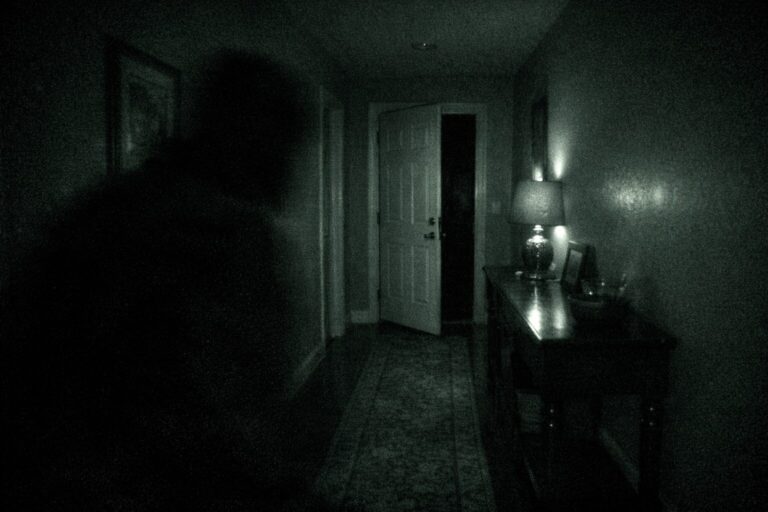
The photograph had become folklore in their small circle because of how ordinary it looked. No streaks or skulls, just the office hallway, the server room door on the right with its narrow strip of dotted safety film at face level, and something pale behind the glass as if a woman had been caught turning back. The story went that it was a former admin, gone in her thirties, who used to wear soft blouses and never left on time. People sent the image back and forth when the building was slow, writing things like you can see her hair pinned up, look. Someone had printed it and thumbtacked it by the break room packets of sugar for a month in October.
He pulled the original into the monitor, not the compressed version that had circulated, but the heavy file he’d coaxed from the old phone backup the photographer’s son had brought in. The metadata said 2015, mid-April, evening. The EXIF clock showed 8:41 p.m. He glanced down the real hallway to make sure he still had it to compare—the server-room door was still there, the same dotted band across the glass, the same baseboard scuffs dark as commas. Everything sat as it should. He exhaled and enlarged the ghost.
At first glance it did read as a person, there in the reflection: a slope like a shoulder, a tender negative where hair might be. But he began to pull it apart with the simple tools—lines set down the edges of the door, contrast up, exposure down to quiet the grain, color channels teased apart. The shoulder broke into the triangle of a glass reflection, the suggestion of a collar became the white dotted safety film catching the ambient fluorescents. The arc that people insisted was a cheekbone was a light from the vending machine at the end of the hall, flared and doubled in the glass as the phone came off a slow shutter. An outline that read as a hand was a smear of residue from a removed sign, catching just enough to matter.
He checked the motion vectors buried in the phone’s live-burst companion frames—there had been a small tremor, the photographer’s hands moving, then stilling, then moving again. Under fluorescent hum, phones can drag light in strange ways. He remembered the old coat rack that had stood across from the server room that spring; he found it in the background, a teeter of dark with shoulders for arms. He saw how the coat rack’s shape, reflected in glass, would nestle into the dotted film and make a human impression if you came at it wanting a human. He stood, dimmed the row of lights, opened his phone camera, stepped to the angle marked by that old metadata—five feet off center, three paces from the door—and let the vending machine glow throw itself into the glass. He breathed out and let his hand move like someone anticipating a shutter. The monitor showed the new picture beside the old, and they agreed in a way that made his scalp warm. That, he thought, was the “blouse.” That was the cheek. There was the arm that had never been.
He went through the rest of it like a mechanic. The “mist” by the floor was a compression artifact amplified by contrast, bare carpet pile flattened and revived. The “orb” that regulars pointed to was a dust mote lit hard by a copier’s sleep light, the kind that happen when you raise exposure and invite every particle in the building in for a drink. The soft edge near the jamb—people swore it was skirt hem—was the slow smear of the phone sensor trying to reconcile lit hallway with dark server room. He ticked them, one by one, feeling the thought of people he liked crumple a little and then straighten again in relief. It was not mean to take stories away, only merciful to let them breathe without all that certainty piled on top.
He almost emailed the notes right then, a clean breakdown for the Slack channel, but he made himself sit through one more pass, the habit that had saved him from errors more than once. He rolled the image all the way left and then all the way right, then down along the baseboard where the cheap carpet grew dark with traffic. And there—small enough to have been ignored across a hundred superstitious conversations—was a brass key lying wrong against the floor. It was not the onyx oval of a modern fob or the anonymous bite of a copy, but a narrow Schlage blank with a milled shoulder, tagged with a flimsy white plastic fob and a Sharpie “17,” thick where the ink had bled into the soft plastic. The tag’s corner showed a hairline crack like a cuticle tear.
He leaned until the desk pressed into his ribs. The “17” tipped a little, the horizontal of the seven drifting as if his hand had wobbled when he wrote it. He reached into his front pocket and felt the weight of his ring, the thud of keys against palm, and turned it over to the file-room key. Same brass, same blank. Same white tag, the cheap kind with the paper slip trapped inside a haze of plastic. On his, the “17” had bled into the edge because he’d pressed too hard. The bottom left corner had a hairline crack he’d made in winter when the tag caught the inside of a drawer and he’d tugged too quickly, thinking about something else. He held the metal to the monitor the way people offer a coin to compare to a photograph of a coin, and in the glow the two lines mirrored one another—the small tilt of the 7, the infinitesimal whitened ridge of stress in the same place on the tag.
He told himself key tags are a commodity. Plastic cracks somewhere, Sharpies drift. He told himself the “17” was a dirty trick of pixels. He toggled the color channels and the fracture held. He dropped saturation and the faint line still ran, a pale seam in thin plastic. He went to the metadata again. April 2015. He looked down the hall at the server room and remembered that back then there had been a keypad door, not a key cylinder. People had whispered codes. When they’d shifted away from the keypad to a deadbolt last winter, he’d signed for a master and marked the ring himself, writing the room numbers along the tags until the black stained the ridges of his fingerprints. “17” for the file room, because the file room had been Suite 17 back when the building had been partitioned differently. He had made that number. He had made that tilt.
He tugged an old email chain from the archive—someone had sent the ghost photo around, laughing, dated the same week the vending machine still took blue-lit bills. There it was: people making shapes out of light, one guy swearing the figure looked like it wore a scarf. There was a reply from the building manager joking about the keypad door jamming and how they needed a locksmith to get the thing to stop buzzing. He scrolled the thread and saw it reference a fire drill that hadn’t happened yet, and then relaxed when the dates lined up—the fire drill would be that fall, months later. He checked the creation date from the image header and the file on the old iCloud backup; the stamps agreed, stubborn. The photo belonged to 2015, when there were no brass keys for this hallway.
He set the printed copy of the dismissed ghost on the desk and listened to the air handler pulling long. Out past the server room the exit sign buzzed its constant, the machine sweet of vending coils pushing sugar into darkness. He walked the hall to test something stupid, to put his toes in the place where, in the picture, the key lay. There was nothing there now except traffic-grayed carpet and an office paperclip someone had crushed underfoot until it wore the shape of a fish.
He locked the suite from within, set the alarm, waited through the beeps with the flat patience that came from doing it nightly, and pulled the glass door until the latch caught. The vestibule lights stayed dim. He could see himself in a black square of night, a man with a ring of keys pushing them into a pocket like any other night. He went back to his desk because the thought of leaving without one practical anchoring act felt superstitious in a way he did not like. He took out his phone and made a photograph of the whiteboard he’d left beside his monitor—the week’s orders and a note about toner. He would email the debunk in the morning, he decided. The circle could keep their story in spirit, and the photo could become what it was: a trick of light and wanting.
In the elevator he thumbed the phone open to check the list. The reflection of his own face slid against the glass of the screen, the overhead fluorescents bending into little suns. The image came up. The marker letters looked grimmer under the phone’s truth than they did in person, like his handwriting had been made by someone tired. He zoomed a little to make out a number, and his thumb pulled the corner of the photograph up from the bottom left until the carpet came into view—his blue-gray office carpet tilted by perspective, edged by the leg of his chair and the base of the desk.
There was a brass key in the bottom of the frame, not centered, not posed, but there as if it had been lying there all along. The tag was white and mean with plastic glare, the number blacked in a way that bled. He recognized the split at the bottom left corner, the little whitened line that only shows when plastic shivers and sets wrong. The “17” leaned the way his numbers lean when his wrist gets tired. It was small enough to miss. It was the same enough to feel like a finger tapping his palm from inside the picture. He took the phone down from his face and looked at the elevator floor as if some trick could be laid out there, but the linoleum was only linoleum and the boot marks of the cleaning crew had dried into dull scuffs hours ago.
He took his keys out because there was nothing else to do and matched the weight in his hand to the weight of the thought of them. The file-room key hung on its tag, true and present, cool against the pads of his fingers. When he lifted the key to the edge of the screen the two corners, the one in his hand and the one in the photograph, flickered into agreement, like a coin and its own reflection.
He left the building without rewriting his message. He locked the outside door and listened to the panic bar settle, then walked the long glass to the corner where the street let wind in and, for a moment, the office in the reflection slid and doubled and then found itself again. Later, when he sat on his couch at home, the room lamp off, his thumb would drift the last photograph open one more time for the stupid comfort of making sure the letters of his list were still there, the marker strokes still his. The brass key in the corner would still be there too, very small and ordinary and placed in the wrong year, bright and exact on a patch of carpet that had been empty when he locked the door.