The Figure Crossed the Hall After the House Was Locked
I’m not a jumpy person. My job keeps me late and I’ve grown used to coming home to a quiet, sealed house, the kind of suburban quiet where sprinklers click on like applause at nine, and the only real light is what you left behind. That night I had left the house carefully: the door then the deadbolt, the soft hydraulic snuff of the storm door following me out. The keypad beeped its tiny goodnights and the app on my phone painted the house icon gray and stamped it with the little shield. Away. Hallway light off. Every switch swept down with the flat of my hand. I took a last look from the driveway—nothing in any of the windows—and pulled away.
I keep an indoor camera on the hallway because it sees all the rooms that spit out onto it: my bedroom, the guest room, the bathroom and the little office. A single camera with a view like a nervous eye. It points down the length of the hall from waist height on the console table, catching the edge of the runner rug and, if the closet door is ajar, a sliver of mirror reflecting anything that walks by. It was there mostly because my insurance likes that kind of thing. I don’t watch it. It just pings me when something moves, and I glance at it out of duty, the same way I check that I really locked the car, even though I heard the chirp.
I stopped at the pharmacy for detergent and coffee filters and stood in line behind a man buying a single balloon for someone’s birthday. The parking lot was the usual amber desert, moths batting themselves to powder against the lamps. That’s where it happened—my phone felt heavier in my hand and then chimed with the same indifferent tone it always uses: Motion detected: Hallway. I glanced down out of habit. The thumbnail preview was the familiar grainy frame, a strip of my rug and the faint gray tunnel beyond, a night-vision painting of my own house with all the warmth drained out of it.
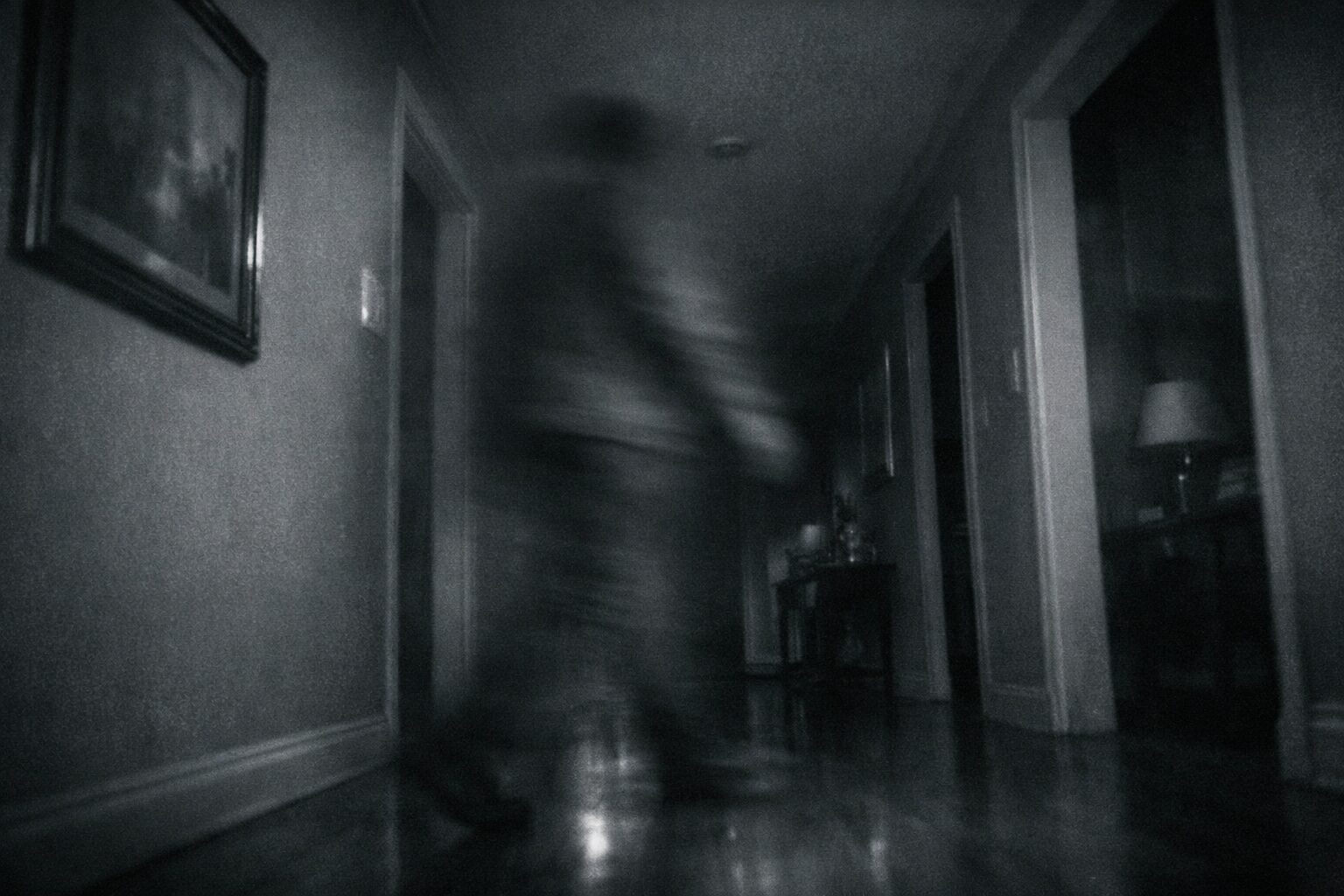
I slid into my car and tapped the alert. It opened to a clip already in progress. For a second I just saw that flat, washed-out hall and the darker oblong where the closet door was. Then something—someone—moved from left to right across the frame. It wasn’t like a shadow trick. The shape clipped cleanly over the doorway trim, dark against dark, passing with the cadence of a person. A shoulder, the tilt of a head, the negative space of an arm swinging. The figure cleared the mouth of my bedroom door and went on toward the end of the hall. Two seconds, maybe three. My mind made a perfect civilian decision in that moment, as plain and useless as instinct: I thought, Oh, I didn’t know anyone was here.
Except I did know. I had locked everything. The alarm was set. No one else had a key. I tapped back to the home screen of the app. Armed Away glowed its little badge. Doors: Closed. Windows: Closed. Last event: Hallway motion detected, 9:14 PM. I could picture the sequence of my leaving, feel it in my hands. The twist of the deadbolt, the click of the mechanical throw. The way I reach with my left hand and sweep the hallway switch down as I pass. I turned to look through the windshield at nothing—the slow-moving dark of the parking lot, the paper bags at my side leaning into each other like small, tired heads—and I realized my mouth had gone dry.
I called the neighbor across the street and asked if he was home, if he could just look at my driveway and tell me if anyone was there. He didn’t sound curious. He’d done this favor before: packages, a car door left ajar. He said his porch light was on and that everything looked normal. He laughed about the wind kicking up his recycling. I thanked him and pulled up the Activity tab. Every door sensor showed a green dot. Three windows (kitchen, office, bedroom) were green dots. The thermostat was in Eco mode. The front door lock showed last action at 8:02 PM: Locked. No new entries. The tiny digital systems all agreed: the house was a sealed jar. I tapped the camera feed again and turned my phone sideways to fill the screen.
The hallway looked the way a throat looks, tight and long and empty. No sound, because I keep the audio toggled to off—the camera had a microphone, but I turned it off long ago because the late-night hum of the fridge recorded itself like a heartbeat. I scrubbed the clip to the start and watched. The sensor catches movement a second late, so there’s always a ghost of a beginning. Stillness, then the smear of motion as something enters from the left. When I scrubbed frame by frame, the shape resolved into a body the way clouds resolve into animals when you’re a child: you know you’re the one supplying meaning, but you can’t help it. The shoulders were too narrow for my frame. The head rode a bit forward. The edges of the figure were not transparent, not the least bit pixel sparkle—solid, if that makes sense in grayscale.
I counted their steps. Two and a half. The second planted squarely on the runner. They didn’t brush anything. The coat hooks on the hallway didn’t move. The cheap watercolor off the guest room stayed crooked. The figure was there like any person is there and then continued out of frame, a quiet, practiced crossing. It took a startling fraction of a second to register another detail: as they passed the closet, the mirror in the ajar door did not reflect them. The angle might explain that, I told myself, a dozen tidy explanations lined up like spare keys I don’t own. Still, I could feel sweat gathering cold under my shirt, a prickle the thermostat would not see.
I backed up again, pinched to zoom. In the stretched view the noise of the feed turned into gray snow, but the figure remained, composed of the same gray as my walls and yet separate from it. I chased their outline with my eye and then, just before the end of the clip, something else happened and made me feel as if the bench seat of my car had tilted. The figure stopped. It stilled so completely in the center of the hall that the motion-detect box around it—those faint little white brackets the app overlays—flickered and then expanded as if the software wasn’t sure anymore. The head turned. It didn’t whip around; it simply turned as if hearing its name, and the blank, silvery face angled directly to the camera. There was no face, not how you think of a face, more the suggestion of where one should be. The camera’s IR LEDs must have caught something in the eyes because for one beat those spots returned a dull, coin-like shine. Then, as if the look were enough, the figure resumed that quiet pace and slid right-side off the edge of the frame.
I waited for a second clip. When the camera senses motion again it typically spawns another, dutiful as a metronome. The app blinked up its row of thumbnails—all shoes and cats and my own elbows over the last month—and then nothing. No follow-up. The hall sat naked and empty. I turned the audio on for the first time in a year and pressed my phone to my ear. The feed filled with the small, seashell room tone of my place: A refrigerator cycle. A baseboard tick as the compressor cut. The long-bellied quiet of the kind of house that has stopped having things said in it for the night. No voices. No drawer. If a shoe scuffed, it did it where the microphone wouldn’t know.
Outside my car a shopping cart rolled into an oil slick. A sedan four rows over ignited with its own electric click as someone unlocked it remotely. I watched my own dark hall until my battery slid to 30% and my hands began to hurt from clenching around the phone. I went into that panicky half-brave mode that makes you do a lot of small things: I refreshed every tab. I rebooted the app. I reset the camera remotely and watched as the feed went to black and then returned. Still the hall. Still the same blanched gray. My neighbor texted again: All good there? I told him I might head back to check, try to make my voice smaller even in the text.
The drive felt longer than seven minutes. The streets in my part of town were sparser at that hour, porches lit like ships you pass in the night, unaware of the lives inside. I caught every red light. I watched the live view on my dash mount in jittery glances and saw nothing but an empty strip of rug and the dim square of the guest room doorway looking forever receptive. Once, I thought I saw a shadow lean into the frame from the left again, but when I scrolled back it hadn’t been captured. The system doesn’t save a thing it isn’t certain of. My house sat there in low-resolution purgatory and refused to admit any more.
When I turned onto my street, the world pulled in around me the way it does when you go from a boulevard’s noise to cul-de-sac quiet. The maple in my front yard moved like a sea creature. Everyone else’s windows were blue rectangles showing talk shows and menu screens. My own windows showed nothing. The living room curtains were closed as I’d left them; the thin slit above them where they don’t quite meet was a cut of darkness. I did a slow pass by, as if I were just some driver, and circled to park across the street so I could look a minute before deciding what to do. The house had the manner of a thing pretending to sleep.
I checked the status again while the engine ticked. The app still said Armed Away. The contact sensors on the doors still wore their little green. The front lock reported itself both locked and smug. The timeline offered me only the one clip from before, the one where someone moved like a person through my hallway and turned to look at me, or to look at the lens that was me in that minute. I could have called the police and asked them to sweep, but the idea of them not finding anything was worse than the idea of them finding too much. I crossed the street with my keys out as if I were visiting a friend’s place to feed their cats.
The key went in as usual. It turned. There was no grit in it, no resistance that would have told me a stranger had been impatient with this lock in my absence. The seal of the door broke with the small transfer of air that always smells a little like detergent and cedar. I stood a beat with my hand on the doorknob just inside, listening. The house breathed once, the settling sigh of a structure admitting the night and then making up its mind against it. I reached for the alarm panel and brushed the code in slower than necessary because my fingers had gone stupid. The panel screen glowed, politely asking me to disarm. My own voice felt loud when I exhaled.
Then I looked down the hall and saw the light was on.