The Expedition That Sent One Final Message
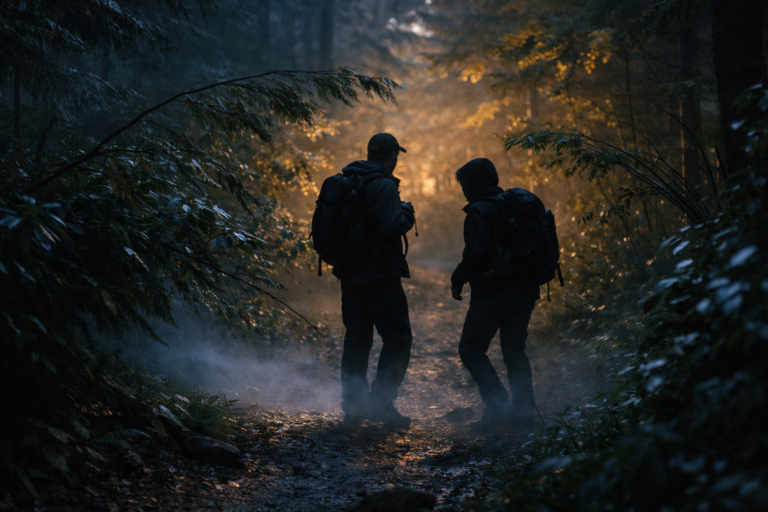
They stepped off the gravel at first light, three figures and their mud-dulled packs swallowed by the spruce and alder. The county track ended in a berm of broken rock just past a rusted sign for Alder Spur 7, a decommissioned road now laced with saplings. Beyond it, the trail thinned to a rib of soil and duff along a creek. They were there to swap out batteries on acoustic monitors and flag a washed-out section of the tributary trail that no one used except elk and the handful of volunteers who still carried hand tools. Routine work in a part of the forest most people forgot existed.
The air held that late-season damp that rises from the ground itself. Every step shifted the smell of mushrooms and cold metal. They spoke in the mild shorthand of people who had hiked together before—Mara asking about the ridge weather, Jace patting the hip pocket for the beacon, Levin running his hand along old blaze marks, pointing out where bark had swallowed them. Above them, the sky showed as a rough lattice through branches, small and ordinary.
Before they turned in, they checked in. The sat messenger chirped at its steady interval: green. The county radio spat out a clipped good morning from the dispatch desk two valleys over. They confirmed the plan, confirmed the turnaround time, and let the static settle back down. Levin unsnapped the map case, ran his finger along the dotted line of a trail that hadn’t been officially maintained for seven years, and said, Without the markers you follow the water. The creek will keep you honest.
It was simple. Two days in, swap batteries, inspect the washout, camp at the saddle above the basin, two days back. The kind of job that produces a small file and no stories. They moved under the shade where the air felt ten degrees colder, boots making a dark line of wet along the dust. A jay skittered up the ridge as if shrugging them off. By the time the creek had widened and flattened, the signal on the little screen was still a green check every fifteen minutes. Nothing strange. They had nobody else in their sector.
Just after noon, the first wrong thing came as a garble. It fed through the dispatch console in three lines and half pauses. Who else—spacing—anyone registered in the basin—then a smear of data that resolved as numerals but not quite, not a set of coordinates you could enter. The text-to-speech lilted over it, voice careful and empty. Lights up on the far tree line, said the next piece, as if someone was leaning close to the mic and sliding back. Movement where there shouldn’t be. The message timestamp lagged six minutes behind the device’s internal clock. Dispatch stared at the tiny wobble in the time and waited for the next check-in, the cursor blinking in a window that stayed patient and gray.
There were no other permits for that basin. The trailhead register held three ballpoint signatures from the weekend and all of them notes about turning back before the fork. It was just the three of them and the cold air that makes your breath go ragged. When Dispatch called back, the radio hit the repeater and gave nothing. Over and over she said: Confirm. Say again. You’ve got eyes on lights where. And then there it was, a second message, shorter, one broken word at a time, almost apologetic. Not headlamps. Not fire. Then a gap long enough for the room to empty itself of any sound except the small high whine of a laptop fan.
The beacon’s breadcrumb line had been a sober thread on the dispatch map until then—west to the bend, north to the shelf. At 13:42 it hiccuped. A point appeared two ridges away in the old burn scar as if a hand had lifted the device and set it down, as if the slope it claimed was beneath them hadn’t been climbable without ropes. Two minutes later it flourished back near the creek, then—for less than ten seconds, long enough to draw a notice—out beyond the road’s end where the runoff cut into pale rock like an open book. Anyone who had ever used the software knew it made mistakes when clouds or canyon walls got arrogant, but not like that. It jumped, not drifted. It declared them at a locked gate twenty miles away, then snapped them into the shadow of the decommissioned fire tower that had been dismantled in 1989 and now existed only in memory and bolts.
Somewhere under trees thick enough to sew the day shut, the three of them moved like people still working, still doing the plain things: checking straps, calling out the number on a metal tag, marking a tree. Somewhere their breathing made white flecks in the cold. Dispatch sent a weather update that took six minutes to squeal across. Wind light. Precipitation after dark. Using language that felt like a hand held out.
At 15:03 the voice channel opened on its own. Not the sat messenger this time, but the county radio, pulling sound over a repeater they hadn’t used all summer. The first syllables sounded like someone dragging a zipper across the speaker. Levin, his voice bent by distance: Copy, movement still on the north aspect, it’s past the swale—then the transmission doubled on itself, one beat echo against another, the word swale folding over like paper. You could hear Jace, not on the mic but enough to put weight behind it, say That’s not— and then a redger sound like wind that wasn’t wind at all, and a click, and the old silence closing.
The breadcrumb line continued to draw its stuttering script across the topography. By evening it had written them into a tiny circle that crossed the creek three times in two minutes. It set them in the alder flats, then in the shale five hundred feet upslope, then in a narrow, white run of snow under trees that should have kept snow out. It was a shape of franticness the way a pen taps a desk and leaves dots. The sat messenger sent a single ping with no content, only a timestamp that was in the future by three minutes, as if some petty math had slipped.
Their final message arrived at 17:26. No coordinates rode along with it. No breadcrumb point, no lat/long, no polite bracketed [OK]. It pushed through as if someone held the SEND and would not let go, as if a finger had rubbed a single sentence into the skin of the device over and over. It read: It isn’t a person. It isn’t a person. It isn’t a person. Six times, with a seventh begun and broken by nothing. It came through clean to the screen on Dispatch’s table with that particular neatness text has when it belongs somewhere you don’t.
After that there was weather. Night leaned down, slow and implacable as always. The humidity moved up through the saw cuts in the stump outside the ranger station, darkening wood into something with veins. The map on the screen held its impossible markers as if they had cooled there. Units were called, quietly, in the voice you use when the first bad idea enters a room. The old searcher in his coat came anyway even though no one said his name. They slept on couches, not really. The empty offices hummed like boxes of breath.
The next morning a chain of bodies walked that long rib of trail together. The creek did its pleasant, stupid work. The snowline was a smear between ferns. The point where you leave the gravel for the woods did not feel sacred or dangerous. It felt like a place where three people had been yesterday and were not today. They found the first mark where it should be: a strip of bright flagging hoisted like a thought. Farther in, a dent in moss where a knee had read the ground. In the saddle, the camp.
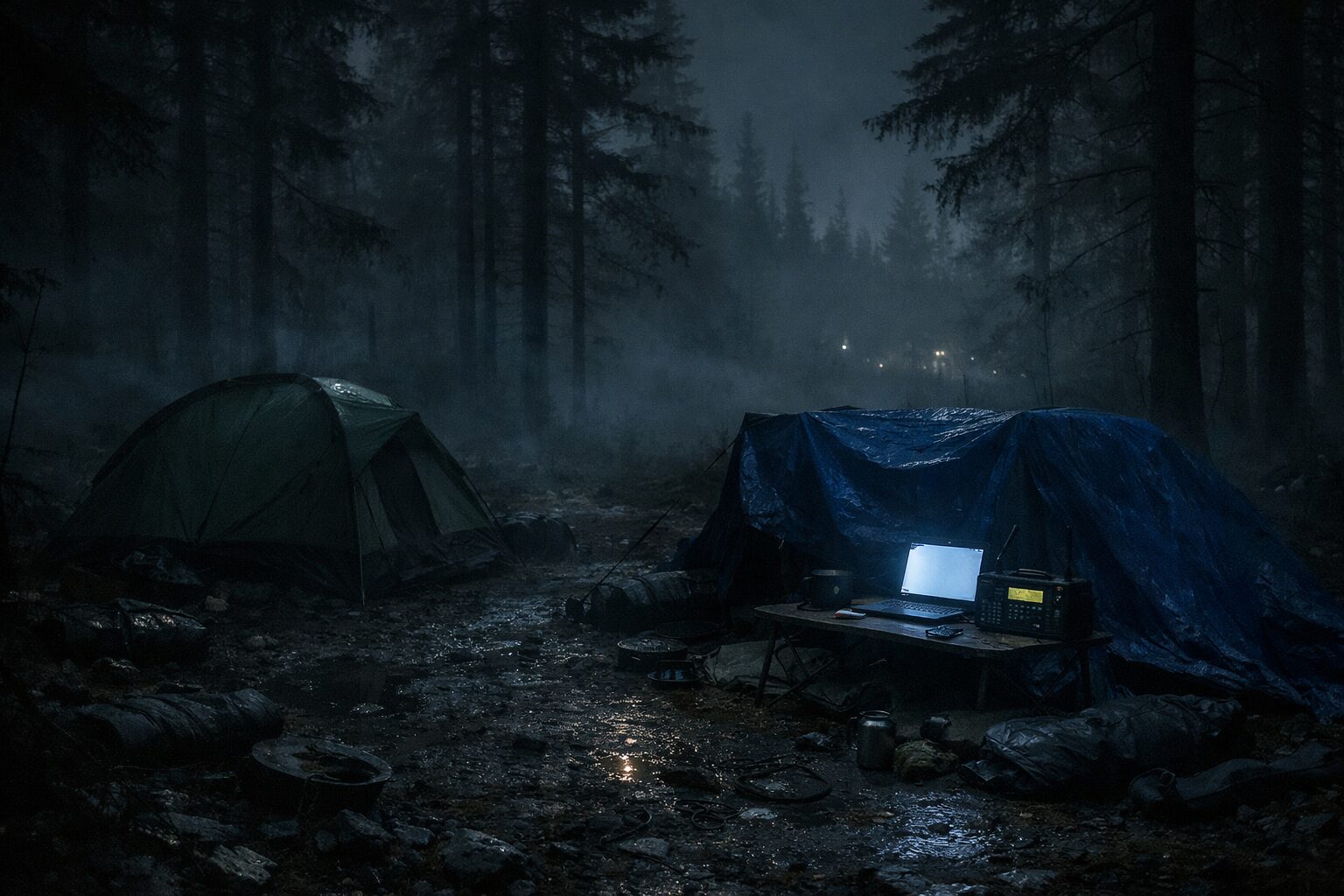
It looked like any of their camps. Two tents muting to the color of the earth. A blue tarp rigged off a sapling with the competence of someone who has done this often. Levin’s thermos with the lid on, still warm enough inside to fog the lip. A spiral notebook open with a list ended mid-word: “Battery low on unit 3, swap w…” Every small thing had stopped because it had run into something else and not because of haste. You could picture them stepping away from the little rectangle of light their radio screen made.
The radio was on. The tiny field laptop hummed. The generator hadn’t been spun up. A battery pack glowed one green eye from beneath a coil of cord. The sat messenger sat in its small cradle blinking how it always blinked, bright and blind. On the laptop, the dispatch console equivalent—a barebones field program—had the Outbox open. Three messages queued with red slashes on them and one with a green check locked there like a staring thing: It isn’t a person.
They called out the spot by its file number and then by whatever was oldest, the name of a ridge that used to host a lookout, the name of the family whose land touched Forest Service boundary, the name of a creek no one had ever managed to pronounce right. They spread in a slow circle, the sound of brush against jacket seams taut as a kind of music. No scuff past what feet make, no slide or tumble. A tin of stove tabs sealed and dry. Levin’s map on a stump weighted with a small rock, a drawn line from the camp to the washout with a neat x. In that light the ordinary felt like a held breath.
One of them bent to the radio not because they expected anything from it but because they needed to put their hands on something. The screen refused to be dead. The log showed the messages they already knew. It also showed an INBOUND notification waiting in a square that blinked an amber that wasn’t an option documented in whatever manuals had been typed up and bound three directors ago. The cursor hovered, the key was pressed with the neat indifference of a clerk stamping a receipt. The message opened itself and lay there, line after line, the same way every message looks when it’s short and won’t be negotiated with: It isn’t a person. It had today’s date. It had their minute. It had, absurdly, no origin listed, only a string of dashes like a phone number scrawled in a dream.
Outside the tarp the trees moved without wind once, a shiver that traveled along crowns and dissolved. The GPS unit they found clipped to a tent pole lifted its little square lines of signal and then smoothed them as if ashamed. The map on the laptop redrew itself and then undid it, ashamed too. Someone said the missing names in a careful voice as if a litany could promise a return. The laptop sprang a new window without being asked and put a small square on a small map, at the camp, then in the alder flats, then for one beat, under the old fire tower that isn’t there. The radio clicked as if a hand had leaned on it.
They stood in the empty place the three of them had made and listened to the cold. They talked in the taut instrument of procedure because it gives your mouth something to do. The woods went on between one trunk and the next. The message log waited in its square, numbers settling the way dust does. The room in the ranger station, miles away and slick with fluorescent light, showed the same thing where the cursor blinked. Then a sound long absent returned, so normal it turned everything odd around it: a brief, ordinary chirp indicating a handshake, signal established. The field radio thrummed a half-second of noise, and without anyone speaking, a new message slotted into the queue with the quiet certainty of something that has found its route at last. It was just the one line again, no coordinates, no introduction, the same phrase falling into place as if it had been walking along the trail and caught up: It isn’t a person.