The Warning Came Three Days Too Early
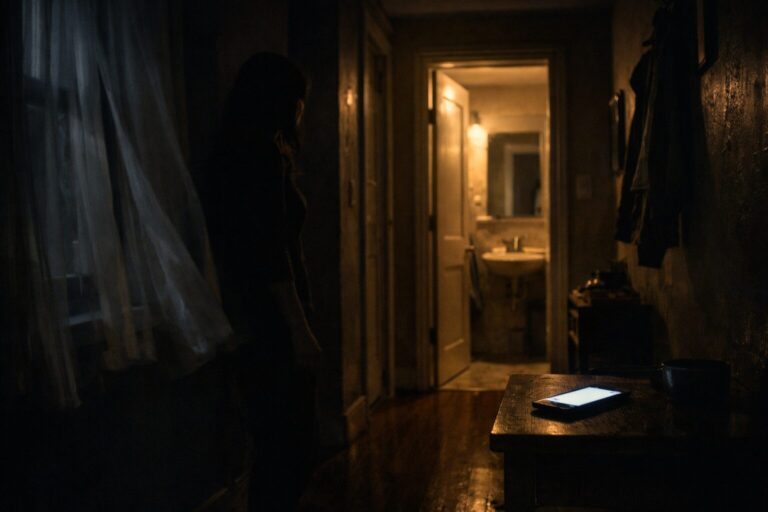
On Wednesday morning my apartment held the kind of silence that pretends to be a sound—the thin whine of the refrigerator motor, the slow click of the heating pipes, the scuff of a neighbor’s shoe somewhere above me as they crossed to the bathroom. I filled the kettle and stood watching the water pool the metal, the cold tap shivering in my hand, light flattening through the blinds and striping the sink. Nothing had happened. No call came in, no news fizzed across my phone, no sirens, no voices in the hall. Still, there it was, rising through that nothing like a bruise through milk: stop.
It wasn’t a thought so much as a push from the inside. I put the kettle down and listened to the apartment, then to my own pulse. Stop what? I was on autopilot, setting the mug in its usual place on the counter, reaching for the tin of tea, moving without wanting to. The warning gathered itself in words that didn’t come from me: Don’t take the stairs.
There were other options. The elevator worked, most days. I didn’t need to be anywhere, not urgently. Still, the suddenness of it set my skin tight. The moment stayed with me as I watched steam ghost upward and vanish. If you had asked me right then what exactly I was supposed to avoid, I would have said I didn’t know. The only thing I knew was the feeling of the message, as distinct as a scent. It did not make sense to be afraid in my kitchen at eight-fifteen.
The first wrong detail arrived as I stood at the window letting the radiator’s heat breathe against my shins. Green tile. The thought pressed in from the side of my head, uninvited. Not the mottled beige of my building’s stairwell, not the scuffed linoleum by the mailboxes downstairs—green tile, glazed and cold, the kind that throws back your footsteps like they belong to someone larger. I saw the corner of a landing I’d never stood on and the dark line of grime where a wall meets a floor. And with it: fourth step, left side. The image came so ready, so specific, it had the confidence of a memory. I didn’t know any place in my routine that matched it.
By ten I had written “green tile—fourth step left” in the margin of a shopping list without thinking, the way you jot down something you meant to grab last time. I went to circle it and realized my hand was shaking. I took a breath and folded the paper, slid it into the drawer where I keep spare receipts and rubber bands and the key to the bike lock I haven’t used in a year. The kettle had gone quiet. Across the hall someone’s phone chimed twice and stopped. Everything stayed ordinary and, because of that, faintly wrong.
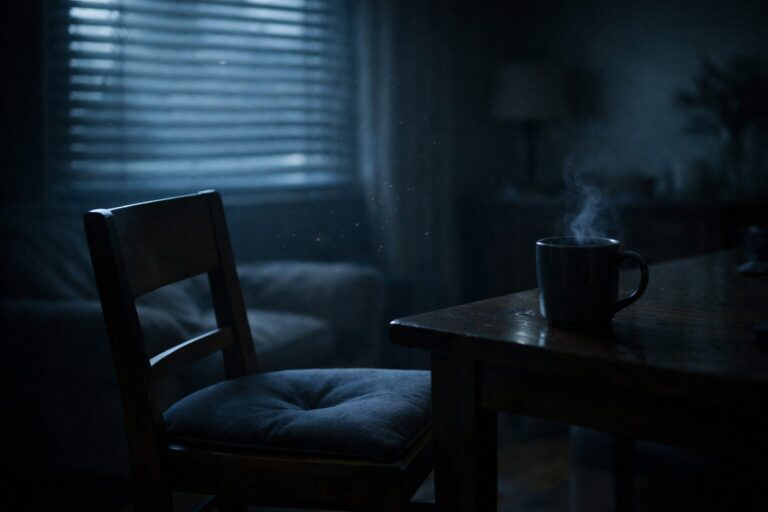
That night I fell into a dream so shallow it barely counted. I was inside a stairwell, the air cool and chemical, like the janitor’s closet in my old grade school. I paused with my hand on a metal rail that left a cold stripe across my palm. Someone said, without being in the frame of the dream at all: Stay to the left. I woke up as if plucked from the sheet by that sentence, the taste of something citrus and sharp in my mouth. The radiator snapped and settled. I could make out the shape of my chair by the window. My mug sat on the table in its usual spot, unchipped. I was sure I remembered a rough notch on its rim—hadn’t I run my finger over it that morning? It was smooth. The memory had arrived before the fact.
On Thursday the things that didn’t matter began to lean toward the things that did. In the lobby a neighbor complained to the super that her delivery had shown up three days early and she hadn’t been home to sign. At the café on the corner a handwritten sign pointed customers around the mop to Keep Left. The barista handed me a scone and said, “Careful, the fourth one’s always a little underbaked,” to the woman behind me. I found myself counting steps without meaning to, picking the left edge of the sidewalk when coming down curbs, gripping railings with my left hand, even though I’m not left-handed. On the subway I looked up from nothing to see an ad for a flooring company: glossy green tile shining under staged down-lights. On my way back up to the apartment I avoided the stairs and waited for the elevator like it was a decision that would be graded.
There was a voicemail from an unknown number when I got home, time-stamped around noon. The message was almost all room: the noise of air moving past a phone microphone, the faint beep of something at intervals, a hollow chill threaded through. No voice. It felt rude to listen twice. I set the phone down and went to put the kettle on again and knocked my mug against the edge of the sink. Porcelain ticked on porcelain; a piece no bigger than a fingernail came away, leaving a crescent missing on the rim. I carried it to the light and rubbed my thumb over the new edge. It matched the memory I’d had the night before, to the ripple. I told myself it meant nothing. I told myself my mind was playing a child’s game of making patterns out of lint.
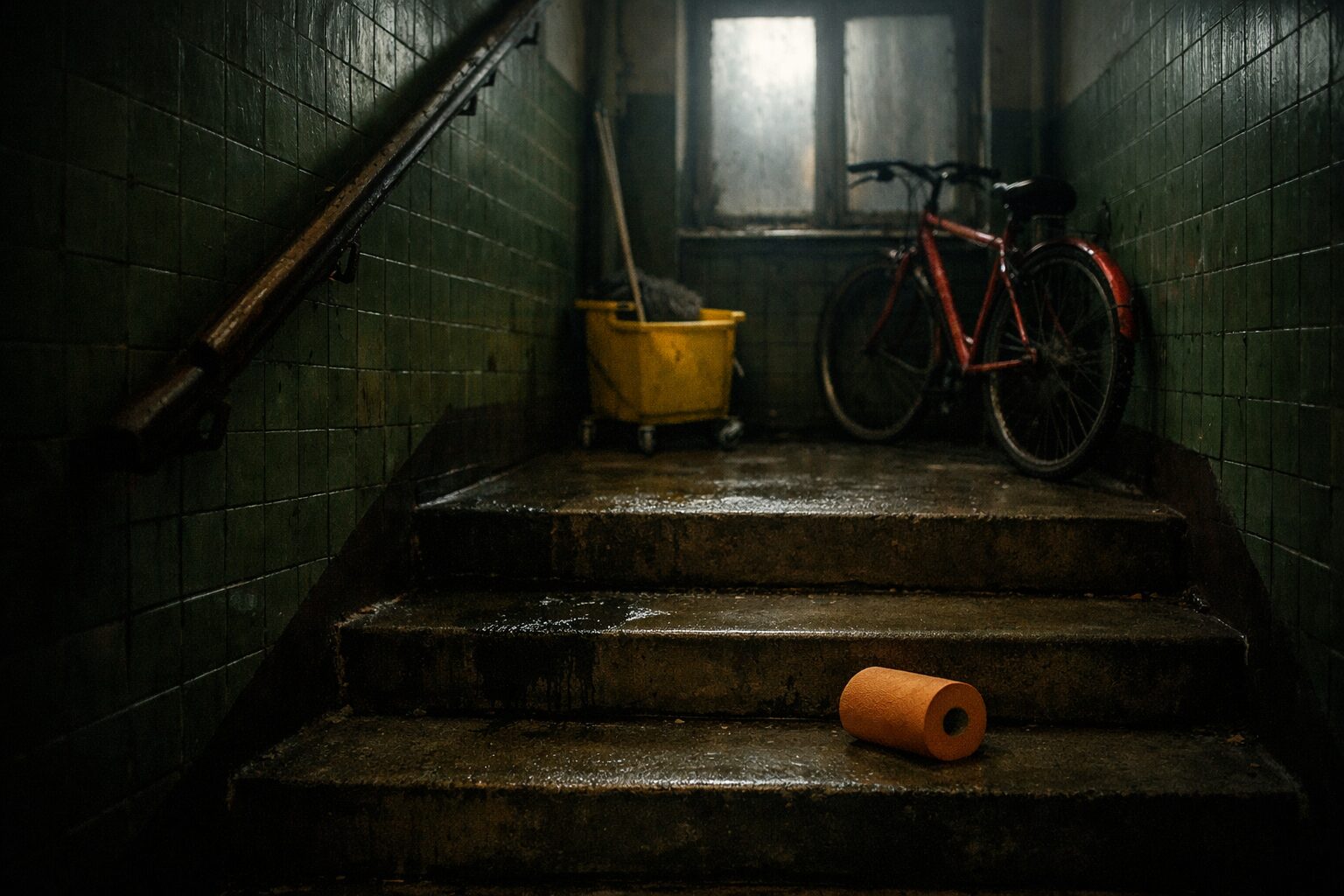
That night the dream had weight. I stepped into it already knowing where to place my feet. The stairwell was an L-turn with a landing that faced a window painted shut under layers of the same green; the glass was dirty; outside the slow smudge of a tree moved as if someone had pushed a watercolor. A red bicycle leaned against the wall on the landing, front wheel canted, its cable lock looped lazy through the frame but not secured. On the turn there was a yellow mop bucket left with the handle cocked back and a wet shine on the fourth step, left side, where drips had fallen. It was not my building. I could smell oranges and cleaner and the paper-dry dust of old tile grout, and I had never been there. I reached the step and someone put a hand on my elbow, firm, pulling, and I turned to see—to see no one. The hand was real and left the same shape as gravity does when it moves through you. I woke with my heart in my throat and the word Riverside in my head like a bell. I don’t live near Riverside. There is no Riverside on my block.
Friday, the word followed me. A guy in a safety vest outside the bodega told someone on speakerphone, “Yeah, they closed Riverside again,” even as I walked past thinking of coffee, not roads. The library’s community board had a flyer for a drum circle at Riverside Park, Scotch-taped in place so long the corners had curled. A woman at work asked if I knew the Riverside branch had finally reopened after its renovation—she missed the old tile, she said, they’d brightened it too much. By then I wasn’t arguing with coincidence anymore; I was letting it move me, the way you let the elevator control when your body goes up. I stayed off the stairs again, pressed my hand to cool stainless steel and watched the numbers drift from one to three to five and back. In the mirror, the underside of my arm had a shadow that vanished when I turned my wrist. I rubbed at it and laughed out loud at myself and stopped halfway through.
On Saturday morning, the text that fixed the day arrived: Could you do me the biggest favor? I’m out of town and forgot to water the plant. Keys are with the super at 317 Riverside—third floor. Elevator is always acting up—stairs are quicker. I stared at the words until the phone dimmed, then lit up again with its own nerve. I could have said no. I could have made excuses. She had asked weeks ago if I’d be around to help if she needed, and I’d said yes without thinking, the way you agree to things far off because your future time seems empty.
The warnings had been days early, I told myself. Maybe I had bled the charge out of them by paying attention. Maybe the point was only to prove I could be moved by something I couldn’t hold or name. I put on my coat and locked my door and stood for a moment in the empty hallway listening to the elevator cables hum. The floor smelled like dust and laundry soap; a television murmured behind a door like an aquarium. I took the elevator down, but when I got to the building on Riverside, I held the door and didn’t press the button. I opened the stairwell instead.
Green tile. The kind you don’t just see; you stand inside the color of it. It was the exact green I had tasted in my sleep, the exact shade of bottle glass taken into shadow. The stairwell was narrow, saturated with the same cool chemical smell. On the first landing, against the wall, leaned a red bicycle, just as careless, its front wheel a tilt that mirrored the pivot of my stomach. Farther up, a yellow mop bucket sat with water pooled to a tide line, its handle caught back, a white rag flung over the rim as if someone had received a call mid-task and would be right back. A single line of water had found the fourth step, left edge, wicking itself into the grout so slowly it might have been a clock I couldn’t read. My hand found the rail. It was as cold as my dream had promised.
I stopped there. I don’t mean I hesitated; I mean that my body decided before I did, and I found myself half lifting my foot for the first step and then pulling it back. The air was so still I could hear the water touching the tile in touches too small to name. I stood on the threshold and felt the feeling that had first moved at my sink three days before, only now it was large enough to hold my whole shape inside it. I let go of the rail. I turned toward the elevator.
I pressed the button and waited there in the corridor that smells only like corridors do, a mixture of dust and old paint and the aftertones of things people have cooked in pans. The elevator beeped somewhere below and began its slow climb. Behind the stairwell door there was the startle of a voice, cut by the quick clap of something hitting tile, then a spill—the muffled thunder of round things rolling and the soft, erratic music of them falling from one step to the next. Orange, my mind said, as if labeling a diagram. I could smell it; that same sweet-bitter rind oil the dream had got exactly right shimmered into the hallway and into me. Someone above cursed once, not in pain so much as in surprise, and then the building went still again. The elevator arrived and opened with a breath and I stepped in.
The third floor was three floors like any other, quiet and close. I took the plant off a stool near the window and carried it to the sink, the water going cold over my hand as it ran through the dry soil and out the drainage hole with a reliability that felt like a kindness. I moved the pot back and checked the lock twice when I left and kept my eyes off the stairwell door as I passed it, looking instead at the scuffed paint of the exit sign and the way someone had pressed the button so many times the black dot in its center had grown shiny. The hall smelled faintly of oranges that didn’t belong to me.
Back at my apartment, the keys hit the dish with a clink that told me I had not lost them. I poured water into the chipped mug without thinking and watched it find the missing crescent as if to prove itself obedient to edges. My elbow ached faintly. I turned my arm in the kitchen light and saw the beginning of a bruise, not a blotch but the implication of one: four ovals where fingers might have been, placed exactly where I had felt the hold in my dream, light as a map pencil mark. I pressed on one and felt the ache answer back clear and quiet, the way a good violin string hums when the one next to it is played.
My phone buzzed on the table and I let it. The unknown voicemail from Thursday asked for attention again, a small dot insisting. I pressed play and heard air move, steady and patient, like the breath of a space. Then, behind it, the same stall of beeps my ears had learned that morning—two notes rising, one low, one high, the pause, again—exactly the elevator in the Riverside building. The message had come three days too early to be recorded where it was. It should not have known the rhythm I had not stood in yet.
I put the phone face down and leaned against the counter listening to the pipes and to the quiet my apartment keeps when it is waiting. Out in the hall, someone’s footsteps went by and paused. There was the small rolling sound of something soft striking the baseboard, then stopping. I didn’t open the door. I didn’t need to. The smell of orange found the seam where the floor meets wood and slid under, thin and correct, and I thought, not for the first time that week, that the warning had not been a thought at all but a place I had briefly already stood in, a moment I had visited before it made a shape. I stayed there with the smell and the bruise and the chipped mug cooling in my hand, and the elevator’s distant chime sounded, gentle and sure, in a building that was not mine.